Saffron is one of the world’s most valuable spices, prized for its distinctive aroma, vibrant golden color, and delicate flavor. Often called “red gold,” saffron comes from the dried stigmas of the saffron crocus (Crocus sativus), a flowering plant that has been cultivated for thousands of years.
Today, saffron is used in cooking, traditional wellness practices, cosmetics, and specialty food products. It is especially popular in Mediterranean, Middle Eastern, South Asian, and North African cuisines.
Because each flower produces only a few usable stigmas, harvesting saffron requires significant manual labor. This explains why genuine saffron is much more expensive than most common spices.
This guide explores what saffron is, its potential benefits, common uses, safety considerations, and basic tips for growing saffron at home.
Table of Contents
- 1. What Is Saffron?
- 2. Where Does Saffron Come From?
- 3. Saffron Nutrition
- 4. Potential Antioxidant Properties
- 5. Saffron and Mood Support
- 6. Saffron and Eye Health
- 7. Saffron in Traditional Wellness Practices
- 8. How to Use Saffron in Cooking
- 9. How to Store Saffron
- 10. Saffron Side Effects and Safety
- 11. How to Grow Saffron at Home
- 12. Saffron Harvesting and Production
- 13. How to Choose High-Quality Saffron
- Final Thoughts
1. What Is Saffron?
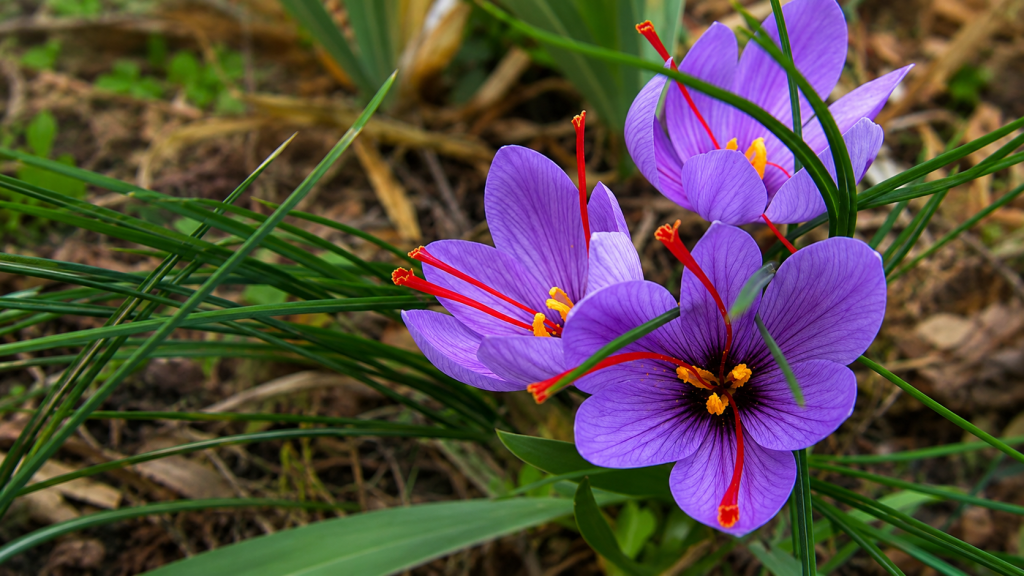
Saffron is a spice obtained from the three red-orange stigmas found inside each flower of Crocus sativus.
The plant belongs to the iris family and produces beautiful purple flowers in the fall. Each flower contains only three delicate stigmas, which must be carefully picked by hand and dried to produce saffron spice.
The word “saffron” is often associated with both the spice and the plant that produces it.
High-quality saffron typically has a deep red color, a distinctive aroma, and a complex flavor that can be described as slightly sweet, earthy, floral, and subtly bitter.
Because of its labor-intensive production, saffron is among the most expensive spices in the world.
2. Where Does Saffron Come From?
Saffron has a long history of cultivation in regions around the Mediterranean and parts of Asia.
Today, Iran is one of the world’s largest saffron producers. Other important growing regions include India, Spain, Greece, Morocco, and parts of the Middle East.
The quality and characteristics of saffron can vary depending on the growing region, harvesting methods, drying techniques, and storage conditions.
Kashmiri saffron, Spanish saffron, and Iranian saffron are among the types that are commonly known in international markets.
Because genuine saffron is expensive, adulteration and counterfeit products can be a concern. Buyers should purchase saffron from reputable sources and look for clear information about origin and quality.
3. Saffron Nutrition
Saffron is usually consumed in very small quantities, so it does not contribute significant amounts of calories or macronutrients to the average diet.
Its importance comes primarily from its naturally occurring plant compounds.
Saffron contains compounds such as crocin, crocetin, picrocrocin, and safranal. These compounds contribute to the spice’s color, flavor, and aroma.
Researchers have studied these compounds for their antioxidant and other biological properties.
However, research findings do not mean that saffron can prevent or treat every health condition. Much of the research involves specific extracts or supplements rather than the small culinary amounts typically used in cooking.
4. Potential Antioxidant Properties
One reason saffron has attracted scientific interest is its content of naturally occurring antioxidant compounds.
Antioxidants help protect cells from oxidative stress caused by unstable molecules known as free radicals.
Compounds such as crocin and crocetin have been investigated for their antioxidant activity in laboratory and clinical research.
Although these findings are promising, more research is needed to fully understand how saffron affects human health when consumed as part of a normal diet.
Using saffron in cooking can add flavor and color to meals, but it should not be viewed as a replacement for a balanced diet or medical treatment.
5. Saffron and Mood Support
Saffron has been studied for its potential relationship with mood and emotional well-being.
Some clinical research has explored saffron extracts in relation to symptoms of depression and anxiety. Certain studies have reported promising results, but research is still developing and study quality and formulations can vary.
It is important to distinguish between culinary saffron and standardized saffron extracts used in research.
People experiencing persistent changes in mood should seek professional medical advice rather than relying solely on saffron or other supplements.
6. Saffron and Eye Health
Researchers have also investigated saffron in relation to eye health and age-related vision changes.
Certain saffron compounds have antioxidant properties that may be relevant to the health of retinal tissues.
However, saffron should not be considered a treatment for eye disease. Anyone experiencing changes in vision should consult an eye care professional for proper evaluation.
Research into saffron and eye health remains an area of ongoing scientific interest.
7. Saffron in Traditional Wellness Practices
Saffron has been used in traditional medicine systems for centuries.
Historically, it has been included in various preparations for digestion, mood, general wellness, and other purposes.
Traditional use provides important cultural context, but it does not automatically prove that saffron is effective for a specific medical condition.
Modern research continues to investigate saffron’s potential biological effects, but evidence varies depending on the health outcome being studied.
8. How to Use Saffron in Cooking
Saffron is widely used as a culinary spice.
It can be added to:
- Rice dishes
- Paella
- Risotto
- Soups
- Seafood
- Chicken
- Breads
- Desserts
- Milk-based drinks
- Sauces
One of the best ways to release saffron’s color and aroma is to gently steep the threads in warm water, milk, or broth before adding the liquid to a dish.
Another method is to lightly crush the threads and allow them to infuse before cooking.
Because saffron has a strong flavor and is expensive, only a small amount is usually needed.
When purchasing saffron, look for whole threads rather than brightly colored powder when possible. Whole threads are generally easier to inspect for quality and authenticity.
9. How to Store Saffron
Proper storage helps preserve saffron’s aroma, flavor, and color.
Keep saffron in an airtight container away from heat, moisture, and direct sunlight.
A cool, dark cupboard is generally suitable.
Avoid storing saffron in a container that allows moisture to enter. Exposure to humidity can reduce quality over time.
When properly stored, saffron can maintain its quality for an extended period, although its aroma and flavor may gradually weaken.
10. Saffron Side Effects and Safety
Saffron is generally used in very small amounts as a culinary spice. However, concentrated saffron supplements can provide much higher amounts than normal food consumption.
Some people may experience side effects from higher amounts, including:
- Nausea
- Dizziness
- Dry mouth
- Headache
- Changes in appetite
Large amounts of saffron may be unsafe and should be avoided.
Pregnant individuals should be especially cautious with high doses or medicinal use of saffron and should consult a healthcare professional before taking saffron supplements.
People taking prescription medications should also discuss concentrated saffron products with a doctor or pharmacist, particularly if they have an underlying medical condition.
The safety of culinary saffron in normal food quantities is different from the safety of high-dose extracts or supplements.
11. How to Grow Saffron at Home
Growing saffron at home is possible if you live in a suitable climate and provide the right growing conditions.
Saffron is grown from special underground structures called corms. Unlike ordinary spring-flowering bulbs, saffron crocus produces flowers in the fall.
Choose a location with full sun and well-drained soil. Saffron does not perform well in constantly wet soil, so drainage is especially important.
Plant healthy saffron corms in late summer or early fall, depending on your climate. Place them several inches deep in loose soil and space them apart to allow the plants to develop.
Water after planting, then maintain moderate moisture without keeping the soil saturated.
The purple flowers typically appear in fall. Harvest the three red stigmas from each flower as soon as the flowers open.
Carefully remove the stigmas and dry them in a controlled environment before storing them in an airtight container.
Because each flower produces only three stigmas, a large number of flowers are needed to produce a meaningful amount of saffron.
12. Saffron Harvesting and Production
Commercial saffron production is highly labor-intensive.
The flowers are generally harvested by hand, often early in the day when they are freshly opened. The delicate red stigmas are removed individually and carefully dried.
This labor-intensive process is one of the primary reasons saffron is so expensive.
Growing conditions, weather, soil quality, corm health, and harvesting techniques can all affect production.
For home gardeners, growing saffron can be an enjoyable experience even if the harvest is relatively small. The flowers themselves are also attractive additions to a fall garden.
13. How to Choose High-Quality Saffron
Because genuine saffron is expensive, consumers should be cautious when purchasing unusually cheap products.
High-quality saffron threads generally have a deep red or reddish-orange appearance and a distinctive aroma.
Buying from reputable spice suppliers can reduce the risk of purchasing adulterated products.
Whole threads are often preferable to unidentified saffron powder because the threads can be visually inspected.
When purchasing packaged saffron, look for information about the country of origin, product quality, and storage recommendations.
Final Thoughts
Saffron is a unique spice with a fascinating history, distinctive flavor, and significant economic value. Produced from the delicate stigmas of Crocus sativus, it is prized around the world for its culinary uses and has also attracted scientific interest because of its naturally occurring compounds.
Saffron can add color, aroma, and flavor to rice, seafood, soups, desserts, and many other dishes. It can also be grown at home from saffron corms in suitable climates with full sun and well-drained soil.
While saffron is generally used safely in small culinary amounts, concentrated supplements should be approached with greater caution. More research is needed to fully understand its potential health effects, and saffron should not replace professional medical care.
Whether you enjoy it in a traditional rice dish, experiment with growing it in your garden, or simply appreciate its rich history, saffron remains one of the world’s most fascinating and valuable spices.
Important: This article is for general educational purposes and is not intended to provide medical advice. If you are considering high-dose saffron supplements or have a medical condition, are pregnant, or take prescription medications, consult a qualified healthcare professional before use.
References: National Center for Complementary and Integrative Health (NCCIH); peer-reviewed research on Crocus sativus, saffron compounds, and human health.