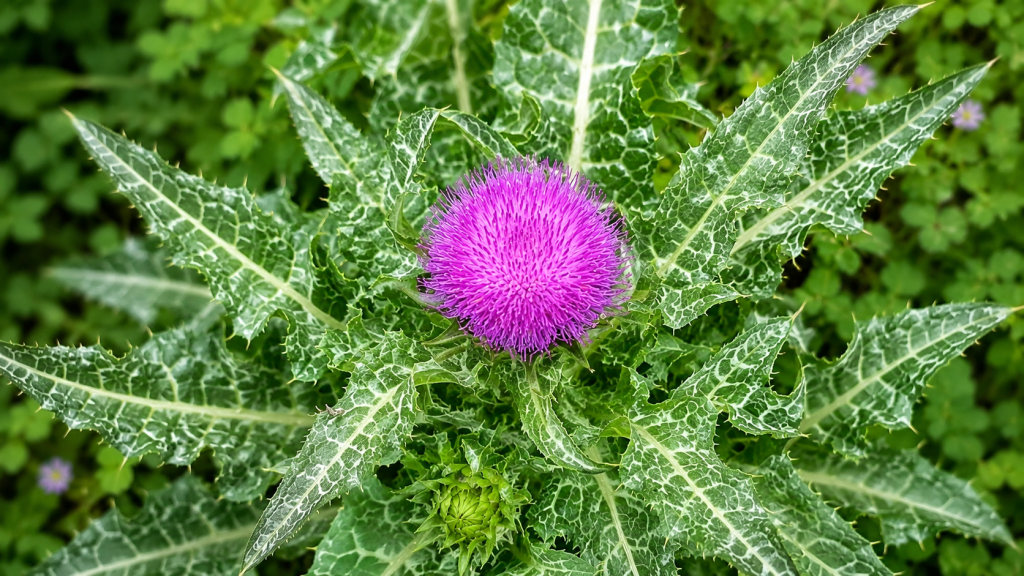
Milk Thistle is a distinctive flowering herb known for its purple blooms, spiny leaves, and long history of traditional use. Its scientific name is Silybum marianum, and the plant is native to parts of Europe and the Mediterranean region.
Today, Milk Thistle is widely recognized because of silymarin, a group of compounds found mainly in the plant’s seeds. Silymarin has been studied for its potential antioxidant activity and its possible connection to liver health. However, scientific evidence in humans remains limited or mixed for several health conditions.
Beyond its traditional and herbal uses, Milk Thistle can also be an interesting plant to grow in a home garden. With plenty of sunlight, well-drained soil, and enough space, it can produce attractive purple flowers and mature seeds.
Table of Contents
- 1. What Is Milk Thistle?
- 2. What Is Silymarin in Milk Thistle?
- 3. Potential Benefits of Milk Thistle
- 4. Milk Thistle and Liver Health
- 5. How to Use Milk Thistle
- 6. When Is the Best Time to Plant Milk Thistle?
- 7. How to Grow Milk Thistle from Seed
- 8. How Much Sun, Water, and Soil Does Milk Thistle Need?
- 9. When Does Milk Thistle Flower and Produce Seeds?
- 10. Important Things to Know Before Growing Milk Thistle
- 11. How to Harvest and Store Milk Thistle Seeds
- 12. Milk Thistle Safety and Precautions
- Conclusion
- FAQ About Milk Thistle
- References
1. What Is Milk Thistle?
Milk Thistle, scientifically known as Silybum marianum, is a member of the Asteraceae family, which also includes daisies and sunflowers.
The plant is easy to recognize by its large green leaves, which often have distinctive white markings or veins. The edges of the leaves are covered with sharp spines, and mature plants produce rounded purple to pinkish-purple flower heads.
Milk Thistle is commonly grown as an annual or biennial plant, depending on the climate and growing conditions. A mature plant can become fairly large, so it is important to give it enough space when planting.
The seeds are especially well known because they contain silymarin, the main group of compounds studied in Milk Thistle research. According to the National Center for Complementary and Integrative Health (NCCIH), there is currently not enough high-quality evidence to draw definite conclusions about the effects of Milk Thistle on health conditions in people.
2. What Is Silymarin in Milk Thistle?
Silymarin is a mixture of compounds found mainly in Milk Thistle seeds. It is the component most commonly associated with the plant’s herbal and scientific research.
Laboratory studies have investigated silymarin for antioxidant, anti-inflammatory, and cell-protective activities. These findings have contributed to interest in Milk Thistle, particularly in research related to the liver.
However, laboratory findings do not necessarily mean that the same effects occur in people who consume Milk Thistle supplements. Clinical research has produced mixed or limited results, so more research is needed to understand its potential benefits.
3. Potential Benefits of Milk Thistle
Milk Thistle is often promoted for several health-related purposes, but the strength of scientific evidence varies.
Potential Support for Liver Health
Milk Thistle is perhaps best known for its connection with liver health. Silymarin has been studied in people with various liver conditions, including hepatitis B and C, alcohol-related liver disease, and non-alcoholic fatty liver disease.
However, clinical results have been inconsistent. According to NCCIH, studies of Milk Thistle for liver diseases have been conflicting or too limited to reach firm conclusions. Research supported by NCCIH on hepatitis C and a progressive form of fatty liver disease did not demonstrate clear benefits from silymarin supplementation.
For this reason, Milk Thistle should not be considered a proven treatment for liver disease or a replacement for medical care.
Antioxidant Activity
Silymarin has been investigated for its antioxidant activity in laboratory research. Scientists have also studied how it may influence cellular stress and inflammatory signaling.
These findings are scientifically interesting, but more human research is needed to determine what practical health benefits, if any, Milk Thistle may provide.
Possible Effects on Blood Sugar
Some small human studies have suggested that Milk Thistle extracts may help with blood sugar control in people with type 2 diabetes. However, NCCIH notes that the available research is limited, and much of it was conducted in Middle Eastern countries. It remains unclear whether similar results would be seen in other populations.
Milk Thistle should therefore not be used as a substitute for prescribed diabetes treatment
4. Milk Thistle and Liver Health
The relationship between Milk Thistle and liver health is one of the main reasons the plant has attracted scientific interest.
Researchers have studied silymarin because laboratory experiments suggest that it may influence oxidative stress, inflammatory pathways, and other cellular processes. These findings provide a basis for further research but do not prove that Milk Thistle can prevent or treat liver disease.
For example, studies of silymarin in people with hepatitis C have generally not demonstrated meaningful benefits compared with placebo. NCCIH states that no dietary supplement has been shown to be effective for hepatitis C.
Anyone with a diagnosed liver condition should follow medical advice and discuss herbal supplements with a healthcare professional before using them.
5. How to Use Milk Thistle
Milk Thistle is available in several forms, including capsules, tablets, powders, and liquid extracts. Many supplements are standardized around silymarin content, although the actual composition can vary between products.
Some people are interested in using the seeds directly, but home-grown Milk Thistle does not provide a standardized amount of silymarin. The concentration of active compounds can vary depending on the plant, growing conditions, harvesting time, and processing methods.
If you are considering a Milk Thistle supplement, pay attention to product quality and labeling. NCCIH notes that some Milk Thistle dietary supplements have been found to contain amounts of silymarin that differ substantially from their labels or to have contamination concerns.
People who take medications should talk with a healthcare professional before using Milk Thistle because herbal products can interact with certain medicines.
6. When Is the Best Time to Plant Milk Thistle?
The best planting time depends on your climate and whether you want to grow Milk Thistle as an annual or biennial plant.
In colder regions, you can start seeds indoors in early spring and transplant young plants outdoors around the last spring frost. This approach can allow the plant to grow during the warmer months and potentially flower in late summer.
In areas with milder climates, seeds can also be sown directly outdoors during the appropriate growing season. Missouri Botanical Garden notes that Milk Thistle can be grown as a biennial by sowing seeds directly in the garden from May through August, although flowering may not occur until the second year. For annual growth, seeds can be started indoors in March and planted outdoors around the last spring frost date.
Before planting, check the typical frost dates for your area. The timing may need to be adjusted depending on your local climate.
7. How to Grow Milk Thistle from Seed
Growing Milk Thistle from seed is relatively straightforward.
Choose a location with full sun and well-drained soil. Loosen the soil before planting and remove competing weeds.
Sow the seeds directly into the garden or start them in containers. Cover the seeds lightly with soil and keep the growing medium slightly moist during germination.
Once seedlings emerge, thin crowded plants so they have enough room to develop. Milk Thistle can grow several feet tall and become quite wide, so avoid planting it too close to other plants.
If starting seeds indoors, transplant young seedlings carefully once outdoor conditions are suitable. Avoid disturbing the roots more than necessary.
For container growing, select a large pot with drainage holes. Because Milk Thistle can become a large plant, a small container may restrict its growth.
8. How Much Sun, Water, and Soil Does Milk Thistle Need?
Milk Thistle grows best in full sun. Choose a location that receives plenty of direct sunlight throughout the day.
The plant is adaptable to different soil conditions but performs well in moderately fertile, well-drained soil. Missouri Botanical Garden recommends average, moderately fertile, well-drained soil and notes that the plant can tolerate poorer soils.
Water young plants regularly while they are becoming established. Once established, Milk Thistle can tolerate relatively dry conditions and usually does not need constant watering.
Avoid overwatering. The soil should drain well, and water should not remain around the roots for long periods.
If growing in a container, use a well-draining potting mix and make sure excess water can escape through the drainage holes.
9. When Does Milk Thistle Flower and Produce Seeds?
Milk Thistle typically produces its distinctive purple flower heads after the plant has developed a strong structure of leaves and stems.
The exact flowering time depends on the climate and whether the plant is grown as an annual or biennial. In suitable conditions, flowering can occur during the warmer part of the growing season.
After flowering, the plant develops mature seed heads. If you want to collect seeds, allow the flower heads to dry naturally before harvesting.
Wear gardening gloves when handling Milk Thistle because the leaves and flower heads have sharp spines.
If you do not want the plant to spread, remove spent flower heads before mature seeds are released. This is especially important because Milk Thistle can self-seed under suitable conditions.
10. Important Things to Know Before Growing Milk Thistle
Milk Thistle is an attractive and useful plant for some gardens, but there are several things to consider before planting it.
The plant has sharp spines. Its leaves and flower heads can be prickly, so wear gloves when handling, pruning, or harvesting the plant.
It needs plenty of space. A mature Milk Thistle can become several feet tall and several feet wide. Give it enough room to grow without crowding nearby plants.
It may spread by self-seeding. If mature flower heads are left on the plant, seeds may fall to the ground and produce new plants. Remove spent flower heads if you want better control over where Milk Thistle grows.
Check local growing recommendations. Milk Thistle can behave differently depending on the region. Before planting large numbers of plants, check with your local gardening extension service or invasive plant authority to determine whether it is considered invasive or problematic in your area.
11. How to Harvest and Store Milk Thistle Seeds
If your goal is to collect Milk Thistle seeds, wait until the flower heads have finished blooming and begin to dry.
Harvest the mature flower heads carefully while wearing gloves. Allow them to dry fully in a dry, well-ventilated location.
Once the seeds are completely dry, store them in an airtight container away from moisture, heat, and direct sunlight.
Keep in mind that seeds harvested from home-grown plants are not standardized for their silymarin content. If your interest is specifically in the plant’s herbal compounds, the amount of active constituents may vary considerably between plants and preparations.
12. Milk Thistle Safety and Precautions
Milk Thistle taken by mouth appears to be generally well tolerated for many people. However, some individuals may experience digestive symptoms such as bloating, nausea, gas, diarrhea, or abdominal discomfort.
Allergic reactions are also possible, particularly in people who are sensitive to related plants in the daisy family. NCCIH also notes that there is limited information about the safety of Milk Thistle during pregnancy and breastfeeding.
If you take prescription or over-the-counter medications, talk with a healthcare professional before using Milk Thistle or other herbal supplements. This is especially important if you have an existing medical condition or are taking medication regularly.
Conclusion
Milk Thistle is a distinctive herb with purple flowers, spiny leaves, and a long history of traditional use. Its seeds contain silymarin, a group of plant compounds that has attracted scientific interest because of its potential antioxidant and cellular effects.
Research has particularly focused on Milk Thistle and liver health, but current human evidence is not strong enough to confirm clear benefits for specific liver diseases. Some studies have also explored possible effects on blood sugar, although more research is needed. For these reasons, Milk Thistle should not be viewed as a replacement for medical treatment.
From a gardening perspective, Milk Thistle is relatively easy to grow from seed. Plant it in full sun, use well-drained soil, avoid excessive watering, and give the plant plenty of space. If you live in a colder climate, starting seeds indoors in spring can be a practical option, while gardeners in milder regions may have more flexibility with planting times.
Because Milk Thistle has sharp spines and can spread through self-seeding, careful placement and regular removal of spent flower heads can make the plant easier to manage.
FAQ About Milk Thistle
- What is Milk Thistle? Milk Thistle (Silybum marianum) is a flowering herb known for its spiny leaves, white markings, and purple flowers.
- What are the potential benefits of Milk Thistle? Milk Thistle is mainly studied for potential benefits related to liver health, antioxidant activity, and blood sugar control, although evidence remains limited or mixed.
- Is Milk Thistle good for the liver? Milk Thistle has been widely studied for liver health, but research results are mixed, and it should not replace medical treatment.
- When should you plant Milk Thistle? In colder climates, start seeds indoors in early spring and transplant after the last frost. In milder areas, seeds can be sown outdoors during the growing season.
- Does Milk Thistle need full sun? Yes. Milk Thistle grows best in full sun and well-drained soil.
- How often should you water Milk Thistle? Water young plants regularly. Once established, Milk Thistle tolerates dry conditions and does not like constantly wet soil.
- Can you grow Milk Thistle from seed? Yes. Sow seeds directly outdoors or start them indoors, giving each plant plenty of room to grow.
References
- National Center for Complementary and Integrative Health (NCCIH) – Milk Thistle: Usefulness and Safety
- National Center for Complementary and Integrative Health (NCCIH) – Hepatitis C and Dietary Supplements
- Missouri Botanical Garden – Silybum marianum (Milk Thistle)