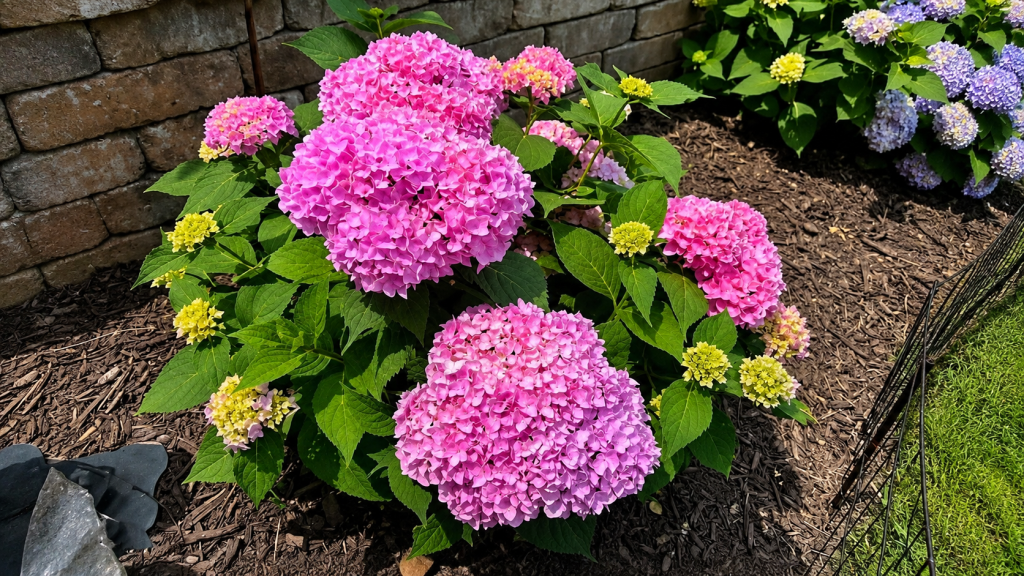
Hydrangeas are popular flowering shrubs known for their large, colorful flower clusters and long-lasting beauty. Depending on the variety, hydrangea blooms can appear in shades of blue, pink, purple, white, or green, making them a stunning addition to gardens and landscapes. With suitable sunlight, consistent moisture, well-drained soil, and proper pruning, hydrangea plants can thrive and produce beautiful flowers year after year. This guide covers hydrangea varieties, planting, watering, sunlight, pruning, flower color, hydrangea care, and common growing problems.
1. What Is a Hydrangea?
Hydrangea is a genus of flowering plants that includes shrubs, vines, and small trees. Most hydrangeas grown in home gardens are deciduous shrubs that lose their leaves during winter and produce new growth in spring.
Hydrangeas are best known for their large flower heads, which can be round, cone-shaped, or made up of delicate lace-like flowers. Depending on the species and growing conditions, some hydrangeas bloom from late spring through summer, while others continue flowering into early fall.
One of the most interesting features of some hydrangea varieties is their ability to produce different flower colors depending on soil conditions. In particular, bigleaf hydrangeas may develop blue or purple flowers in acidic soil and pink flowers in more alkaline soil.
2. Popular Types of Hydrangeas
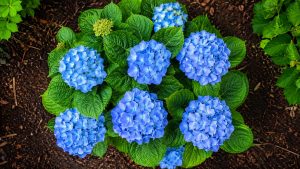
There are several types of hydrangeas commonly grown in gardens. Choosing the right variety is important because different hydrangeas have different sunlight, pruning, and climate requirements.
Bigleaf Hydrangea
Bigleaf hydrangeas are popular for their large, colorful flowers. They are often grown in areas with mild climates and can produce blue, purple, pink, or red flowers.
Some varieties bloom on old wood, while others bloom on both old and new wood. This difference is important when pruning.
Panicle Hydrangea
Panicle hydrangeas are known for their large, cone-shaped flower clusters. They are generally hardy and can tolerate more sunlight than many other hydrangea types.
These plants typically bloom on new wood, making them easier to prune and suitable for many home gardens.
Smooth Hydrangea
Smooth hydrangeas are native to North America and are valued for their large, rounded flower heads. They bloom on new growth and are often considered easy-care plants.
Their flowers are commonly white or greenish but may turn attractive shades as they mature.
Oakleaf Hydrangea
Oakleaf hydrangeas have distinctive leaves shaped somewhat like oak leaves. In addition to beautiful flowers, they offer excellent fall foliage color.
They generally prefer well-drained soil and can be a great choice for woodland-style gardens.
Mountain Hydrangea
Mountain hydrangeas are similar to bigleaf hydrangeas but are often more compact. They can produce attractive lacecap-style flowers and are suitable for smaller garden spaces.
3. How to Grow Hydrangeas
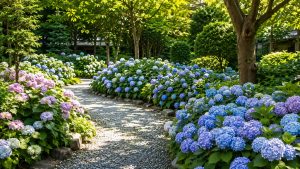
Growing hydrangeas is relatively easy when you choose the right location and provide the plant with enough moisture and good soil.
Choose the right location. Most hydrangeas grow best in a spot with morning sun and afternoon shade. In hot climates, protection from strong afternoon sunlight can help prevent wilting and leaf scorch. Make sure the area has good air circulation and enough space for the plant to grow.
Prepare the soil. Hydrangeas prefer rich, moist, well-drained soil. Before planting, mix compost or other organic matter into poor or compacted soil to improve drainage and soil quality.
Plant your hydrangea. Dig a hole about twice as wide as the root ball and roughly the same depth. Place the plant in the hole so the top of the root ball is level with the surrounding soil. Fill the hole with soil, gently firm it around the roots, and water thoroughly.
Add mulch. Apply a layer of organic mulch around the base of the plant. Mulch helps keep the soil moist, control weeds, and protect the roots from temperature changes. Keep the mulch a few inches away from the main stem to prevent excess moisture and rot.
Water regularly. Newly planted hydrangeas need consistent moisture while their roots become established. Check the soil regularly and water when the top layer begins to dry. During hot or dry weather, water more often to prevent the plant from becoming stressed.
With the right location, well-drained soil, regular watering, and a layer of mulch, your hydrangea can grow healthy and produce beautiful flowers throughout the growing season.
4. How Much Sun Do Hydrangeas Need?
Hydrangeas generally grow best with morning sunlight and afternoon shade, especially in warmer climates.
Too much intense afternoon sun can cause leaves to wilt and flowers to fade more quickly. However, hydrangeas also need enough light to produce healthy growth and abundant flowers.
Panicle hydrangeas usually tolerate more sun than bigleaf hydrangeas, particularly when they receive adequate water.
If you live in a hot climate, planting hydrangeas where they receive morning sun and protection from strong afternoon heat is often a good choice.
5. What Is the Best Soil for Hydrangeas?
Hydrangeas prefer rich, well-drained soil that holds enough moisture without becoming waterlogged.
Before planting, improve poor soil by adding compost or other organic matter. This can improve soil structure and help provide nutrients for healthy plant growth.
The ideal soil pH depends partly on the hydrangea variety and the flower color you want. Bigleaf hydrangeas are especially well known for changing flower color based on soil chemistry.
However, soil pH is only one factor affecting flower color. The specific hydrangea variety also plays an important role.
6. How Often Should You Water Hydrangeas?
Hydrangeas need consistent moisture, particularly during their first growing season and during hot or dry weather.
Water deeply when the top layer of soil begins to dry. Instead of watering lightly every day, it is generally better to provide a thorough watering that reaches the root zone.
The exact watering frequency depends on your climate, soil type, rainfall, and the size of the plant.
Watch the leaves for signs of water stress. Wilting leaves can indicate that the plant needs water, although excessive heat can also cause temporary midday wilting.
Avoid keeping the soil constantly soggy. Poor drainage and excessive moisture can lead to root problems.
7. How to Fertilize Hydrangeas
Hydrangeas generally benefit from fertile soil and a balanced feeding routine.
Apply a suitable slow-release fertilizer in spring as new growth begins. Follow the product instructions carefully, as too much fertilizer can encourage excessive leaf growth at the expense of flowers.
Avoid over-fertilizing late in the growing season because it may encourage new growth that is more vulnerable to cold weather.
Adding compost around the plant can also help improve soil quality over time.
8. How to Prune Hydrangeas
Pruning hydrangeas can seem confusing because different types bloom on different types of wood.
Some hydrangeas produce flowers on old wood, meaning the flower buds develop on stems from the previous growing season. Others bloom on new wood, meaning flowers develop on new growth produced during the current season.
For old-wood bloomers, heavy pruning at the wrong time can remove next year’s flower buds. These plants are often best pruned immediately after flowering, if pruning is necessary.
For new-wood bloomers, pruning during late winter or early spring is generally more appropriate.
When pruning, remove dead, damaged, or weak branches first. You can also remove spent flowers to improve the plant’s appearance.
Always identify your hydrangea variety before making major pruning cuts.
9. When Do Hydrangeas Bloom?
Hydrangea bloom times vary depending on the species, variety, climate, and growing conditions.
Many hydrangeas begin flowering in late spring or early summer and continue producing flowers through summer. Some varieties may keep their flower heads into fall, providing additional seasonal interest.
If your hydrangea is healthy but does not bloom, several factors could be responsible. Common causes include improper pruning, insufficient sunlight, excessive fertilizer, winter damage, or immature plants.
Understanding whether your hydrangea blooms on old wood or new wood is especially important when trying to solve flowering problems.
10. How to Change Hydrangea Flower Color
One of the most fascinating characteristics of certain hydrangeas is their ability to change flower color.
Bigleaf hydrangeas can produce blue or purple flowers when aluminum is available to the plant in acidic soil conditions. In more alkaline soil, flowers may appear pink or reddish.
However, not every hydrangea can change color. White-flowered varieties generally remain white, although their flowers may naturally change shades as they age.
If you want to influence flower color, test your soil first. Changing soil chemistry can take time, and results may vary depending on the plant variety and existing soil conditions.
11. Common Hydrangea Problems and Solutions
Even healthy hydrangeas can experience problems. Fortunately, many common issues can be prevented with proper care.
Wilting Leaves
Wilting may be caused by hot weather, insufficient water, or root problems. Check the soil moisture before watering and make sure the planting area drains well.
Yellow Leaves
Yellow leaves can result from several factors, including overwatering, poor drainage, nutrient deficiencies, or natural leaf aging.
Check the soil and watering routine before adding fertilizer.
No Flowers
A hydrangea that produces leaves but few flowers may have been pruned at the wrong time. Too much shade, excessive fertilizer, or cold damage can also affect flowering.
Brown Leaf Edges
Brown edges may appear when plants experience drought, heat stress, or inconsistent watering. Providing consistent moisture and afternoon protection can help in hot climates.
Powdery Mildew
Powdery mildew can develop when air circulation is poor and conditions are humid. Space plants properly, avoid wetting the foliage unnecessarily, and remove heavily affected leaves.
12. How to Protect Hydrangeas in Winter
Winter protection depends on the hydrangea variety and your local climate.
Some types are quite cold hardy, while others are more sensitive to freezing temperatures. Hydrangeas that bloom on old wood may be especially vulnerable because their flower buds can be damaged by severe winter conditions.
Apply a layer of mulch around the root zone to help protect the roots from temperature fluctuations.
In colder areas, gardeners may also use protective coverings for more sensitive varieties. Avoid wrapping plants too tightly or using materials that trap excessive moisture.
13. Frequently Asked Questions About Hydrangeas
Are hydrangeas easy to grow?
Yes. Many hydrangea varieties are relatively easy to grow when planted in suitable soil and provided with adequate moisture and light.
Do hydrangeas need full sun?
Most hydrangeas prefer morning sun and afternoon shade, especially in hot climates. Some varieties, such as panicle hydrangeas, can tolerate more sun when adequately watered.
How often should I water a hydrangea?
Water when the soil begins to dry, providing enough water to reach the root zone. Newly planted hydrangeas and plants growing in hot weather may need more frequent watering.
Why is my hydrangea not blooming?
Possible causes include incorrect pruning, insufficient light, winter damage, excessive fertilizer, or the plant being too young to flower reliably.
Can I grow hydrangeas in pots?
Yes. Many hydrangeas can grow successfully in containers when provided with a large enough pot, quality potting soil, good drainage, and consistent watering.
Can hydrangeas grow in shade?
Hydrangeas can tolerate partial shade, but they generally need some sunlight to produce strong growth and flowers. Too much shade may reduce flowering.
14. Conclusion
Hydrangeas are beautiful, versatile flowering plants that can become a stunning feature in almost any garden. With the right variety, suitable sunlight, rich and well-drained soil, consistent watering, and proper pruning, hydrangeas can reward gardeners with spectacular blooms year after year.
The most important step is to understand the specific type of hydrangea you are growing. Different varieties have different requirements for sunlight, pruning, winter protection, and flower color.
Whether you’re planting your first hydrangea or looking to improve the health of an established shrub, a little attention to growing conditions can make a big difference. With proper care, your hydrangea can become one of the most attractive and long-lasting plants in your garden.