The Japanese cherry blossom, also known as sakura or cherry blossom, is a beautiful symbol of spring. Its delicate pink or white flowers and graceful branches make it a favorite ornamental tree in gardens and landscapes.
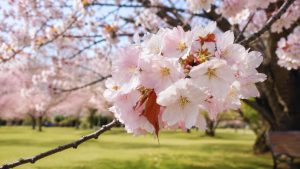
At GardenGuideHub, we explore what makes these trees special, from popular varieties and bloom time to planting and care. Whether you love sakura or want to grow a Japanese cherry blossom tree, this guide will help you get started.
What Is a Japanese Cherry Blossom?
A Japanese cherry blossom generally refers to ornamental flowering cherry trees that are widely associated with Japanese gardens and spring landscapes.
Unlike sweet cherries or sour cherries grown mainly for fruit, ornamental Japanese cherry trees are primarily planted for their flowers and attractive appearance.
Depending on the variety, the flowers may be white, pale pink, or deeper pink. Some varieties have single flowers with a simple appearance, while others produce layers of petals that create a fuller display.
Japanese cherry blossom trees are deciduous, meaning they lose their leaves during winter. In spring, the branches become covered with flowers before or around the time new leaves appear.
Their mature size varies considerably. Some trees can become large landscape specimens, while dwarf or weeping forms are better suited to smaller gardens.
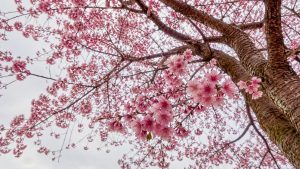
Japanese Cherry Blossom Characteristics
Japanese cherry blossom trees are known for their beautiful spring flowers, graceful branches, and attractive foliage. Flowers range from white to light or deep pink and may be single or double-petaled. After blooming, oval green leaves develop and some varieties produce colorful fall foliage. Depending on the variety, trees can have upright, rounded, spreading, or weeping canopies. Bloom time varies from early to late spring depending on the variety and local climate.
Popular Japanese Cherry Blossom Varieties
There are many ornamental cherry varieties to choose from, each with its own flower color, growth habit, and mature size.
Somei Yoshino
Somei Yoshino is one of the best-known Japanese flowering cherry trees. It produces abundant white to pale pink flowers and has an elegant branching structure.
The flowers often appear in large numbers, creating the classic spring cherry blossom appearance seen in many Japanese landscapes.
Kanzan
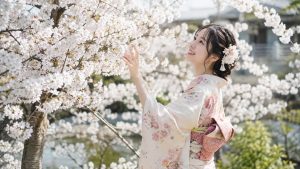
Kanzan is especially popular for its large, double pink flowers.
The flowers are fuller than those of many single-flowered varieties, making Kanzan an excellent choice when the goal is a strong spring floral display.
Shirotae
Shirotae is known for its soft white flowers and attractive spreading form.
Its elegant appearance makes it a popular choice for gardens and landscape settings where a lighter flower color is preferred.
Weeping Cherry Varieties
Weeping Japanese cherry trees have branches that arch downward, creating a graceful and distinctive appearance.
They can work especially well as specimen trees in lawns, garden entrances, or other locations where their shape can be appreciated from several angles.
When selecting a Japanese cherry blossom variety, consider the tree’s mature height, width, flower color, bloom time, and growth habit rather than choosing based only on appearance.
Japanese Cherry Blossom Meaning
The Japanese cherry blossom has deep cultural importance in Japan and has become a symbol recognized around the world.
Cultural and Spiritual Meaning
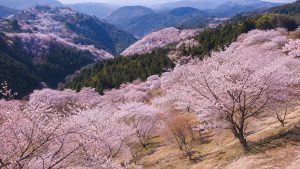
Cherry blossoms are strongly associated with spring, renewal, and the beauty of nature.
In Japan, the tradition of enjoying cherry blossoms is known as Hanami. People gather under flowering trees to appreciate the seasonal display and spend time with family and friends.
Because the flowers bloom for a relatively short period, cherry blossoms are also often associated with the temporary nature of beauty and the changing seasons.
For many people, the arrival of cherry blossoms represents a fresh beginning and the transition from winter into spring.
In Japanese culture, cherry blossoms symbolize beauty, renewal, and the fleeting nature of life. Learn more about the meaning of Japanese cherry blossoms in Japanese culture.
Landscape and Garden Value
Beyond their cultural meaning, Japanese cherry blossom trees have tremendous ornamental value.
They can be planted in home gardens, parks, public landscapes, streets, schools, and other outdoor spaces. A mature flowering tree can become a natural focal point when it is in full bloom.
Growing Conditions for Japanese Cherry Blossom Trees
Providing suitable growing conditions is one of the most important steps when growing a Japanese cherry blossom tree.
Climate
Japanese flowering cherries generally perform best in climates that provide a suitable winter period followed by a moderate growing season.
However, individual varieties can have different climate requirements. Before planting, check whether the selected variety is suitable for your local growing conditions.
Areas with extremely hot summers, very mild winters, or unpredictable spring freezes may require more careful variety selection.
Soil
Japanese cherry blossom trees prefer fertile, well-drained soil.
The soil should hold enough moisture to support healthy growth without remaining saturated for long periods. Poor drainage can create problems for the roots.
If the planting site has heavy or compacted soil, improving drainage and incorporating suitable organic matter can help create a better growing environment.
Sunlight
Full sun is generally best for Japanese cherry blossom trees.
A location that receives several hours of direct sunlight each day can encourage healthy growth and better flowering.
Avoid planting the tree where buildings or large trees will block most of the available sunlight.
Water
Newly planted Japanese cherry blossom trees need consistent moisture while their root systems become established.
Water deeply when the soil begins to dry, particularly during hot or dry periods. At the same time, avoid keeping the soil constantly saturated.
Once established, watering needs will depend on rainfall, soil type, temperature, and the age of the tree.
How to Plant a Japanese Cherry Blossom Tree
Planting correctly gives a Japanese cherry blossom tree a stronger start.
Choosing a Healthy Tree
Choose a nursery tree with healthy branches, a strong root system, and no obvious signs of pests or disease.
It is also important to select a variety that fits the available planting space and your local climate.
Preparing the Planting Site
Choose a sunny location with good drainage.
Dig a planting hole that is appropriate for the tree’s root ball. The hole should provide enough room for the roots to spread naturally without forcing them into a tight space.
Avoid planting the tree too deeply. The root flare should remain at the appropriate level rather than being buried under several inches of soil.
Planting Steps
Place the tree upright in the center of the hole and carefully spread the roots if necessary.
Backfill with the native soil and gently firm the soil around the roots. Water thoroughly after planting to help settle the soil and remove large air pockets.
A young tree may benefit from temporary staking if the planting site is exposed to strong winds.
Best Time to Plant
The best planting time depends on your climate and the condition of the tree.
For many regions, planting during dormancy or early in the growing season allows the tree to establish roots before facing the stress of hot summer weather.
Japanese Cherry Blossom Tree Care
Proper Japanese cherry blossom tree care helps maintain healthy growth and attractive flowering year after year.
Water newly planted trees regularly while they establish their root systems. A layer of organic mulch around the root zone can help conserve soil moisture and moderate soil temperature.
Keep mulch slightly away from the trunk to prevent excessive moisture from remaining against the bark.
Fertilization should be based on the tree’s growth and soil conditions rather than applying large amounts of fertilizer automatically. Too much nitrogen can encourage excessive leafy growth without necessarily improving flowering.
Regularly inspect the leaves, branches, and trunk for signs of pests, disease, or unusual growth.
Young trees may require more attention than established trees, especially during periods of drought, extreme heat, or severe winter weather.
Pruning Japanese Cherry Blossom Trees
Pruning can help maintain the tree’s structure, remove damaged branches, and improve the overall appearance of the canopy.
Avoid heavy pruning simply to change the natural shape of the tree. Japanese cherry trees generally look best when their natural growth habit is allowed to develop.
Remove dead, damaged, or crossing branches when necessary. When larger structural pruning is needed, make careful cuts rather than removing large amounts of growth at once.
The timing of pruning can vary by variety and local conditions, so avoid unnecessary pruning during periods when the tree is actively flowering.
Growing Japanese Cherry Blossom Trees in Pots
Some compact Japanese cherry blossom varieties can be grown in containers, although they generally require more attention than trees planted directly in the ground.
Choose a container with good drainage and enough room for the root system. Use a well-draining growing medium and make sure excess water can escape freely.
Container-grown trees usually dry out faster than trees planted in the ground, so monitor soil moisture regularly.
Repotting may eventually be necessary as the root system develops. Compact or dwarf varieties are generally better choices for container growing than large-growing trees.
Japanese Cherry Blossom Leaf Color Through the Seasons
Japanese cherry blossom trees change noticeably throughout the year.
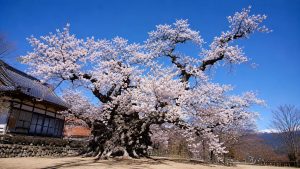
In early spring, the tree’s branches become covered with flowers, creating the characteristic cherry blossom display.
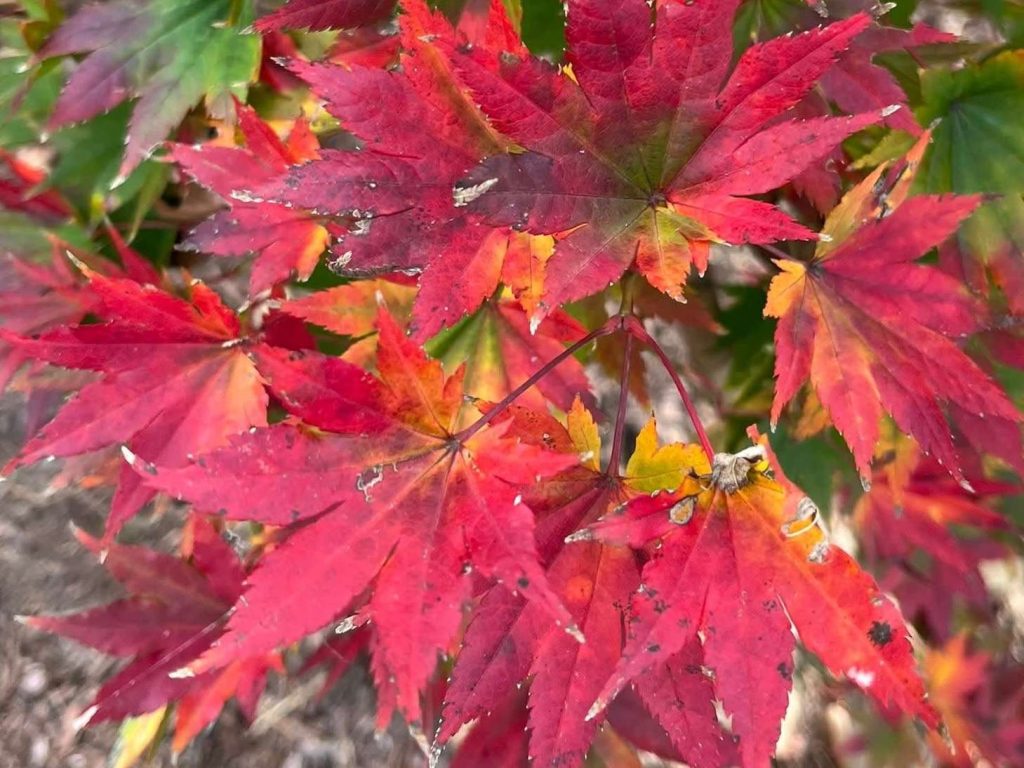
After flowering, green leaves develop and provide a fresh summer appearance. Depending on the variety, the foliage may develop yellow, orange, bronze, or reddish tones during fall.
As temperatures drop, the leaves eventually fall, leaving the branching structure visible through winter.
This seasonal change is one reason Japanese flowering cherries remain attractive even outside their main blooming period.
Common Pests and Diseases
Like other ornamental trees, Japanese cherry blossom trees can experience pest and disease problems.
Common issues may include aphids, scale insects, caterpillars, fungal leaf diseases, and branch or trunk problems.
The best approach is to inspect the tree regularly rather than waiting until damage becomes severe.
Look for curled or discolored leaves, unusual spots, damaged branches, insect activity, or changes in overall growth.
Good air circulation, appropriate watering, proper planting, and avoiding unnecessary stress can help support healthier trees.
If a serious pest or disease problem develops, identify the specific issue before choosing a treatment.
Tips for Growing Japanese Cherry Blossoms
A few practical tips can help keep your Japanese cherry blossom tree healthy and attractive:
- Keep the soil evenly moist, especially during hot and dry weather.
- Add mulch around the root zone to help retain moisture.
- Avoid letting water remain around the roots for long periods.
- Prune lightly and remove dead or damaged branches when needed.
- Avoid excessive fertilizer, which can encourage weak, leafy growth.
- Check the leaves and branches regularly for pests or signs of disease.
With regular observation and simple, consistent care, Japanese cherry blossoms can stay healthy and produce beautiful blooms each spring.
Conclusion
The Japanese cherry blossom is much more than a beautiful spring flower. Its graceful shape, seasonal changes, cultural meaning, and spectacular blooms make it one of the most attractive ornamental trees for gardens and landscapes.
Choosing the right variety is the foundation of successful growing. Give the tree plenty of sunlight, well-drained soil, appropriate moisture, and enough room to develop its natural shape.
With consistent care and the right growing conditions, a Japanese cherry blossom tree can become a memorable focal point in the landscape and bring a beautiful display of spring flowers year after year.
Japanese Cherry Blossom FAQs
When do Japanese cherry blossoms bloom?
Japanese cherry blossoms generally bloom in spring, but the exact timing depends on the variety, climate, and local weather conditions.
How much sunlight does a Japanese cherry blossom tree need?
Most Japanese cherry blossom trees grow best in full sun with several hours of direct sunlight each day.
Can Japanese cherry blossom trees grow in warm climates?
Some varieties can grow in warmer regions, but it is important to choose a variety that is suited to your local climate.
Do Japanese cherry blossom trees need a lot of water?
Young trees need regular watering while their roots become established. Mature trees may need additional water during extended dry periods.
Can you grow a Japanese cherry blossom tree in a pot?
Yes, compact and dwarf varieties can be grown in containers with good drainage, suitable soil, and enough room for root growth.
Why is my Japanese cherry blossom tree not blooming?
Lack of sunlight, unsuitable growing conditions, tree age, pruning, weather, or variety-specific flowering habits can affect blooming.
Should Japanese cherry blossom trees be pruned?
Light pruning can remove dead, damaged, or crossing branches and help maintain a healthy structure without changing the tree’s natural shape.