Propagating roses from cuttings is one of the easiest ways to grow new rose plants at home. Instead of buying another plant, you can take a healthy stem from an existing rose and give it the chance to develop its own roots. When the right cutting and growing conditions come together, a single stem can eventually become a new rose plant.
The good news is that you do not necessarily need rooting hormone to propagate roses. A healthy cutting, a suitable growing medium, consistent moisture, and the right amount of light are often the most important factors for successful propagation.
Preparing Rose Cuttings Before Propagation
Successful propagation starts with good preparation. A weak, damaged, or diseased stem is much less likely to develop into a healthy new plant. Taking a little time to choose the right cutting and prepare the growing medium can make the process much easier.
Choose a Healthy Rose Stem
Start with a healthy rose stem that shows no obvious signs of disease, pests, damage, or severe wilting. A stem that is neither extremely soft and young nor very old and woody is usually a good choice for propagation.
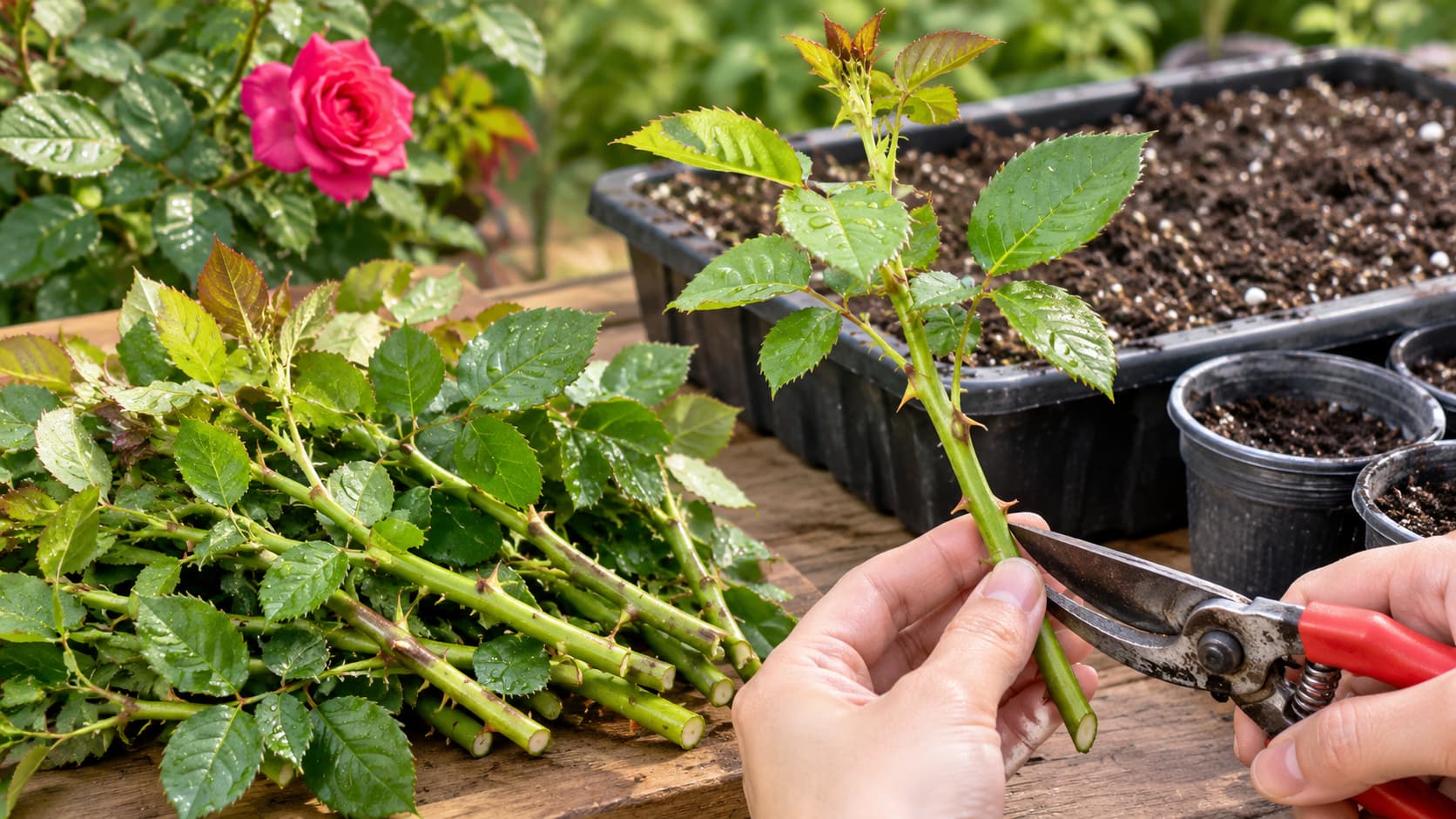
A cutting around 6 to 8 inches long is easy to handle. Look for a section with several healthy leaf nodes, since these are important points where new growth and roots can develop.
Use a clean, sharp pair of pruning shears or a knife to make the cut. A slightly angled cut at the bottom of the stem can provide a clean surface for planting.
Remove most of the leaves from the lower part of the cutting. You can leave a few leaves near the top so the cutting can continue to produce energy while it begins developing roots.
Choose the Right Time
Timing can also affect the success of rose propagation. Mild weather and moderate humidity generally create better conditions than periods of extreme heat.
For many gardeners, spring and fall are good times to take rose cuttings. If you live in a warm climate, you can also propagate roses during other mild periods, but it is best to avoid extremely hot weather.
Take cuttings in the early morning or during the cooler part of the day rather than during the hottest part of the afternoon. This helps reduce moisture loss from the freshly cut stem.
Prepare the Growing Medium
A rose cutting does not have an established root system yet, so the growing medium needs to provide both moisture and good drainage.
A loose, well-draining medium is usually a better choice than heavy garden soil. Materials such as perlite, coarse sand, coco coir, or a combination of these can provide a suitable environment for developing roots.
The goal is to keep the medium slightly moist without allowing it to stay waterlogged.
You generally do not need a large amount of fertilizer at this stage. Since the cutting has not developed a proper root system, good drainage and moisture control are more important than supplying lots of nutrients.
Use a clean container with drainage holes, and make sure the growing medium is free from obvious contaminants or plant debris.
How to Propagate Roses From Cuttings
Once your cutting and growing medium are ready, you can begin the propagation process.
First, lightly moisten the growing medium. It should feel damp but not saturated with water.
Next, make a small hole in the medium using a pencil, stick, or similar tool. Making the hole first helps prevent the bottom of the cutting from being damaged when you insert it.
Place the lower end of the rose cutting into the hole and gently firm the growing medium around the stem so it stays upright.
At least one or two leaf nodes can be positioned below the surface, while the remaining leaves stay above the medium.
After planting, give the cutting a gentle watering or misting so the growing medium settles around the stem.
There is no need to push the cutting extremely deep. The important thing is to keep the lower portion securely in contact with the moist growing medium while allowing the upper part to remain above the surface.
Can You Use Aloe Vera When Propagating Roses?
Aloe vera is sometimes used by home gardeners as a natural option when propagating plants from cuttings. Some gardeners apply a small amount of fresh aloe vera gel to the bottom of a cutting before placing it into the growing medium.
However, aloe vera should not be considered a guaranteed rooting treatment or a replacement for good propagation conditions.
If you want to try it, use fresh, clean aloe vera gel and apply only a thin layer to the cut end. More importantly, focus on the fundamentals: start with a healthy cutting, use a well-draining medium, maintain appropriate moisture, and provide suitable light.
A healthy rose cutting can also be propagated without using aloe vera or any other rooting product.
Caring for Rose Cuttings After Planting
The weeks after planting are often the most important part of the process. A fresh cutting does not have an established root system, so it can lose moisture more quickly than a mature rose plant.
Maintain Consistent Moisture
Keep the growing medium lightly and consistently moist. If the surface begins to dry out, give it a small amount of water or mist it gently.
Avoid keeping the medium constantly soggy. Too much moisture combined with poor air circulation can increase the risk of stem rot and fungal problems.
Some gardeners cover rose cuttings with a clear plastic bag or use a clear container to create a more humid environment. If you do this, make sure there is enough ventilation and check the cutting regularly.
The goal is a humid environment without excessive condensation or stagnant air.
Provide the Right Light
Fresh rose cuttings need light, but placing them directly in strong sunlight can cause them to dry out quickly.
A bright location with indirect or filtered light is usually more suitable during the early stages of propagation.
Once the new plant has developed a stronger root system and begins growing steadily, you can gradually introduce it to brighter conditions.
Keep Good Air Circulation
Humidity can help prevent cuttings from drying out, but a constantly closed and stagnant environment can create problems.
If you use a plastic cover, allow some fresh air to circulate. Check the cutting regularly for signs of trouble, such as a soft or discolored stem or visible mold.
Good airflow helps create a healthier environment while the cutting is developing roots.
How Long Does It Take for Rose Cuttings to Root?
There is no single timetable for every rose cutting. The time required for roots to develop can vary depending on the rose variety, the age of the stem, temperature, humidity, light, and the growing medium.
Try to be patient during this stage. Avoid pulling the cutting out of the medium every few days to check for roots. Disturbing the cutting can damage delicate roots before they have a chance to become established.
Instead, watch for changes in the plant above the soil. A cutting that remains healthy and begins producing new growth may be developing successfully. However, new leaves alone do not always mean that a strong root system has already formed.
When Should You Move a Rose Cutting to a Pot?
Once the cutting has developed a healthy root system and begins growing steadily, it can be moved into a larger container.
Handle the young plant carefully when transplanting it. Newly formed roots can be delicate and are easily damaged.
Choose a container with drainage holes and fill it with a loose, well-draining potting mix suitable for roses or other flowering plants.
After transplanting, keep the young rose in a protected location with gentle light while it adjusts to its new container.
Avoid exposing it to intense sunlight immediately after transplanting. Once the plant becomes established, you can gradually increase its exposure to stronger light.
Common Mistakes When Propagating Roses
One of the most common mistakes is starting with a weak or unhealthy cutting. Even the best propagation technique cannot guarantee success if the original stem is already struggling.
Overwatering is another common problem. It is easy to assume that keeping the cutting very wet will encourage roots to form, but the developing stem also needs oxygen around its base.
Placing fresh cuttings in strong, direct sunlight can also cause them to lose moisture too quickly.
Another mistake is checking for roots too often. Rose cuttings need time to develop, and patience is an important part of the process.
If one cutting fails, do not assume that you did everything wrong. Propagation success can vary from one cutting to another, which is why taking several healthy cuttings can give you a better chance of growing a new rose plant.
How to Improve Your Chances of Success
You do not need a collection of special products to propagate roses successfully. Instead, focus on the basic growing conditions.
Choose a healthy stem, use clean tools, prepare a loose and well-draining growing medium, and keep the cutting from drying out.
Provide bright but gentle light, maintain good airflow, and avoid excessive watering.
Most importantly, try to keep the environment stable during the first few weeks. A rose cutting needs time to transition from a piece of stem without roots into an independent young plant.
Conclusion
Learning how to propagate roses from cuttings does not have to be complicated. A healthy stem, a suitable growing medium, consistent moisture, and appropriate light are the most important ingredients for the process.
You can start with several cuttings rather than relying on just one. With a little patience and regular care, you may eventually have new rose plants ready to grow in your garden.
Propagating roses this way can also be a rewarding gardening project because you get to watch a simple cutting gradually develop into a living plant.
Frequently Asked Questions
Do I need rooting hormone to propagate roses?
No. Rose cuttings can develop roots without rooting hormone. However, success can vary depending on the rose variety and growing conditions.
How long should a rose cutting be?
A cutting around 6 to 8 inches long is a practical size for propagation. It should have several healthy leaf nodes and enough stem to plant securely in the growing medium.
Can I propagate roses in water?
You can try rooting rose cuttings in water, but roots that develop in water may adjust differently when the cutting is moved into soil. For long-term propagation, rooting the cutting directly in a suitable growing medium is often a more practical approach.
Should rose cuttings be placed in direct sunlight?
Fresh cuttings generally should not be placed in strong, direct sunlight. Bright, indirect, or filtered light is usually a better choice while the cutting is developing roots.
Why is my rose cutting not rooting?
Several factors can affect rooting. The cutting may be too young or too old, it may have lost too much moisture, the growing medium may be too wet or poorly drained, or the variety may simply be more difficult to propagate from cuttings.