Japanese maple trees are known for their graceful branches, delicate leaves, and beautiful shape. With the right care, they can become an attractive focal point in a garden for many years. Pruning is an important part of that care, but Japanese maples do not usually need heavy trimming.
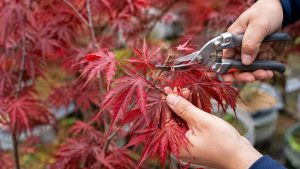
Knowing when to prune Japanese maple is more important than cutting frequently. The right timing helps reduce stress on the tree, makes wounds heal more easily, and allows you to maintain the tree’s natural form.
When Is the Best Time to Prune Japanese Maple?
The best time to prune a Japanese maple depends on the type of pruning you need to do.
For most routine pruning, late winter is a good time, especially when the tree is dormant and has not started producing new spring growth. At this time, the branch structure is easier to see because the leaves are gone.
Another suitable period is mid to late summer, particularly for removing small unwanted branches or making light corrections to the tree’s shape.
Avoid major pruning when the tree is actively producing strong new growth in spring. Fresh cuts during this period may cause excessive sap flow and can place unnecessary stress on the tree.
Pruning Japanese Maple in Late Winter
Late winter is often the easiest season for structural pruning.
Without leaves covering the branches, you can clearly see:
- Crossing branches
- Dead or damaged wood
- Branches growing inward
- Weak or poorly positioned branches
- Unwanted shoots near the trunk
- Branches that affect the tree’s overall shape
Before making a cut, step back and look at the entire tree. Japanese maples naturally develop an elegant branching pattern, so the goal should be to improve that structure rather than create a perfectly symmetrical shape.
Remove only what is necessary.
Summer Pruning for Japanese Maple
Light pruning can also be done during summer.
Summer pruning is useful when you notice a branch that is growing in the wrong direction or becoming too long. It can also help you make small adjustments after the tree has fully leafed out.
However, summer is not the best time for aggressive pruning. Removing too much foliage can expose branches and bark to stronger sunlight and may stress the tree during hot weather.
If you need to make larger structural changes, it is usually better to wait until the tree is dormant.
What Should You Prune?
The first branches to consider are dead, broken, or damaged branches. These can be removed whenever necessary rather than waiting for a specific pruning season.
Next, look for branches that rub against each other. Constant rubbing can damage the bark and create weak areas over time.
Branches that grow toward the center of the tree may also need attention. Removing selected inward-growing branches improves airflow and allows the natural branch structure to become more visible.
You can also remove suckers or unwanted shoots growing from the base or trunk.
When possible, preserve branches that contribute to the tree’s natural layered appearance. This is one of the characteristics that makes Japanese maples so attractive.
How to Prune a Japanese Maple
Start by inspecting the tree from several angles. Decide which branches need to be removed before picking up your pruning tools.
Use clean, sharp pruning shears for small branches. Larger branches may require a pruning saw.
Make each cut carefully and avoid damaging the trunk or nearby branches.
For a branch that needs to be completely removed, cut close to the branch collar without cutting into it. The branch collar is the slightly swollen area where a branch connects to the trunk or another larger branch.
Do not leave long stubs behind. At the same time, avoid making flush cuts against the trunk because they can create unnecessarily large wounds.
For branches that only need shortening, prune back to a healthy side branch or bud that is pointing in a useful direction.
Avoid Over-Pruning
One of the most common mistakes when pruning Japanese maple is removing too much at once.
Japanese maples generally look better when their natural form is preserved. Heavy pruning can make the tree look unnatural and may encourage vigorous shoots that do not fit the original structure.
As a simple rule, remove a small amount, step back, and look at the tree again before making another cut.
If the tree needs extensive structural correction, it may be better to spread the work over several pruning sessions rather than trying to reshape everything in one day.
How Often Should You Prune?
A healthy Japanese maple does not need to be pruned on a strict annual schedule.
Young trees may need occasional pruning as their structure develops. Mature trees usually require only maintenance pruning to remove dead, damaged, crossing, or poorly positioned branches.
Some Japanese maples naturally have an attractive shape with very little intervention.
Instead of pruning simply because it is a certain time of year, inspect the tree and determine whether a particular branch actually needs to be removed.
Pruning Young Japanese Maples
Young Japanese maples benefit from careful structural pruning.
During the first few years, focus on establishing a strong and attractive framework. Look for branches that compete with the main structure or grow in awkward directions.
Do not remove every small branch. Young branches contribute to the tree’s future shape and removing too many can slow development.
Patience is especially useful with young Japanese maples. It is easier to remove an unwanted branch later than to replace a branch that was removed unnecessarily.
Pruning Mature Japanese Maples
Mature trees should generally be pruned more conservatively.
Start by removing dead or damaged wood. Then examine branches that cross, rub, or grow into crowded areas.
If the canopy has become dense, selectively remove a few branches to open the structure. Avoid thinning large sections of the canopy all at once.
For an established Japanese maple with a complicated structure, take your time. Small cuts can make a significant difference when the tree already has a well-developed form.
Tools for Japanese Maple Pruning
Clean and sharp tools make pruning easier and reduce unnecessary damage.
For small branches, hand pruners are usually sufficient. Loppers can be useful for slightly larger branches, while a pruning saw is better for substantial limbs.
Before moving from one tree to another, clean your pruning tools. Keeping tools clean is a simple part of good garden maintenance.
Always use a tool that is appropriate for the branch size rather than forcing a small pair of shears to cut a large limb.
Common Pruning Mistakes
Several simple mistakes can affect the appearance and health of a Japanese maple.
Pruning at the wrong time: Heavy pruning during periods of active growth or extreme weather can place additional stress on the tree.
Removing too many branches: Excessive pruning can destroy the tree’s natural character.
Leaving long stubs: Stubs can interfere with the tree’s natural wound response.
Making flush cuts: Cutting directly against the trunk can create a larger wound than necessary.
Ignoring the overall shape: Looking only at individual branches can result in an unbalanced canopy.
Good pruning is not about making every branch perfect. It is about making a few thoughtful cuts that support the tree’s natural structure.
Final Tips for Pruning Japanese Maple
The best approach to Japanese maple pruning is gentle and selective. Late winter is generally a convenient time for structural work, while light summer pruning can be useful for small corrections.
Before cutting, study the tree carefully. Remove dead, damaged, crossing, and poorly positioned branches first. Keep the natural branching pattern whenever possible, and avoid removing large amounts of healthy growth unnecessarily.
With patience and a light touch, pruning can help your Japanese maple maintain its elegant shape without losing the character that makes it special.
For a broader guide to this beautiful ornamental tree, see our complete guide to Japanese Maple pruning and learn more about caring for Japanese maple trees throughout the growing season.