There are plenty of beautiful flowering plants, but orchids have a charm of their own. I used to think they were difficult to grow, but over time, I realized the biggest mistake was treating them like ordinary houseplants.
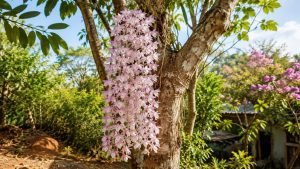
Many orchids naturally grow on trees and branches, with roots that need air as much as moisture. Once you understand how they grow in nature, caring for them becomes much easier and far more enjoyable.
In this article, we’ll take a closer look at some of the most popular types of orchids and explore simple care practices that can help keep them healthy, encourage strong growth, and produce beautiful blooms.
What Are Orchids?
Orchids are flowering plants in the Orchidaceae family. They are found in many parts of the world, especially in tropical and subtropical regions, although orchids also grow naturally in cooler areas.
There are thousands of orchid species, along with countless hybrids. That is why orchids can look so different from one another.
Some have large, colorful flowers, while others produce tiny blooms in unusual shapes. Some grow in pots indoors, while others can be seen attached to trees in warm outdoor environments.
One thing that surprised me when I first became interested in orchids was how many of them don’t actually grow in soil.
Orchids and Their Meaning
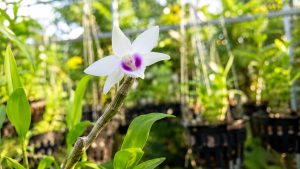
Orchids have long been associated with beauty, elegance, love, and refinement.
Because of their unusual flowers, they are often given as gifts for special occasions or used to brighten homes and offices.
I think part of the attraction comes from the fact that orchids don’t always give you flowers immediately. You may care for the plant for months before seeing a new flower spike.
Then suddenly, the buds begin forming.
That waiting makes the flowers feel even more special.
Different orchid colors can also carry different traditional meanings. White orchids are often associated with purity and elegance, while pink orchids can be connected with affection and admiration.
Of course, people grow orchids for many reasons. Sometimes you simply like the way they look.
And honestly, that’s reason enough.
How to Grow and Care for Orchids
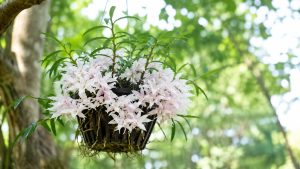
The best orchid care starts with understanding what the plant is asking for.
Instead of trying to keep the roots constantly wet, I think about providing a balance of moisture, air, light, and warmth.
Give Orchids the Right Amount of Light
Most orchids enjoy plenty of bright light, but that doesn’t necessarily mean hours of harsh direct sunlight.
An east-facing window can be a good spot for many indoor orchids because it provides bright morning light.
If an orchid sits in a very dark room, it may grow leaves but struggle to produce flowers.
If the leaves become very pale or show signs of sun damage, the plant may be receiving too much intense light.
When moving an orchid to a brighter location, I prefer doing it gradually. Plants can get stressed when their environment changes suddenly.
How Often Should You Water Orchids?
This is one area where I don’t recommend following a strict schedule.
You might hear that orchids should be watered once a week, but that doesn’t work equally well for every plant.
An orchid growing in a bark mix may dry at a different speed from one growing in moss. A mounted orchid can dry even faster, especially in warm or dry weather.
Before watering, I check the growing medium and the roots.
If everything is still very wet, I wait.
If the medium has dried considerably and the roots are showing signs that the plant needs moisture, I water thoroughly and let the excess water drain away.
For many indoor orchids, watering once or twice a week may be reasonable, but I would treat that only as a starting point rather than a rule.
Temperature, humidity, airflow, pot size, and season all matter.
The important thing is to avoid keeping the roots constantly soaked.
Be Careful With Water Around the Leaves
When watering orchids, I also pay attention to the center of the plant.
Water that sits between leaves for a long time can create problems, particularly when the plant has poor airflow.
If water collects there, gently remove the excess and make sure the plant has enough air movement to dry.
Humidity and Airflow
Orchids generally appreciate humidity, especially tropical species.
If your home is dry, a humidifier can help. Keeping several plants together can also create a slightly more humid environment.
But don’t forget airflow.
High humidity combined with stagnant air can encourage disease problems.
I would rather have a reasonably humid space with gentle air movement than a constantly wet, closed environment.
Fertilizing Orchids
Orchids don’t need to be heavily fertilized.
During active growth, I use an appropriate orchid fertilizer according to the product instructions.
A light feeding routine is generally more sensible than applying a strong dose.
If an orchid is growing in bark, regular feeding can be useful because bark itself doesn’t provide much nutrition.
Every so often, watering thoroughly with plain water can help flush away fertilizer salts that may have accumulated around the roots.
What to Do When the Flowers Fall
When the flowers finally drop, don’t assume the orchid is dying.
This is completely normal.
The plant needs time to recover and build up energy for another flowering cycle.
I continue caring for the roots and leaves and make sure the plant receives suitable light.
Depending on the type of orchid and the condition of the flower spike, it may flower again from the same spike or produce a new one later.
Sometimes the best thing you can do is simply leave a healthy orchid alone and give it time.
How to Mount Orchids on Wood or in Baskets
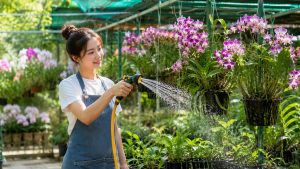
Mounting orchids is one of the most interesting ways to grow them.
If you have an orchid that naturally grows as an epiphyte, mounting it on wood can give it a growing environment that is much closer to what it experiences in nature.
How to Mount an Orchid on Wood
Start with a piece of clean, untreated wood or a suitable natural branch.
Place the orchid against the surface and arrange the roots without forcing them into an unnatural position.
Then gently secure the plant using soft ties.
Don’t tie it so tightly that the stem or roots are damaged.
At first, the orchid may look a little awkward sitting on the wood. That’s normal.
Over time, new roots can grow across the surface and attach themselves to the wood.
Once the orchid becomes established, the whole plant can look surprisingly natural.
Watering a Mounted Orchid
This is where mounted orchids require a little more attention.
There is no potting mix holding moisture around the roots, so the plant can dry much faster.
In a warm and humid outdoor environment, that may be easy to manage.
Indoors, especially when the air is dry, a mounted orchid may need more frequent watering.
I check the roots and the condition of the plant rather than trying to follow a fixed schedule.
Growing Orchids in Baskets
Open baskets are another good option.
Wooden baskets and other well-ventilated containers allow the roots to receive plenty of air and let excess water drain away quickly.
Don’t pack the roots tightly into the basket.
Give them room to spread.
As the orchid grows, the roots may eventually extend through the basket. When that happens, I usually avoid disturbing them unless there is a real reason to repot or move the plant.
Choosing Wood for Orchids
For outdoor mounting, use clean, untreated wood.
Avoid painted, chemically treated, or contaminated wood.
A naturally rough surface is often useful because it gives the roots something to grip.
You don’t need an expensive piece of wood. A simple natural branch can work beautifully when the orchid becomes established.
Common Orchid Problems, Pests, and Diseases
Even when you do everything right, orchids can occasionally develop problems.
The key is to notice changes early.
Yellow Leaves
One older leaf turning yellow isn’t necessarily a problem.
Plants naturally lose older leaves as new growth develops.
If several leaves begin turning yellow at once, however, I would check the roots, watering habits, and light levels.
Root Rot
Root rot is one of the problems I pay the most attention to.
Healthy orchid roots should generally feel firm. Soft, mushy, or badly damaged roots can indicate that the plant has been staying too wet.
Poor drainage and a compact growing medium can make the problem worse.
If you find rotten roots, remove the damaged portions with a clean tool and give the remaining healthy roots a better environment.
Pests
Orchids can occasionally attract mealybugs, scale, aphids, and spider mites.
I make a habit of looking underneath leaves and around the base of the plant when watering.
A few pests are much easier to deal with than a large infestation that has been ignored for weeks.
Black or Brown Spots
Spots on orchid leaves can have several causes, including fungal or bacterial problems, physical damage, or environmental stress.
Don’t immediately assume that every spot is the same disease.
Look at how quickly it is spreading and whether the plant is staying wet for too long.
Good airflow and avoiding unnecessary moisture on the leaves can help reduce many problems.
Orchid Isn’t Blooming
If an orchid grows leaves but refuses to flower, light is one of the first things I check.
It may also be affected by temperature, nutrition, maturity, or its natural growth cycle.
I wouldn’t change everything at once.
Make one improvement, give the plant some time, and watch what happens.
Orchid Growing Tips I’ve Learned Over the Years
After growing orchids, I have learned that the simplest habits often make the biggest difference.
Don’t water on autopilot. Check the plant first.
Don’t use heavy garden soil for an epiphytic orchid. Its roots are designed to breathe.
Don’t panic when flowers disappear. Flowering is only one part of the plant’s life cycle.
Don’t cut healthy roots just because they look unusual. Orchid roots can look very different from ordinary plant roots.
Don’t keep moving the plant around. Once you’ve found a suitable location, give it time to settle.
Don’t ignore the roots. Flowers may tell you that the plant is attractive, but the roots often tell you whether it is actually healthy.
And one of the biggest lessons I’ve learned is that orchids usually don’t need as much attention as people think.
They need the right conditions more than they need constant care.
Beautiful and Easy-to-Grow Orchid Varieties
There are far too many beautiful orchids to list them all, but a few are especially popular with home gardeners.
Phalaenopsis Orchids
Phalaenopsis, commonly called moth orchids, are probably the easiest orchids for many beginners to find and grow indoors.
They produce long-lasting flowers and can adapt well to typical home conditions.
Dendrobium Orchids
Dendrobiums come in many forms and produce attractive flowers along upright stems.
Their care requirements vary between different types, so it is worth identifying the particular variety you have.
Cattleya Orchids
Cattleya orchids are known for large, colorful flowers, and many have a wonderful fragrance.
They generally appreciate good light and airflow.
When a mature Cattleya blooms well, it is hard not to stop and admire it.
Vanda Orchids
Vandas are particularly interesting because they can be grown with very little traditional potting material.
Their long roots are often left exposed, making them well suited to hanging or mounted displays in warm, humid conditions.
Cymbidium Orchids
Cymbidiums have long leaves and tall flower spikes.
Many types appreciate cooler conditions than some tropical orchids, which can make them a good choice for gardeners who experience cooler nights.
Oncidium Orchids
Oncidiums are known for producing many smaller flowers, sometimes creating an impressive display when the plant is mature.
They are another interesting choice for gardeners who want to try something beyond the common Phalaenopsis.
Final Thoughts
Growing orchids became much easier once I understood their natural environment. They need moisture, airflow, bright indirect light, and patience. Instead of constantly fussing over them, I learned to watch their roots, leaves, and growing medium. With the right care, an orchid can reward you with a beautiful flower spike when you least expect it. That simple surprise is one of the reasons I enjoy growing orchids.
Frequently Asked Questions About Orchids
What are orchids?
Orchids are flowering plants belonging to the Orchidaceae family. There are thousands of species, and they grow in a wide range of environments around the world.
Do orchids grow on trees?
Yes. Many orchids are epiphytes and naturally grow attached to tree trunks and branches. They use trees for support rather than taking nutrients from them.
Can orchids grow without soil?
Yes. Many epiphytic orchids can grow in bark, open baskets, or mounted directly onto wood. Some types can grow with much of their root system exposed.
How often should I water orchids?
It depends on the orchid and its growing conditions. Many indoor potted orchids may need water around once or twice a week, but mounted orchids and plants in dry environments may need it more often. Check the roots and growing medium rather than following a rigid schedule.
Can I mount an orchid on a piece of wood?
Yes. Many epiphytic orchids can be mounted on clean, untreated wood. Secure the plant gently and give the roots time to attach naturally.
Do orchids need direct sunlight?
Most commonly grown orchids prefer bright, filtered light. Strong direct afternoon sunlight can damage their leaves.
Why are my orchid leaves turning yellow?
An older leaf turning yellow can be normal. If several leaves turn yellow, check the plant’s roots, watering habits, light, and general growing conditions.
What are the easiest orchids to grow?
Phalaenopsis orchids are often a good starting point for beginners because they are widely available and can adapt well to typical indoor conditions.
How do I make my orchid bloom again?
Provide suitable light, healthy roots, proper watering, and stable growing conditions. Once the plant has recovered and built enough energy, it may produce another flower spike.
Can orchids live in a basket?
Yes. Open baskets can work particularly well for epiphytic orchids because they provide excellent drainage and airflow around the roots.