The Bird of Paradise Plant is a striking tropical houseplant known for its large leaves, upright growth, and dramatic appearance. It can instantly bring a tropical feel to a home, office, or bright indoor space. While it needs plenty of light and room to grow, Bird of Paradise is not difficult to care for when its basic needs are understood.

What Is a Bird of Paradise Plant?
Bird of Paradise is the common name for plants in the genus Strelitzia, which are native to southern Africa. They are prized for their large foliage and unusual flowers that resemble a colorful bird. Indoors, however, most people grow them mainly for their impressive leaves rather than flowers.
Two popular types are Strelitzia reginae and Strelitzia nicolai. Strelitzia reginae is smaller and is known for its orange and blue flowers, while Strelitzia nicolai can become much larger and is often grown as a dramatic foliage plant.
How to Identify a Bird of Paradise Plant
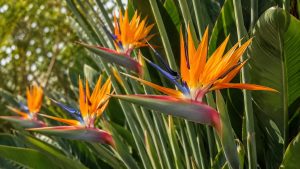
Bird of Paradise is easy to recognize once you know what to look for. The plant produces large, paddle-shaped leaves that rise from sturdy stems and form an upright, architectural shape. Young plants may look relatively compact, but mature specimens can become quite large.
The leaves are usually deep green and have a broad surface that gives the plant its tropical appearance. As they mature, the leaves may naturally split along their edges. This is normal and does not automatically mean something is wrong with the plant.
Strelitzia reginae generally stays more compact and may produce colorful bird-like flowers under suitable conditions. Strelitzia nicolai develops much larger leaves and can eventually resemble a small tropical tree indoors.
The overall size is one of the easiest ways to distinguish Bird of Paradise from smaller houseplants. Before bringing one home, consider both the height and the width it may eventually reach.
How to Grow and Care for Bird of Paradise

Choose the Right Location
The first thing I look for when choosing a place for Bird of Paradise is light. This is not a plant I would tuck into a dark corner and expect to thrive.
Place it close to a bright window where it can receive plenty of natural light. A south- or west-facing window can work particularly well, although the amount of direct sunlight will vary depending on the home and season.
If your plant has been growing in a relatively low-light location, do not suddenly move it into intense afternoon sun. Give it time to adjust. Gradually increasing its exposure helps reduce the chance of leaf stress.
Also think about space. Bird of Paradise can become surprisingly large indoors. Give the leaves enough room to spread without constantly rubbing against walls, furniture, or other plants.
Provide the Right Soil
Bird of Paradise prefers soil that drains well while still holding some moisture. I would avoid heavy garden soil in an indoor pot because it can stay wet around the roots for too long.
A good-quality indoor potting mix works well as a starting point. Adding perlite or another material that improves drainage can be helpful if the mix feels heavy or compact.
The pot itself matters just as much as the soil. Always use a container with drainage holes so excess water can escape.
If water sits around the roots for long periods, the plant can struggle even when everything else seems right. Good drainage makes watering much more forgiving.
Bird of Paradise Light Requirements
Bright light is probably the most important factor for growing a healthy Bird of Paradise indoors.
The plant can handle some direct sunlight, especially when it has been gradually acclimated. In bright conditions, it generally produces stronger growth and larger, healthier-looking leaves.
If your Bird of Paradise is receiving too little light, you may notice slow growth or fewer new leaves. The plant may survive, but it will not necessarily look as vigorous as one grown in a brighter position.
A useful practical approach is to watch the plant rather than relying only on a fixed rule. If it is growing strongly toward a window, rotate the pot occasionally so the plant develops more evenly.
How to Water Bird of Paradise
Bird of Paradise likes regular watering, but it does not like sitting in constantly wet soil.
Before watering, check the upper portion of the soil with your finger. If it still feels noticeably wet, give it more time. When the soil has dried somewhat, water thoroughly until excess moisture runs through the drainage holes.
Always empty water collected in a saucer or decorative container.
The exact watering frequency will change with the season. A plant sitting in bright light during warm weather may use water much faster than one growing in a cooler, darker room.
This is why I prefer checking the soil instead of watering every Sunday or every few days. The plant tells you more than the calendar does.
Temperature and Humidity
Bird of Paradise enjoys warm, stable indoor conditions. Keep it away from cold drafts, frequently opened exterior doors, and strong heating or air-conditioning vents.
Average comfortable indoor temperatures are usually suitable, provided the plant is not exposed to sudden temperature changes.
Humidity can also affect the appearance of the large leaves. If the air is very dry, the leaf edges may become brown or crispy.
A humidifier can help in particularly dry rooms. Grouping several compatible plants together may also slightly increase local humidity.
Just remember that humidity does not replace good airflow. A constantly damp, poorly ventilated environment can create its own problems.
How to Fertilize Bird of Paradise
Bird of Paradise can benefit from feeding during periods of active growth.
Use a balanced houseplant fertilizer and follow the manufacturer’s recommended application rate. More fertilizer does not mean faster or healthier growth. Excess nutrients can build up in the soil and put unnecessary stress on the roots.
Spring and summer are generally the most useful times to pay attention to feeding because brighter conditions often encourage more active growth.
If growth slows during darker or cooler months, reduce feeding accordingly.
I also avoid immediately fertilizing a newly repotted plant if the fresh potting mix already contains nutrients. Give the plant time to settle before adding more.
How to Prune Bird of Paradise
Bird of Paradise does not need heavy pruning. Most pruning is simply maintenance.
Remove old, badly damaged, or completely yellow leaves by cutting them close to the base with clean, sharp pruning shears.
If only the edges or tips are brown, you can trim the damaged portion for appearance. There is no need to remove an otherwise healthy leaf just because it has a small brown area.
Do not worry too much about naturally split leaves. Large Bird of Paradise leaves commonly develop splits as they mature, and this is part of their normal appearance.
The goal of pruning is to keep the plant tidy and healthy, not to force it into a particular shape.
When to Repot Bird of Paradise
Bird of Paradise can stay in the same container for quite a while. Repot when the roots become crowded, the plant has clearly outgrown its pot, or the existing soil has become compacted and drains poorly.
Choose a new pot only moderately larger than the current one. Moving a small plant into a huge container can make moisture management more difficult because excess soil holds water around the roots.
When repotting, handle the root ball gently and plant it at approximately the same depth as before.
After repotting, water appropriately and place the plant back in a bright, stable location.
How to Propagate Bird of Paradise
The most practical way to propagate a mature Bird of Paradise is through division.
A healthy mature plant may develop multiple stems or sections that can potentially be separated. Remove the plant carefully from its container and examine the root system before dividing it.
Each division should have healthy roots attached. Place the divisions into suitable containers with fresh, well-draining potting mix.
Afterward, provide bright light and consistent care. Do not expect immediate growth. Divided plants need time to recover and establish their roots.
Bird of Paradise can also be grown from seed, but this method requires considerably more patience and is not the quickest option for someone who simply wants another houseplant.
What Does Bird of Paradise Symbolize?
Bird of Paradise is often associated with freedom, paradise, joy, beauty, and tropical escape.
Its unusual flowers and bold foliage have made it a popular ornamental plant, particularly in spaces designed to create a relaxed tropical atmosphere.
The name itself comes from the distinctive flowers of some Strelitzia species, which resemble a brightly colored bird.
These symbolic meanings are cultural rather than scientific, but they add another reason people enjoy keeping this plant in their homes and gardens.
Practical Tips for Growing and Caring for Bird of Paradise
After growing large-leaved tropical plants, one thing becomes clear: consistency is usually more important than complicated routines.
First, give Bird of Paradise as much bright natural light as your indoor space reasonably allows. Light affects almost everything else, including growth and water use.
Second, check the soil before watering. If the soil is still wet, waiting another day or two is often better than watering simply because it is “watering day.”
Third, pay attention to the leaves. Brown edges, curling, yellowing, and drooping can all provide clues that something in the growing environment needs attention.
Do not change five things at once when the plant looks unhappy. Check the soil, light, temperature, and recent watering history first. Make one or two sensible adjustments and then give the plant time to respond.
Another useful habit is rotating the pot occasionally. Bird of Paradise naturally grows toward light, so turning it can help maintain a more balanced appearance.
Finally, remember that this is a large plant. If you choose a Bird of Paradise, plan for its future size rather than judging the space based only on the young plant you bring home.
Common Bird of Paradise Pests and Problems
Brown Leaf Edges
Brown edges are one of the most common complaints with Bird of Paradise.
Dry indoor air, inconsistent watering, excessive sunlight, or environmental changes can all contribute. Start by checking the soil and the plant’s location rather than immediately assuming the problem is fertilizer.
If the air is particularly dry, improving humidity may help.
Yellow Leaves
Yellow leaves can develop for several reasons. Excess moisture, poor drainage, insufficient light, and naturally aging leaves are all possibilities.
Check the soil before watering again. If it remains wet for a long time, look at the pot, drainage holes, and watering routine.
Curling Leaves
Curling leaves can be a sign of environmental stress.
Check whether the soil is too dry, whether the plant is receiving intense heat or sunlight, and whether it has recently experienced a sudden change in temperature or location.
Splitting Leaves
Splitting is normal for mature Bird of Paradise leaves and is not automatically a sign of disease.
Large leaves naturally develop splits and tears as they expand. Indoor plants can show this characteristic even when they are perfectly healthy.
However, sudden severe damage should still encourage you to check the plant’s growing conditions.
Drooping Leaves
Drooping can happen when the plant needs water, but wet soil can also be associated with root stress.
Check the soil before watering. If it is dry, water thoroughly. If it is already wet, do not add more water. Instead, check drainage and consider whether the soil is staying wet for too long.
Spider Mites
Spider mites can become more noticeable when indoor air is dry.
Inspect both sides of the leaves, particularly around areas where leaves and stems meet. Regular inspection makes it easier to notice pest activity before it becomes widespread.
Maintaining suitable humidity and keeping the foliage clean can also help you monitor the plant more easily.
Mealybugs and Scale
Mealybugs and scale insects can occasionally affect Bird of Paradise.
Check stems, leaf joints, new growth, and the undersides of leaves. If you notice pests, isolate the affected plant from other houseplants and use an appropriate plant-care treatment according to the product label.
Regular inspection is one of the simplest ways to prevent a small pest problem from becoming a larger one.
Final Thoughts
Bird of Paradise is a great choice if you want a houseplant that makes a statement. Its large leaves and tropical form can transform a bright room, but the plant needs enough light and space to show its best growth.
The basic routine is simple: provide bright light, use well-draining soil, water when the upper soil has dried somewhat, maintain stable temperatures, and give the plant enough room to grow.
Do not worry about every split leaf or minor brown edge. Instead, look at the overall condition of the plant and pay attention to changes over time.
With consistent care and a little patience, Bird of Paradise can become one of the most impressive plants in an indoor collection.
Bird of Paradise FAQ
Is Bird of Paradise easy to grow indoors?
Yes. Bird of Paradise is relatively straightforward indoors when it receives plenty of bright light, appropriate watering, good drainage, and stable temperatures. Its biggest challenges are usually its need for light and the amount of space a mature plant can require.
How much light does Bird of Paradise need?
Bird of Paradise prefers bright light and can tolerate some direct sunlight when gradually acclimated. A bright window is usually one of the best locations. Low light may allow the plant to survive, but growth is generally slower.
How often should I water Bird of Paradise?
Water when the upper portion of the soil has dried somewhat. The exact timing depends on light, temperature, humidity, soil, and pot size. Always allow excess water to drain away.
Why are my Bird of Paradise leaves turning brown?
Brown edges can be caused by dry conditions, inconsistent watering, low humidity, strong sunlight, or other environmental stress. Check the soil and growing conditions before making changes.
Why are Bird of Paradise leaves splitting?
Splitting is a natural characteristic of the large leaves. Mature leaves can split as they expand, so a few splits do not necessarily mean the plant is unhealthy.
Can Bird of Paradise grow in low light?
It can survive in lower light for a period of time, but it generally grows best in bright conditions. If you want strong, healthy growth, choose the brightest suitable location available.