What Is Morning Glory?
Morning glory is the common name used for several flowering vines in the Ipomoea genus. These plants are grown primarily for their attractive flowers and fast-growing climbing habit.
One of the best-known garden species is Ipomoea purpurea, although gardeners can find many other species and cultivars with different flower colors, sizes, and growth habits.
Morning glory is generally grown as a warm-season annual in colder climates, while some species can behave as perennials in warmer regions.
The vines can grow rapidly once temperatures become warm. With the right support, they can climb fences, trellises, arbors, and other garden structures.
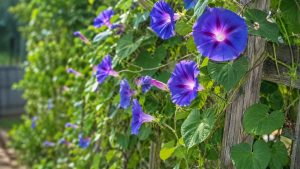
The flowers are usually trumpet-shaped and may appear in several colors. Blue and purple are particularly popular, but pink, red, and white varieties are also available.

How to Identify Morning Glory
Morning glory is relatively easy to recognize once you know its main characteristics.
The plant produces long, flexible vines covered with heart-shaped leaves. Young vines tend to grow upward when they find a suitable support, eventually wrapping themselves around narrow structures.
The flowers are the most noticeable feature. They have a trumpet-like shape and often open during the early part of the day.
Flower color depends on the variety. Some plants have solid-colored blooms, while others feature stripes, contrasting centers, or multiple shades.
Morning glory can become quite vigorous during warm weather, so its overall growth habit is another useful identifying feature.
If you are purchasing seeds, check the botanical name on the packet because different morning glory species can have noticeably different characteristics.
How to Grow and Care for Morning Glory
Choose the Right Location
The first thing I consider when planting morning glory is sunlight.
Morning glory grows best in full sun, with around six or more hours of direct sunlight each day. A bright location helps the vines develop strong growth and encourages flowering.
Because the plant climbs, location is also important from a practical point of view.
A fence, trellis, arbor, pergola, or garden netting can provide the support the vines need. I prefer installing the support before the vines become large because it makes training much easier.
Also consider how much space the plant has around it. A healthy morning glory vine can spread quickly, and it may climb onto nearby plants if there is nothing else available.
Provide the Right Soil
Morning glory isn’t particularly fussy about soil, but good drainage is important.
A moderately fertile garden soil containing organic matter is usually suitable. If the soil is heavy or compacted, adding compost can improve its structure and drainage.
I would avoid planting morning glory in an area where water regularly pools after rain.
The roots need access to moisture, but constantly saturated soil can create problems.
If your soil drains poorly, improving the planting area before sowing seeds is much easier than trying to correct drainage later.
Morning Glory Light Requirements
Morning glory prefers plenty of sunlight.
A location receiving full sun generally provides the best conditions for flowering and vigorous vine growth.
If the plant receives too much shade, you may notice long, weak growth and fewer flowers.
Morning glory can tolerate some light shade, but if your main goal is a large display of blooms, choose the sunniest suitable location in your garden.
One advantage of growing morning glory on a trellis or fence is that the vines can climb toward the light naturally.
How to Water Morning Glory
Morning glory needs consistent moisture while young plants are becoming established.
After planting seeds, keep the soil lightly moist without making it constantly soggy. Once the plants develop a stronger root system, they can tolerate short periods of dry weather more easily.
During hot summer weather, check the soil regularly. If the surface and upper layer have become dry, give the plant a thorough watering.
I prefer watering deeply rather than giving a tiny amount every day.
Morning watering can also be useful because it gives excess moisture on the foliage time to dry during the day.
At the same time, don’t assume that a wilted plant always needs more water. Check the soil first. If it is already wet, adding more water can make the problem worse.
Temperature and Humidity
Morning glory is a warm-season plant and grows best when temperatures are consistently mild to warm.
Cold weather can slow growth considerably, while frost can damage or kill the plant.
This is why outdoor planting is best done after the danger of frost has passed.
Humidity is usually not something gardeners need to manage specifically when growing morning glory outdoors. Normal garden conditions are generally sufficient as long as the plant receives adequate moisture and good airflow.
How to Fertilize Morning Glory
Morning glory usually doesn’t require heavy feeding.
If you plant it in reasonably fertile soil, adding compost before planting may provide enough nutrients for good growth.
If you decide to use fertilizer, choose a balanced fertilizer and follow the application instructions on the product label.
Be careful with excessive nitrogen.
Too much nitrogen can encourage the plant to produce an impressive amount of foliage and long vines while producing fewer flowers.
If the plant looks healthy and is flowering well, there is usually no reason to keep adding fertilizer.
How to Prune Morning Glory
Morning glory doesn’t require complicated pruning.
Most pruning is simply about controlling its vigorous growth.
If vines begin climbing into areas where you don’t want them, gently redirect them toward the trellis or cut back unwanted growth with clean pruning shears.
You can also remove damaged or dead sections to keep the plant looking tidy.
If you want the plant to remain within a specific area, occasional trimming throughout the growing season is much easier than waiting until the vines have become heavily tangled.
When to Plant Morning Glory
Morning glory should generally be planted outdoors after the last frost when the soil has warmed.
The seeds germinate best under warm conditions.
If you live in a colder climate, you can start seeds indoors a few weeks before the expected last frost and transplant the young plants outdoors once conditions are suitable.
However, be gentle when transplanting because young morning glory plants can dislike excessive root disturbance.
For many gardeners, direct sowing is the simplest option.

How to Grow Morning Glory From Seed
Growing morning glory from seed is straightforward.
The seeds have a hard outer coating, so some gardeners soak them in warm water for several hours before planting. This can help water penetrate the seed coat and encourage more even germination.
Plant the seeds about 1/2 inch deep in moist, well-draining soil.
Keep the soil lightly moist while waiting for germination.
Once seedlings emerge, give them plenty of sunlight and provide a support structure nearby.
Morning glory seedlings can begin growing quickly once temperatures are warm, so don’t wait too long before giving them something to climb.

How to Propagate Morning Glory
Morning glory is most commonly propagated from seed.
At the end of the flowering season, flowers that are allowed to mature can develop seed pods.
Once the pods dry naturally, you can collect the seeds and store them for future planting.
Allow collected seeds to dry completely before storing them in a labeled paper envelope in a cool, dry location.
Starting from seed is generally more practical than trying to propagate morning glory through cuttings.
What Does Morning Glory Symbolize?
Morning glory is often associated with affection, renewal, beauty, and the fleeting nature of life because its flowers open for a relatively short period during the day.
Its habit of opening in the morning has also contributed to associations with new beginnings and fresh starts.
The exact symbolism can vary between cultures and flower-color traditions, so these meanings are best viewed as cultural interpretations rather than scientific characteristics.
Regardless of symbolism, the flower’s daily opening is one of the reasons it is such an enjoyable plant to grow.
Practical Tips for Growing and Caring for Morning Glory
After growing fast-growing vines, one thing becomes clear: morning glory is usually easier to manage when you plan for its growth from the beginning.
First, choose a sunny location with a support structure already in place.
Second, avoid overwatering. Check the soil instead of following a rigid watering schedule.
Third, guide young vines toward their support early. Once they become tangled with other plants, controlling them becomes much harder.
I also recommend checking the plant every few days during periods of rapid growth. A quick inspection can help you redirect vines before they reach nearby shrubs or garden plants.
If you want to collect seeds, leave some flowers on the vine instead of removing every faded bloom.
Finally, check whether the particular morning glory species you want to grow is appropriate for your area. Some types can spread readily and may be considered invasive in certain regions.
Common Morning Glory Pests and Problems
Yellow Leaves
Yellow leaves can have several causes, including overwatering, poor drainage, nutrient problems, or natural aging.
Start by checking the soil.
If it stays wet for a long time, improve drainage and reduce watering rather than immediately adding fertilizer.
Poor Flowering
Morning glory that produces lots of leaves but very few flowers may not be receiving enough sunlight.
Move container-grown plants to a brighter location if possible.
Excessive nitrogen can also encourage leafy growth at the expense of flowers.
Aphids
Aphids may gather around young shoots, stems, and tender leaves.
Small infestations can sometimes be reduced by spraying the plant with a strong stream of water.
Regularly inspecting new growth makes it easier to catch aphids before they become widespread.
Spider Mites
Spider mites can become more noticeable during hot and dry weather.
Affected leaves may develop a speckled appearance, and fine webbing can sometimes appear around leaves and stems.
Keeping plants from becoming severely drought-stressed and checking foliage regularly can help you notice problems early.
Wilting
Wilting does not always mean the plant needs water.
If the soil is dry, thorough watering may help.
If the soil is already wet, however, look at drainage and root conditions before adding more water.
Is Morning Glory Invasive?
This depends heavily on the species and your location.
Some morning glory plants can spread rapidly through seeds and vigorous growth. In certain regions, particular species may be considered invasive or difficult to control.
Before planting, check local gardening or extension resources for the exact species you plan to grow.
If you are concerned about spreading, remove unwanted seed pods before they mature and keep the vines trained within their growing area.
Is Morning Glory Poisonous?
Some morning glory species produce seeds containing naturally occurring compounds that can be harmful if eaten.
For this reason, morning glory seeds should be treated as planting material rather than food.
Keep seed packets and collected seeds away from children and pets, and do not consume them.
If accidental ingestion occurs, seek appropriate medical advice or contact a poison information service.
Final Thoughts
Morning glory is a wonderful choice when you want a fast-growing flowering vine that can add color and vertical interest to the garden.
Its basic care is fairly simple: provide full sun, well-draining soil, consistent moisture, and a sturdy support structure.
The biggest challenge is often not getting morning glory to grow, but keeping its vigorous vines where you want them.
Give young plants something to climb, check their growth regularly, and avoid excessive fertilizer or water.
With the right conditions, morning glory can turn an ordinary fence or trellis into a colorful garden feature filled with trumpet-shaped flowers throughout the warm season.
Morning Glory FAQ
Is morning glory easy to grow?
Yes. Morning glory is generally easy to grow, especially when planted in warm soil with plenty of sunlight. Its fast growth means the main challenge is often managing the vines rather than encouraging them to grow.
How much sunlight does morning glory need?
Morning glory grows best in full sun. Aim for around six or more hours of direct sunlight each day for strong growth and better flowering.
How often should I water morning glory?
Water when the soil begins to dry, particularly while plants are young. Established plants tolerate some dry conditions, but they perform best when they receive consistent moisture without sitting in waterlogged soil.
Does morning glory need a trellis?
A trellis is not absolutely required, but some type of support is highly recommended. Morning glory is a climbing vine and grows especially well on fences, trellises, arbors, and garden netting.
Why is my morning glory not blooming?
Too little sunlight is one common reason. Excess nitrogen can also encourage leaves and vines instead of flowers. Make sure the plant receives plenty of direct sunlight and avoid excessive fertilization.
Can morning glory grow in a pot?
Yes. Morning glory can grow in containers as long as the pot has drainage holes, the soil drains well, and the plant has a suitable support to climb.
Does morning glory come back every year?
That depends on the species and climate. In colder regions, morning glory is commonly grown as an annual. In warmer climates, some species may survive as perennials or reseed themselves.
Should I deadhead morning glory?
Deadheading is optional. Removing faded flowers can keep the plant looking tidy, but if you want to collect seeds, allow some flowers to develop mature seed pods.
How fast does morning glory grow?
Morning glory can grow very quickly once temperatures are warm. Under favorable conditions, the vines can cover a trellis or fence surprisingly fast during a single growing season.