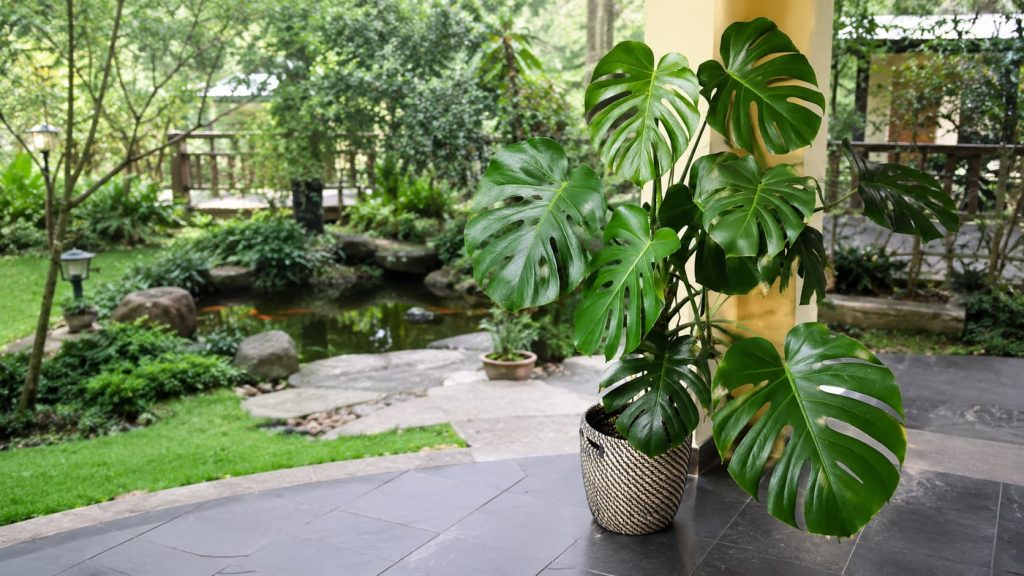
The Monstera plant is one of the most popular tropical houseplants in the United States, and it is easy to see why. Its large, glossy leaves and distinctive splits can instantly make a room feel greener and more inviting. Although Monstera has a tropical appearance, it is surprisingly adaptable indoors. With the right light, watering routine, soil, and support, it can grow beautifully for years.
What Is a Monstera Plant?
Monstera is a group of tropical plants native to Central and South America. One of the best-known species is Monstera deliciosa, commonly called the Swiss cheese plant because mature leaves can develop natural holes and deep splits.
In its natural environment, Monstera grows as a climbing plant. Instead of staying low to the ground, it uses aerial roots to attach itself to trees and other surfaces as it climbs toward brighter light.
This climbing habit is worth remembering when growing Monstera indoors. A young plant may look compact at first, but it can eventually become quite large and benefit from a moss pole, trellis, or another sturdy support.
How to Identify a Monstera Plant
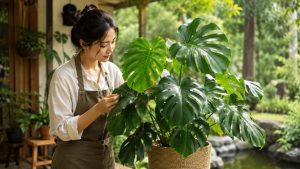
The easiest way to recognize a Monstera is by its large, green leaves. Mature Monstera deliciosa leaves are usually broad and heart-shaped, with deep splits and holes that become more noticeable as the plant develops.
Young Monstera leaves can look completely different. They are often smaller and may have few or no splits. This does not necessarily mean the plant has a problem. Leaf fenestration usually becomes more pronounced as the plant matures and receives suitable growing conditions.
The long leaf stems are another noticeable feature. Monstera leaves emerge from the main stem on individual petioles, allowing the plant to spread outward as it grows.
You may also notice roots growing from the stem above the soil. These are aerial roots, and they are a normal part of Monstera’s growth. They help the plant climb and can be guided toward a support as the plant gets larger.
There are many Monstera species and cultivars, so leaf size, shape, color, and fenestration can vary. Still, the combination of large foliage, aerial roots, and a natural climbing habit makes Monstera relatively easy to recognize.

How to Grow and Care for Monstera
Monstera is generally easy to grow indoors, but it does best when you work with its natural tropical growing habits rather than trying to force it into a strict routine.
Choose the Right Light
Bright, indirect light is usually ideal for Monstera. A spot near a bright window can provide the energy it needs for healthy leaf growth without exposing the foliage to intense direct sunlight for long periods.
An east-facing window can be a good choice because it provides gentle morning light. If your plant is near a south- or west-facing window, a sheer curtain can help soften strong afternoon sunlight.
Too little light can slow growth and may result in smaller leaves. If your Monstera is growing toward one side of the room, that is often a sign that it is reaching for a better light source.
Use Loose, Well-Draining Soil
Monstera likes moisture but does not like sitting in soggy soil. A loose indoor potting mix that drains well is a much better choice than heavy garden soil.
You can improve drainage by mixing regular potting soil with perlite and orchid bark. This creates air pockets around the roots while still allowing the soil to retain some moisture.
Always choose a pot with drainage holes. This simple detail can prevent many watering problems later.
Water When the Soil Begins to Dry

One of the most common mistakes with Monstera is watering too frequently.
Rather than watering every few days simply because it is part of your routine, check the soil first. When the upper portion of the potting mix has dried, it is usually time to water again.
When watering, soak the soil thoroughly and allow excess water to drain from the bottom of the pot. If water collects in the saucer, empty it rather than allowing the pot to sit in it.
The exact watering frequency depends on your home’s temperature, humidity, light, pot size, and soil mix. A Monstera growing in bright light may dry out much faster than one growing in a darker room.
For more helpful tips on watering, light, soil, and keeping your plant healthy, see our complete guide to
Keep the Plant Warm
Monstera naturally prefers warm conditions and generally does well at comfortable indoor temperatures.
Keep it away from cold drafts, air-conditioning vents, and sudden temperature changes. You do not need to make your home extremely warm, but protecting the plant from prolonged cold can make a noticeable difference.
Provide Reasonable Humidity
Because Monstera comes from tropical regions, it appreciates moderate to high humidity. However, you do not need to turn your home into a rainforest.
If the air becomes very dry, especially during winter, a humidifier can help. Grouping several houseplants together can also create a slightly more humid microclimate.
Good airflow is important too. High humidity without adequate air movement can create an environment where fungal and bacterial problems are more likely.
Fertilize During Active Growth
Monstera can benefit from regular feeding during its active growing season. A balanced fertilizer formulated for houseplants is generally sufficient.
Follow the instructions on the fertilizer label and avoid adding extra fertilizer because you want faster growth. Too much fertilizer can lead to salt buildup in the soil and damage the roots.
During periods of slower growth, particularly when indoor light levels are low, the plant usually needs less fertilizer.
Give Monstera Something to Climb
A support can make a big difference as your Monstera matures.
A moss pole, coir pole, trellis, or sturdy stake gives the plant something to attach to as it climbs. Gently guide the stem toward the support instead of bending it sharply.
Aerial roots may naturally grow toward the support. You do not need to force every root into place. The goal is simply to give the plant a structure that matches its natural climbing habit.
With proper support, mature leaves can become much larger and the plant can develop a more attractive upright shape.
Prune When Needed
Monstera does not require heavy pruning. Most pruning is simply about removing damaged leaves, controlling size, or improving the shape of an overgrown plant.
Use clean, sharp pruning shears when making cuts. Remove yellow or severely damaged leaves at the base of the leaf stem.
If only the edge of a leaf has turned brown, you do not necessarily need to remove the entire leaf. The remaining healthy tissue can still contribute to the plant’s growth.
Avoid cutting away large amounts of healthy foliage at once. Monstera needs its leaves to produce energy, so gradual pruning is usually the better approach.
Repot When the Plant Needs More Space
Monstera does not need to be repotted every year just because the calendar says so.
Look for signs that the roots are becoming crowded, such as roots growing from the drainage holes, soil drying unusually quickly, or growth slowing despite otherwise good care.
When repotting, choose a container only slightly larger than the current one. Moving a small Monstera into an oversized pot can leave too much wet soil around the roots and increase the risk of overwatering.
The Meaning and Decorative Value of Monstera
Monstera is often associated with growth, abundance, strength, and a connection with nature. Its large tropical leaves have also made it a favorite plant for creating a relaxed and natural feeling indoors.
From a decorating perspective, Monstera works especially well as a statement plant. A mature specimen can fill an empty corner of a living room, brighten an office, or add a tropical touch to a bedroom.
For many plant lovers, part of the appeal is simply watching the plant change over time. A small Monstera can gradually develop larger leaves and a stronger climbing form when given the right conditions.
Practical Monstera Care Tips
One of the best pieces of advice for growing Monstera is to avoid overwatering. If you are unsure whether the plant needs water, check the soil instead of relying on a fixed schedule.
Pay attention to where the plant is growing. If new leaves are consistently small or growth is very slow, consider whether the plant is receiving enough bright, indirect light.
Rotating the pot every couple of weeks can also help prevent the plant from leaning strongly toward one direction. This is particularly useful when it is growing close to a window.
Do not cut aerial roots simply because they look unusual. They are a natural feature of Monstera. If they become inconvenient, gently guide them toward the soil or a climbing support.
It is also worth cleaning large leaves occasionally. Dust can build up quickly on broad foliage. A soft, damp cloth is usually all you need to keep the leaves looking clean.
If your young Monstera does not have split leaves yet, be patient. Young plants commonly produce smaller, less divided leaves. As the plant matures, proper light, nutrition, root health, and climbing support can encourage more characteristic foliage.
Finally, pay attention to the plant rather than trying to follow a perfect care schedule. Indoor conditions vary from one home to another, so learning how quickly your particular Monstera dries out is often more useful than following a fixed watering calendar.
Common Monstera Pests and Problems
Monstera can experience several common houseplant problems, especially when growing conditions are stressful.
Yellow Leaves
Yellow leaves can have several causes, but consistently wet soil is one of the first things to check.
If the soil remains damp for a long time, examine the drainage and reconsider how frequently you are watering. Older leaves may naturally turn yellow occasionally, but widespread yellowing deserves closer attention.
Brown Leaf Tips
Brown tips can appear when the air is very dry, watering is inconsistent, or the plant is exposed to other environmental stress.
Check the soil moisture and humidity around the plant before making major changes. Avoid reacting to one brown leaf by dramatically increasing watering.
Root Problems
Poor drainage and frequent watering can create conditions that are unfavorable for healthy roots.
A pot with drainage holes, a loose potting mix, and a habit of allowing excess moisture to drain away are some of the simplest ways to reduce the risk of root problems.
Common Pests
Spider mites, mealybugs, scale, and thrips can occasionally affect Monstera.
Check the undersides of leaves, stems, and leaf joints whenever you water the plant. Finding pests early makes them much easier to manage.
If you discover an infestation, separate the affected plant from other houseplants and use an appropriate treatment according to the product label.
Keeping the foliage clean, providing good airflow, and avoiding unnecessary plant stress can also help keep pest problems under control.
Final Thoughts
Monstera is a rewarding houseplant because it combines an impressive tropical appearance with relatively simple care requirements. It does not need a complicated routine, but it does need the basics done consistently.
Give your Monstera bright, indirect light, well-draining soil, careful watering, warmth, and enough space to climb. Watch the leaves and soil, adjust your routine when conditions change, and give the plant time to mature.
With patience and a little attention, even a small Monstera can eventually become a beautiful focal point in your home.
Monstera FAQ
How often should you water a Monstera?
Water when the upper portion of the soil has dried rather than following a strict weekly schedule. Your plant may need water more or less frequently depending on light, temperature, humidity, pot size, and soil.
How much light does a Monstera need?
Monstera generally prefers bright, indirect light. It can tolerate lower light, but growth may become slower and the leaves may remain smaller.
Why are my Monstera leaves turning yellow?
Overwatering is a common cause, especially when the soil stays wet for extended periods. Check the soil, drainage, and watering routine before making changes.
Why doesn’t my Monstera have split leaves?
Young Monstera plants often produce solid leaves. Fenestrations usually become more noticeable as the plant matures and receives suitable light and growing conditions.
Should I cut off Monstera aerial roots?
Usually, there is no need. Aerial roots are a normal part of Monstera’s natural climbing habit. You can gently direct them toward a moss pole, trellis, or another support.
Is Monstera easy to grow indoors?
Yes. Monstera is generally adaptable and can be a good choice for beginners. The main things to get right are bright indirect light, good drainage, careful watering, and adequate support as the plant grows.
Garden Guide Hub