The ZZ Plant is one of the easiest houseplants to grow, making it a great choice for beginners and busy plant lovers. With glossy green leaves, strong underground rhizomes, and excellent tolerance for periods of neglect, it can thrive in many indoor spaces. Give it suitable light, well-draining soil, and careful watering, and a ZZ Plant can stay attractive for years.

What Is a ZZ Plant?
The ZZ Plant (Zamioculcas zamiifolia) is a tropical perennial plant native to eastern and southern Africa. It has become a popular indoor plant because it is adaptable, attractive, and relatively low-maintenance.
Unlike many houseplants, the ZZ Plant stores water in thick underground rhizomes. These storage structures help the plant handle dry periods, which is one reason it does not need frequent watering.
ZZ Plants grow well in homes, offices, bedrooms, and other indoor spaces. They can tolerate lower light than many tropical houseplants, although they generally grow better when given bright, indirect light.
How to Identify a ZZ Plant: Appearance and Characteristics
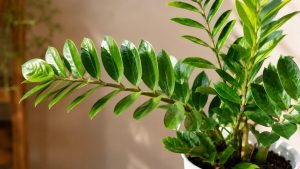
A ZZ Plant is easy to recognize by its upright stems covered with pairs of thick, smooth, glossy leaflets. The foliage is naturally shiny and can range from medium to deep green, giving the plant a polished appearance even without flowers.
The stems grow directly from underground rhizomes and tend to emerge in a slightly upright or arching shape. Each leaflet is relatively thick and firm because the plant is adapted to storing water.
ZZ Plants can remain fairly compact in smaller containers but may become larger and fuller when given enough room and suitable growing conditions. Some cultivated types have darker foliage, while others develop lighter green or variegated leaves.
The plant’s underground rhizomes are particularly important. They look somewhat like small, potato-like structures and act as water-storage organs. Because of this adaptation, the plant generally handles occasional missed waterings better than prolonged wet soil.
Although ZZ Plants can produce flowers, indoor plants are grown mainly for their attractive foliage. Flowers are relatively uncommon in typical indoor conditions and are not necessary for the plant to remain healthy.
How to Grow and Care for a ZZ Plant
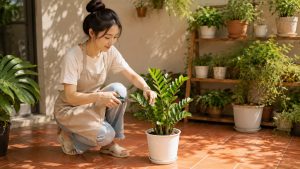
Choose the Right Location
ZZ Plants are adaptable, but choosing a suitable location will help them grow more evenly.
A spot with bright, indirect light is ideal. Near an east-facing window or a little away from a brighter south- or west-facing window can work well.
One advantage of ZZ Plants is their ability to tolerate lower light. They can survive in darker corners where many other houseplants struggle. However, growth will usually be slower, and the stems may become more stretched or widely spaced.
Avoid strong, prolonged direct sunlight through a hot window. Intense sun can scorch the foliage, especially when the plant has been growing in lower light.
Use Well-Draining Soil
Good drainage is more important than keeping the soil constantly moist.
A standard indoor potting mix amended with perlite, pumice, or another material that improves drainage can work well. The goal is to create a soil mix that does not remain saturated after watering.
Always use a container with drainage holes. A decorative pot without drainage can allow water to collect around the roots and rhizomes, increasing the risk of rot.
Watering a ZZ Plant
Overwatering is one of the most common mistakes people make with ZZ Plants.
Because the plant stores water in its rhizomes, it does not need frequent watering. Allow the soil to dry significantly between waterings.
When it is time to water, water thoroughly until excess moisture drains from the bottom of the pot. Then empty any water collected in the saucer.
Do not water again simply because the surface looks slightly dry. Check deeper into the pot first. If the soil is still noticeably moist, give it more time.
The exact watering frequency changes with the season. A ZZ Plant growing in bright light during warm weather may use water faster than one sitting in a cool, dim room.
Temperature and Humidity
ZZ Plants prefer warm indoor conditions and generally do well at typical household temperatures.
Keep them away from cold drafts, freezing temperatures, and sudden temperature changes. They also should not sit directly beside heating vents or air conditioners.
Humidity does not usually need to be very high. This is another reason ZZ Plants are convenient houseplants. Normal indoor humidity is often sufficient as long as the plant is not exposed to extremely dry or stressful conditions for long periods.
Fertilizing a ZZ Plant
ZZ Plants are relatively slow-growing, so they do not require heavy feeding.
During active growth, you can use a balanced houseplant fertilizer according to the label directions. A light feeding routine is usually enough.
Avoid the temptation to fertilize more frequently to make the plant grow faster. Excess fertilizer can accumulate in the soil and may damage the roots.
If the plant is growing very slowly during winter or in a low-light location, reducing or temporarily stopping fertilizer is usually more sensible than increasing the amount.
How to Prune a ZZ Plant
ZZ Plants generally require very little pruning.
Remove yellow, damaged, or declining leaves with clean scissors or pruning shears. If an entire stem becomes damaged, you can cut it close to the soil line.
Pruning can also help maintain the shape of a crowded plant. However, avoid removing healthy stems simply because they are growing outward. The natural upright and slightly arching form is part of the ZZ Plant’s appearance.
Clean tools are important because they reduce the chance of spreading problems from one plant to another.
When to Repot
A ZZ Plant does not need frequent repotting. In fact, it often does well when slightly root-bound.
Consider repotting when the rhizomes and roots have filled much of the container, the plant repeatedly becomes unstable, or roots are growing through the drainage holes.
Choose a pot only one size larger than the current container. Moving the plant into an oversized pot can leave too much unused soil around the roots, which may stay wet for a long time after watering.
When repotting, handle the rhizomes carefully. They are an important part of the plant’s water-storage system.
What Does a ZZ Plant Symbolize?
ZZ Plants are often associated with growth, endurance, prosperity, and resilience. Their ability to remain attractive despite periods of neglect has made them a popular gift and office plant.
Their upright stems and glossy foliage also give them a clean, modern appearance that works well with many interior styles.
These meanings are symbolic rather than scientific, but they contribute to the plant’s popularity as a decorative houseplant and gift.
Practical Tips for Growing and Caring for a ZZ Plant
One of the best ways to care for a ZZ Plant is to resist the urge to do too much.
Let the soil dry between waterings. This is probably the most useful rule for keeping a ZZ Plant healthy. When in doubt, waiting a little longer is often safer than watering too frequently.
Pay attention to the pot. A heavy container that stays wet for a long time may be contributing to watering problems. Make sure the pot has drainage holes and that excess water can escape freely.
Do not judge watering by a calendar. A ZZ Plant may need water every couple of weeks in one location but much less frequently in another. Light, temperature, soil, and pot size all affect how quickly the soil dries.
Keep the foliage clean. Dust can build up on the glossy leaves. Wipe them gently with a soft, damp cloth when needed. This also gives you a chance to inspect the plant for pests.
Rotate the plant occasionally. If one side receives most of the available light, rotate the pot from time to time to encourage more balanced growth.
Do not expect rapid growth. ZZ Plants are naturally slower than many common houseplants. New stems may appear gradually, especially in low light.
Give it more light if growth becomes stretched. If the stems become unusually long and the leaflets are spaced far apart, the plant may benefit from moving closer to a bright source of indirect light.
Do not constantly repot. ZZ Plants do not need a large container simply because they have grown taller. Repot based on the condition of the roots and rhizomes rather than the height of the plant alone.
Common ZZ Plant Pests and Diseases
ZZ Plants are generally tough, but poor growing conditions can still lead to pests and plant health problems.
Root and Rhizome Rot
Excess moisture is one of the biggest risks for a ZZ Plant. Constantly wet soil can create conditions where roots and rhizomes begin to rot.
The best prevention is simple: use well-draining soil, a pot with drainage holes, and a watering routine that allows the soil to dry between waterings.
If the soil remains wet for an unusually long time, check the pot size, soil mix, and watering frequency.
Fungus Gnats
Fungus gnats are small flying insects that are often associated with consistently damp potting soil.
Allowing the soil to dry appropriately between waterings can make the growing environment less favorable for them. Avoid keeping the potting mix constantly wet.
Spider Mites
Spider mites can become more noticeable when indoor conditions are very dry. Check the undersides of leaves and around stems if the foliage begins looking dull, dusty, or stressed.
Regularly inspecting the plant makes it easier to notice problems before they become widespread.
Mealybugs
Mealybugs may appear as small, cottony clusters around leaf joints and stems. Check new growth and hidden areas of the plant when cleaning the foliage.
Early detection makes pest management much easier than waiting until the infestation becomes severe.
Yellow Leaves
An occasional yellow leaf is not necessarily a serious problem. Older leaves naturally decline over time.
However, widespread yellowing combined with consistently wet soil can be a warning sign of overwatering or poor drainage. Check the soil before simply adding more fertilizer or changing the light.
Final Thoughts
The ZZ Plant is popular for a good reason. It combines attractive, glossy foliage with an impressive ability to tolerate periods of dry soil and lower light. That makes it particularly useful for beginners, busy households, offices, and anyone who prefers a plant that does not need constant attention.
The most important part of ZZ Plant care is understanding what it does not need. It does not need frequent watering, constantly wet soil, heavy fertilizing, or regular repotting.
Give it bright, indirect light when possible, well-draining soil, a suitable container, and plenty of time to dry between waterings. Keep an eye on the foliage, inspect for pests occasionally, and remove damaged growth when necessary.
Once you get used to its slower growth and low-water needs, caring for a ZZ Plant becomes wonderfully simple.
ZZ Plant FAQ
How often should I water a ZZ Plant?
Water when the soil has dried significantly rather than following a strict weekly schedule. Water thoroughly and allow excess water to drain away. The plant generally needs less frequent watering than many tropical houseplants.
Can a ZZ Plant grow in low light?
Yes. ZZ Plants tolerate lower light better than many houseplants. However, growth will usually be slower in dim conditions. Bright, indirect light is better if you want stronger and fuller growth.
Why are my ZZ Plant leaves turning yellow?
Yellow leaves can result from natural aging, but widespread yellowing may indicate excessive moisture or poor drainage. Check the soil and roots before increasing watering or fertilizer.
Does a ZZ Plant need high humidity?
No. ZZ Plants generally tolerate normal indoor humidity and do not require a highly humid environment. Keeping the plant away from extreme dryness and sudden temperature changes is usually more important.
How do I know when my ZZ Plant needs repotting?
Look for roots or rhizomes filling the container, roots emerging from drainage holes, or a plant that has become unstable in its pot. Repot only when necessary and move it into a slightly larger container.
Can I prune a ZZ Plant?
Yes. Remove yellow, damaged, or unhealthy leaves and stems with clean pruning shears. ZZ Plants naturally require very little pruning, so focus on maintenance rather than heavy cutting.