
Growing tomatoes is one of the most rewarding gardening experiences, but success depends on providing the right care throughout the growing season. Proper tomato plant care includes choosing the right location, preparing nutrient-rich soil, watering consistently, fertilizing correctly, pruning when necessary, and protecting plants from pests and diseases.
Whether you’re growing tomatoes in raised beds, containers, or a backyard garden, understanding the basic needs of tomato plants will help you produce healthier plants and larger harvests. This guide explains every important step beginners and experienced gardeners should know.
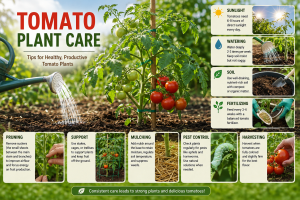
Understanding Tomato Plant Needs
Tomatoes thrive in warm weather and require the right balance of sunlight, moisture, nutrients, and airflow.
Healthy tomato plants need:
- 6–8 hours of direct sunlight every day
- Well-drained soil rich in organic matter
- Consistent watering
- Regular feeding
- Good air circulation
- Support from cages or stakes
Providing these essentials creates the ideal environment for vigorous growth and abundant fruit production.
Choose the Right Location
Location plays a major role in tomato plant care.
Select an area that receives full sun throughout most of the day. Tomatoes grown in shade often produce fewer flowers and smaller fruit.
Avoid planting tomatoes where potatoes, peppers, or eggplants were grown during the previous year because these crops share many of the same diseases.
Prepare Healthy Soil
Healthy soil creates healthy plants.
Before planting:
- Mix compost into the soil.
- Improve drainage if soil is heavy.
- Maintain a soil pH between 6.2 and 6.8.
- Add aged manure or organic compost.
Rich soil encourages stronger root development and continuous growth.
Water Tomato Plants Correctly
Watering is one of the most important aspects of tomato plant care.
Instead of watering lightly every day, water deeply two or three times each week depending on weather.
General guidelines:
- Water early in the morning.
- Avoid wetting leaves.
- Water the soil directly.
- Keep moisture consistent.
Irregular watering can lead to cracked tomatoes and blossom end rot.
Fertilize Tomato Plants
Tomatoes are heavy feeders.
After planting:
- Apply balanced fertilizer.
- Feed again after flowering begins.
- Continue fertilizing every 3–4 weeks.
Organic options include:
- Compost
- Fish emulsion
- Bone meal
- Worm castings
Avoid excessive nitrogen because it produces lush leaves but fewer tomatoes.
Mulch Around Tomato Plants
Mulching helps retain soil moisture while reducing weeds.
Good mulch choices include:
- Straw
- Grass clippings
- Shredded leaves
- Pine needles
Apply a 2–3 inch layer after the soil has warmed.
Support Tomato Plants
Most tomato varieties benefit from support.
Popular methods include:
- Tomato cages
- Wooden stakes
- Trellises
- Florida weave system
Supporting plants keeps fruit off the ground and improves airflow.
Pruning Tomato Plants
Pruning improves air circulation and directs energy toward fruit production.
Remove:
- Suckers growing between the main stem and branches
- Yellow or damaged leaves
- Leaves touching the soil
Determinate varieties require little pruning, while indeterminate tomatoes benefit from regular maintenance.
Watch for Common Tomato Plant Problems
Even healthy plants occasionally develop problems.
Common issues include:
Yellow Leaves
Possible causes:
- Overwatering
- Nutrient deficiencies
- Poor drainage
- Disease
Curling Leaves
Often caused by:
- Heat stress
- Wind
- Inconsistent watering
Blossom End Rot
Usually caused by calcium deficiency combined with uneven watering.
Maintain consistent moisture to prevent this issue.
Early Blight
Symptoms include dark spots on lower leaves.
Remove infected leaves and avoid overhead watering.
Prevent Pests Naturally
Common pests include:
- Aphids
- Hornworms
- Whiteflies
- Spider mites
Natural control methods:
- Neem oil
- Insecticidal soap
- Hand removal
- Encourage ladybugs
Inspect plants weekly for early signs of infestation.
Growing Tomatoes in Containers
Container-grown tomatoes require slightly different care.
Choose containers at least 5 gallons in size.
Use high-quality potting mix and water more frequently because containers dry out faster.
Provide sturdy support and regular fertilization throughout the growing season.
Pollination Tips
Tomatoes are self-pollinating.
To improve fruit set:
- Grow flowers nearby to attract bees.
- Gently shake flowering branches.
- Avoid excessive heat stress.
Good pollination results in larger harvests.
Harvest Tomatoes at the Right Time
Harvest when fruits have reached their mature color but remain firm.
Pick tomatoes regularly to encourage additional fruit production.
Avoid pulling fruit from the vine; twist gently or use pruning shears.
Seasonal Tomato Plant Care
Spring
- Prepare soil
- Plant seedlings
- Install supports
Summer
- Water consistently
- Fertilize
- Prune
- Monitor pests
Fall
- Harvest remaining fruit
- Remove diseased plants
- Clean the garden
Frequently Asked Questions
How often should I water tomato plants?
Deep watering two or three times each week is usually sufficient, although hot weather may require more frequent watering.
Why are my tomato leaves turning yellow?
Yellow leaves may result from overwatering, nutrient deficiencies, poor drainage, or disease.
Should I prune tomato plants?
Indeterminate tomatoes benefit from pruning, while determinate varieties usually need only minimal pruning.
What fertilizer is best for tomato plants?
A balanced fertilizer with moderate nitrogen and higher phosphorus and potassium supports healthy growth and fruit production.
Final Thoughts
Proper tomato plant care is the foundation of a productive vegetable garden. By providing full sun, fertile soil, consistent watering, balanced fertilization, regular pruning, and effective pest management, gardeners can enjoy vigorous plants and abundant harvests throughout the growing season.
If you’re just getting started, learning how to grow tomatoes from the beginning will help you build a strong foundation before focusing on long-term plant care. Whether you’re planting your first tomato seedling or improving an established garden, following these care practices will help your tomato plants stay healthy, resist common problems, and produce flavorful fruit year after year.