French onion soup is a classic comfort food known for its rich, savory broth, deeply caramelized onions, toasted bread, and melted cheese. Although it is often associated with French cuisine and restaurant dining, making French onion soup at home is surprisingly simple. The secret is taking your time with the onions and allowing them to slowly develop a deep golden-brown color and naturally sweet flavor.
If you grow onions in your home garden, French onion soup is also a wonderful way to turn your fresh harvest into a warm and satisfying meal. Homegrown onions can add a fresh, flavorful touch to this traditional recipe, especially when they are harvested at the right time and stored properly.
In this guide, you’ll learn how to make French onion soup from scratch, which onions work best, how to caramelize onions, what ingredients you need, and how to use homegrown onions for the best results.
What Is French Onion Soup?
French onion soup is a traditional soup made primarily with slowly caramelized onions and a flavorful broth. The soup is typically served with toasted bread topped with melted cheese, creating a delicious combination of sweet onions, savory broth, crispy bread, and rich cheese.
The defining feature of French onion soup is the caramelization process. Onions are cooked slowly over low to medium heat until they become soft, deeply golden, and naturally sweet. This process can take some time, but it is one of the most important steps in creating the characteristic flavor of the soup.
While there are many variations of French onion soup, the basic ingredients usually include:
- Yellow, white, or sweet onions
- Butter or olive oil
- Beef broth or another type of broth
- Garlic
- Fresh or dried herbs
- Bread
- Gruyère or another melting cheese
- Salt and black pepper
Some recipes also include a small amount of wine or another cooking liquid to add depth to the broth.
The result is a warm and comforting soup that is perfect for cool evenings, family dinners, or whenever you want a hearty homemade meal.
Best Onions for French Onion Soup
Choosing the right onions is an important part of making flavorful French onion soup. Fortunately, you have several options.
Yellow Onions
Yellow onions are one of the most popular choices for French onion soup. They have a balanced flavor and become sweet and deeply savory when slowly caramelized.
If you’re looking for a reliable onion for a traditional French onion soup recipe, yellow onions are an excellent choice.
Sweet Onions
Sweet onions can also work very well. Varieties such as Vidalia or Walla Walla onions naturally contain more sugar, which can help create a sweeter flavor when caramelized.
However, sweet onions can sometimes produce a milder soup, so you may want to combine them with yellow onions for a more complex flavor.
White Onions
White onions have a sharper and more pronounced flavor. They can be used in French onion soup, although the final taste may be slightly different from a recipe made with yellow onions.
Red Onions
Red onions are not the traditional choice for French onion soup, but they can still be used. They may give the soup a slightly different color and flavor profile.
For the most classic result, yellow onions are usually the easiest option.
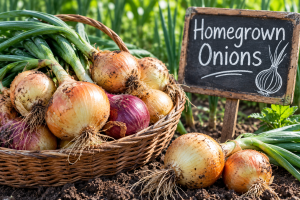
Can You Use Homegrown Onions for French Onion Soup?
Absolutely. Homegrown onions can be an excellent ingredient for French onion soup.
Growing your own onions gives you the opportunity to choose varieties that suit your cooking preferences. You can grow yellow onions for a traditional flavor, sweet onions for a milder taste, or experiment with different varieties to create your own favorite version of the soup.
Freshly harvested onions may have a slightly different flavor and moisture content compared with store-bought onions. For the best results, make sure your onions are mature and properly cured before using them for long-term storage.
If you grow onions specifically for cooking, consider planting several varieties. This allows you to enjoy fresh onions throughout the growing season and keep cured onions available for recipes such as French onion soup during the cooler months.
How to Grow Onions for French Onion Soup
If you want to make French onion soup with onions from your own garden, growing onions is a rewarding project.
Choose a sunny location with well-draining soil. Onions generally grow best when they receive plenty of sunlight and have access to consistent moisture.
Before planting, prepare the soil by removing large rocks and breaking up compacted areas. Adding organic matter can help improve soil structure and drainage.
Plant onion sets or seedlings according to the recommended planting time for your climate. Keep the soil consistently moist, but avoid keeping it waterlogged.
As the onions grow, keep weeds under control because weeds compete with onions for water and nutrients.
When the tops of the onion plants begin to naturally bend over and the bulbs reach a mature size, the onions may be ready for harvesting.
Growing your own onions takes patience, but harvesting a crop and turning it into a homemade French onion soup can be incredibly satisfying.
How to Harvest Onions
Knowing when to harvest onions is important if you plan to use them for cooking or storage.
Mature onions often show signs that they are ready to harvest. The green tops may begin to yellow and naturally fall over. At this stage, carefully lift the onions from the soil.
Avoid damaging the bulbs during harvesting because cuts and bruises can make onions more vulnerable to spoilage.
After harvesting, onions intended for storage should be cured in a dry, well-ventilated location. Allow the outer layers to dry and the necks to become firm before storing them.
Properly cured onions can last much longer in storage, allowing you to enjoy homegrown onions for recipes like French onion soup even after the main growing season has ended.

Ingredients for French Onion Soup
Here is a simple ingredient list for a classic homemade French onion soup.
For the Soup
- 4 to 6 large yellow onions, thinly sliced
- 3 tablespoons butter
- 1 tablespoon olive oil
- 2 cloves garlic, minced
- 6 cups beef broth
- 1 teaspoon fresh thyme leaves
- 1 bay leaf
- Salt, to taste
- Black pepper, to taste
- 1 tablespoon flour, optional
- A small amount of dry white wine, optional
For the Topping
- Slices of crusty French bread or baguette
- 1 to 2 cups grated Gruyère cheese
- Parmesan cheese, optional
You can adjust the ingredients depending on how many people you are serving.
For a vegetarian version, replace the beef broth with a flavorful vegetable broth. The final flavor will be different, but the caramelized onions will still provide plenty of depth.
How to Make French Onion Soup
Making French onion soup at home is straightforward, but the caramelization process requires patience.
1. Slice the Onions
Start by peeling the onions and slicing them thinly.
Try to keep the slices relatively even so that they cook at a similar rate. Very thick pieces may take longer to soften, while extremely thin slices can burn more easily.
If you’re using homegrown onions, remove any damaged outer layers before slicing.
2. Heat the Butter and Oil
Place a large heavy-bottomed pot over medium heat.
Add the butter and olive oil. The combination of butter and oil provides flavor while helping prevent the butter from burning too quickly.
Once the butter has melted, add the sliced onions.
3. Slowly Caramelize the Onions
This is the most important step in making French onion soup.
Cook the onions slowly, stirring regularly. At first, the onions will look bulky because they contain a lot of water. As they cook, they will soften and gradually decrease in volume.
Continue cooking until the onions become deeply golden brown.
Depending on the amount of onions and the heat level, this process may take 30 to 60 minutes or longer.
Do not rush this step by turning the heat too high. Cooking onions too quickly can cause them to burn before they develop the deep, sweet flavor that makes French onion soup special.
If the onions begin sticking to the bottom of the pot, add a small splash of water or broth and scrape the bottom gently.
4. Add Garlic and Optional Flour
Once the onions are deeply caramelized, add the minced garlic.
Cook for about one minute until fragrant.
If you want a slightly thicker soup, sprinkle in a small amount of flour and stir well. Cook the flour briefly before adding the broth.
This step is optional. Many French onion soup recipes work perfectly well without flour.
5. Add the Broth
Slowly pour the beef broth into the pot.
Stir well and scrape up any flavorful browned bits from the bottom of the pot.
Add the thyme and bay leaf. Season with salt and black pepper.
If you’re using wine, add a small amount before or along with the broth, depending on your recipe.
Bring the soup to a gentle simmer.
6. Simmer the Soup
Reduce the heat and allow the soup to simmer for about 20 to 30 minutes.
This gives the flavors time to blend together.
Taste the soup and adjust the seasoning as needed.
Remember that the cheese and bread added later will also contribute flavor, so avoid adding too much salt at the beginning.
7. Prepare the Bread
While the soup is simmering, slice a baguette or another crusty bread.
Toast the slices until they are lightly crisp.
Toasting the bread helps it hold its texture when placed on top of the soup.
8. Add the Cheese
Ladle the hot French onion soup into oven-safe bowls.
Place a toasted slice of bread on top of each bowl and cover generously with grated Gruyère cheese.
If desired, add a little Parmesan cheese for extra flavor.
Place the bowls under a broiler or in a suitable oven until the cheese is melted, bubbling, and lightly golden.
Be extremely careful when removing the bowls because they will be very hot.
Allow the soup to cool slightly before serving.
Why Is My French Onion Soup Bitter?
If your French onion soup tastes bitter, the most common reason is that the onions have been burned rather than properly caramelized.
Caramelization requires patience. The goal is to slowly cook the onions until they become deeply golden brown without allowing them to scorch.
If the bottom of the pot becomes too dark, reduce the heat and add a small amount of liquid to loosen the browned bits.
Another possible cause is using burnt butter or garlic. Garlic should only be cooked briefly before adding the broth.
Using fresh ingredients and controlling the cooking temperature can help prevent bitterness.
How Long Does It Take to Caramelize Onions?
Caramelizing onions is not a fast process.
Depending on the quantity of onions, the type of pan, and the heat level, it can take approximately 30 to 60 minutes or more.
The key is not to focus only on the clock. Instead, pay attention to the appearance and texture of the onions.
Properly caramelized onions should be:
- Soft
- Deep golden brown
- Rich in flavor
- Sweet and savory
- Reduced significantly in volume
If your onions are still pale and watery, they probably need more time.
How to Make French Onion Soup Taste Better
A few simple techniques can make your homemade French onion soup even more flavorful.
Use Plenty of Onions
The onions are the star of the dish, so don’t be afraid to use a generous amount.
They shrink significantly during cooking, so what looks like a large quantity of raw onions will become much smaller after caramelization.
Don’t Rush Caramelization
This is perhaps the most important tip.
Low and steady heat allows the onions to develop a complex flavor without burning.
Use a Good Broth
Because French onion soup contains relatively few ingredients, the quality of the broth can make a noticeable difference.
A rich beef broth creates a traditional savory flavor, while vegetable broth can be used for a vegetarian version.
Choose a Good Melting Cheese
Gruyère is a classic choice because it melts beautifully and has a rich, nutty flavor.
Other melting cheeses can also be used, depending on what you have available.
Use Fresh Herbs
Fresh thyme can add a subtle herbal flavor that complements the sweet caramelized onions.
You can also experiment with other herbs, but avoid adding too many strong flavors that could overpower the onions.
Common French Onion Soup Mistakes
Even a simple French onion soup recipe can go wrong if you rush the process.
Mistake 1: Cooking the Onions Too Quickly
High heat can burn the onions before they caramelize properly.
Solution: Use medium or medium-low heat and stir regularly.
Mistake 2: Not Using Enough Onions
The onions shrink dramatically as they cook.
Solution: Start with more onions than you think you’ll need.
Mistake 3: Burning the Bottom of the Pot
Dark burnt spots can create a bitter flavor.
Solution: Reduce the heat and add small amounts of liquid when necessary.
Mistake 4: Using Too Much Salt
Broth and cheese may already contain a significant amount of salt.
Solution: Taste the soup before adding additional salt.
Mistake 5: Skipping the Toasted Bread
The bread is an important part of the classic French onion soup experience.
Solution: Use crusty bread and toast it before adding it to the soup.
Can You Make French Onion Soup Ahead of Time?
Yes. French onion soup is a great make-ahead meal.
You can prepare the soup base in advance and store it in the refrigerator. When you’re ready to serve it, reheat the soup and prepare the bread and cheese topping separately.
This approach can also make the soup more convenient for dinner parties or busy weeknights.
For the best texture, add the toasted bread and cheese just before serving.
How to Store French Onion Soup
Allow leftover soup to cool before transferring it to an airtight container.
Store it in the refrigerator and consume it within a few days.
If you plan to freeze the soup, freeze the soup base without the bread and cheese topping. Thaw and reheat the soup, then prepare fresh toasted bread and melted cheese when serving.
Keeping the toppings separate helps maintain their texture.
French Onion Soup Variations
Once you know the basic recipe, you can experiment with different ingredients.
Vegetarian French Onion Soup
Use a rich vegetable broth instead of beef broth.
To create a deeper flavor, choose a high-quality broth and allow the onions to caramelize thoroughly.
French Onion Soup with Homegrown Herbs
If you grow herbs in your garden, add fresh thyme or other mild herbs to your soup.
Growing herbs alongside onions can create a convenient garden-to-table experience.
French Onion Soup with Different Cheese
Although Gruyère is a classic choice, you can experiment with other cheeses that melt well.
Try combining Gruyère with Parmesan or another flavorful cheese.
French Onion Soup with Mixed Onions
For a more complex flavor, combine yellow onions with sweet onions.
You can also experiment with white onions or red onions to create your own variation.
Best Side Dishes for French Onion Soup
French onion soup can be served as a starter or as a main meal.
If you’re serving it as a main dish, consider pairing it with a fresh salad.
A simple green salad with a light dressing can balance the richness of the soup.
You can also serve French onion soup with:
- Roasted vegetables
- Fresh garden salad
- Crusty bread
- Grilled vegetables
- A simple sandwich
Because the soup is already rich and savory, lighter side dishes often work best.
How to Grow Onions for a Garden-to-Table Kitchen
Growing onions can be a great addition to a home vegetable garden.
Choose onion varieties that are suitable for your growing region and consider how you plan to use them.
If you frequently make French onion soup, growing yellow or sweet onions can give you a convenient supply of ingredients.
Plant onions in a location with good sunlight and well-draining soil. Keep weeds under control and provide consistent moisture during active growth.
Once the bulbs mature, harvest them carefully and cure them properly before storage.
With a little planning, you can grow onions in your garden, harvest them at the right time, and eventually turn them into a delicious bowl of homemade French onion soup.
Frequently Asked Questions About French Onion Soup
What is the best onion for French onion soup?
Yellow onions are one of the best choices for a traditional French onion soup because they develop a rich, sweet, savory flavor when slowly caramelized. Sweet onions can also be used for a milder and sweeter result.
Why does French onion soup take so long to make?
The longest part of the process is caramelizing the onions. Cooking them slowly allows their natural sugars to develop and creates the deep flavor associated with French onion soup.
Can I use homegrown onions for French onion soup?
Yes. Homegrown onions can work very well in French onion soup. Make sure mature onions are properly harvested and cured if you plan to store them before cooking.
Can I use vegetable broth instead of beef broth?
Yes. Vegetable broth can be used to make a vegetarian version of French onion soup. Choose a flavorful broth to help create a rich and satisfying result.
What cheese is traditionally used for French onion soup?
Gruyère is one of the most traditional choices because it melts well and has a rich, nutty flavor. Other melting cheeses can also be used.
Can I freeze French onion soup?
Yes. For the best results, freeze the soup without the bread and cheese topping. Add freshly toasted bread and cheese after reheating.
How do I prevent my onions from burning?
Cook them slowly over moderate heat and stir regularly. If they begin sticking to the pot, add a small amount of water or broth and scrape the bottom gently.
Final Thoughts
French onion soup is a delicious example of how simple ingredients can become an incredibly flavorful meal when given enough time and attention. The key is slowly caramelizing the onions until they are soft, deeply golden, and packed with sweet and savory flavor.
If you grow onions at home, this classic soup is an excellent way to enjoy the fruits of your garden. From planting and harvesting onions to curing and storing them, the entire process can become part of a rewarding garden-to-table experience.
Whether you use yellow onions from your backyard garden or onions from your local grocery store, a well-made French onion soup is warm, comforting, and surprisingly easy to prepare.
The next time you have a batch of fresh onions ready to use, consider turning them into a steaming bowl of homemade French onion soup topped with crusty bread and bubbling melted cheese. With a little patience during the caramelization process, you can create a comforting classic that is perfect for sharing with family and friends.