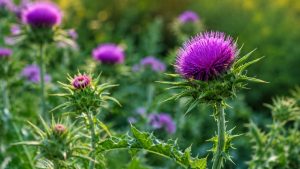
Milk thistle is a striking thistle known for its large white-marked leaves and purple flower heads. Its botanical name is Silybum marianum, and it belongs to the daisy family, Asteraceae. Native to the Mediterranean region and nearby areas, this hardy plant has traveled far beyond its original range.
For gardeners, milk thistle is interesting for its bold appearance, easy growth, and long history in traditional herbal culture.
What Is Milk Thistle?
Milk thistle (Silybum marianum) is an annual or biennial herb in the Asteraceae family, the same broad plant family that includes daisies, sunflowers, and many other familiar garden plants. It is commonly called milk thistle, Mary thistle, or blessed milk thistle.
Distribution and Origin
The species is native to a broad region extending from the Mediterranean and Macaronesia through parts of Central Asia and India, with populations also occurring in parts of Africa. Today, it has been introduced to many other parts of the world, including North America.
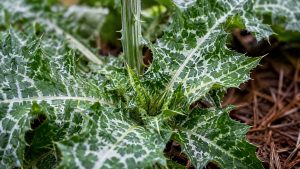
Milk thistle is a substantial plant. Depending on growing conditions, it can form a large basal rosette before sending up an upright flowering stem. Mature plants can reach several feet in height, making them much more noticeable than many small culinary herbs.
One of its most recognizable features is the white marbling that runs along the veins of its green leaves. The foliage is also heavily armed with sharp spines, giving the plant a distinctly rugged appearance.
In nature, milk thistle commonly occurs in disturbed areas, fields, roadsides, pastures, and other open locations. It generally favors sunny conditions and can tolerate a range of soils. Botanical sources describe it as an annual or biennial, with its life cycle depending partly on climate and growing conditions.
For gardeners, there is one important consideration: milk thistle can produce many seeds and may spread readily when conditions are favorable. In some regions of the United States, it is regarded as a potentially invasive plant. Before growing it, check local weed or invasive-plant guidance.

How to Identify Milk Thistle
Milk thistle is relatively easy to recognize once you know its main features. The combination of large white-veined leaves, strong spines, and purple flower heads makes it stand out from many other thistles.
Stem
The stem is upright, green, and generally sturdy enough to support the flowering head. It may branch toward the upper portion of the plant. Botanical descriptions report stems ranging from roughly 1 to more than 6 feet depending on the plant and growing conditions.
Leaves
The leaves are the easiest feature to notice.
Young milk thistle plants begin as a broad basal rosette. The leaves can become quite large, with deeply lobed edges and sharp spines along the margins. Their surfaces are green but strongly marked with pale or white veins.
This white marbling is the feature that gives milk thistle its common name and helps distinguish it from many ordinary thistles.
As the plant grows upward, leaves on the stem become smaller. Upper leaves clasp the stem rather than forming the large spreading rosette seen at the base.
Flowers
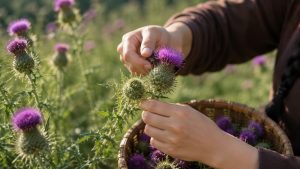
Milk thistle produces showy purple to reddish-purple flower heads at the ends of its stems.
The flower head is surrounded by a spiny structure called an involucre. The combination of purple flowers and sharp surrounding bracts gives the plant its classic thistle appearance.
Fruit and Seeds
After flowering, milk thistle produces small dry fruits called achenes. They are generally dark brown to blackish and have a tuft of fine hairs that helps with dispersal.
Because the seeds can spread easily, gardeners should pay attention to mature flower heads if they do not want the plant appearing elsewhere in the garden.
How to Grow Milk Thistle
Milk thistle is generally an easy plant to grow when given plenty of sun and reasonable drainage. It is better suited to gardeners who have room for a large, spiny plant than to very small beds next to paths or play areas.
Sunlight
Milk thistle grows best in full sun.
Choose a location that receives several hours of direct sunlight each day. Strong light encourages compact, vigorous growth and supports good flowering.
A sunny edge of a garden, herb area, or open border can work well.
Soil
Milk thistle is not especially demanding about soil, but it performs well in moderately fertile, well-drained ground.
A loamy soil with organic matter is a good starting point. Compost or well-rotted organic material can improve soil structure while providing a steady supply of nutrients.
There is usually no need to heavily fertilize the plant. In fact, excessively rich soil can encourage very large vegetative growth when the plant already has plenty of vigor.
For gardeners growing herbs and other useful plants, a simple approach is often best: healthy soil, mature compost, good drainage, and minimal unnecessary inputs.
Watering
Water newly planted milk thistle regularly enough to help the root system become established.
Once established, the plant can tolerate periods of relatively dry weather better than many tender garden herbs. Even so, consistent moisture during early growth can help the plant develop a strong rosette.
Avoid keeping the soil constantly wet. Poor drainage can create unfavorable conditions around the roots.
Temperature
Milk thistle is adapted to relatively mild climates and performs well in warm, sunny conditions. It can behave as an annual or biennial depending on the local climate and planting time.
In colder areas, gardeners may grow it as an annual or sow it at a time that allows the plant to establish before winter.
Planting
Milk thistle is commonly started from seed.
Choose a sunny location and prepare the soil by removing competing weeds and loosening the upper layer. Sow seeds according to the instructions supplied with the seed packet, since planting depth can vary slightly between seed sources.
Once seedlings emerge, thin crowded plants so they have enough space to develop their broad basal leaves.
Give the mature plant plenty of room. A small seedling can become surprisingly large over one growing season.
Propagation
Seed is the practical method for propagating milk thistle.
Allowing mature plants to produce seed can result in natural reseeding. However, this is not always desirable. If you want to keep the plant contained, monitor the flower heads and remove them before mature seeds are dispersed.
Growing in Containers
Milk thistle can be grown in a large container, particularly while young.
Use a sturdy pot with drainage holes and a well-draining potting mix. Because the plant develops a substantial root system and large foliage, a small container will quickly become restrictive.
Container growing also makes it easier to keep the plant separated from other garden areas.
Pruning and General Care
Milk thistle does not require regular pruning.
The main maintenance task is controlling unwanted seed production. Wear appropriate gardening gloves when handling the plant because the leaf margins and flower structures are sharply spined.
Remove damaged foliage when necessary, keep nearby weeds under control, and avoid excessive watering.
Common Growing Problems
The most common problem is not usually a lack of vigor but too much vigor.
Milk thistle can spread beyond the area where it was originally planted. In regions where it is considered invasive or troublesome, seed control is especially important. California, for example, lists the species as a high-risk invasive plant.
Good air circulation, sensible watering, and avoiding overcrowding can also help reduce general garden problems.
How to Harvest and Store Milk Thistle
Harvesting should be planned around the plant part you intend to collect. For gardening purposes, the seeds and mature flower heads are the most obvious harvest material, while leaves and other plant parts have also been documented in traditional and food-related contexts.
When to Harvest
Seeds are generally harvested after the flower heads have matured and begun to dry.
Watch the flower heads closely because mature seeds can disperse naturally. If your goal is to collect seed rather than allow reseeding, timing is important.
How to Harvest
Wear sturdy gardening gloves and use clean scissors or pruning shears when handling mature plants.
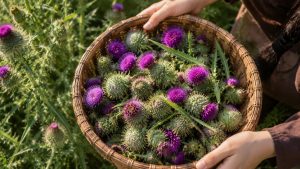
Cut mature flower heads carefully and place them into a clean, dry container. Avoid harvesting material that is wet from rain or heavy dew.
Cleaning and Drying
Remove obvious debris and damaged plant material.
For botanical storage, drying is important because trapped moisture can encourage mold. Spread the material in a thin layer in a clean, dry, well-ventilated location away from strong direct sunlight.
A controlled dehydrator can also be used when appropriate for the plant material and equipment instructions.
Storage
Once completely dry, store the material in an airtight container.
Keep containers in a cool, dry, dark location away from humidity, heat, and direct light. Label each container with the plant name and harvest date.
Check stored material occasionally. Discard anything that develops visible mold, an unusual odor, dampness, or signs of insect activity.
The goal of botanical storage is simple: keep the dried material clean, dry, cool, and protected from light.
Traditional Uses and History of Milk Thistle
Milk thistle has a long history in traditional herbal practices. Historical records and botanical references describe the plant as having been used in European and other traditional herbal cultures.
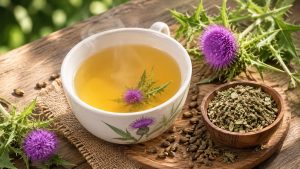
Historically, different parts of the plant, particularly the seeds and above-ground portions, were associated with traditional herbal preparations. Historical sources have described its use in connection with liver-related folk practices and other traditional applications.
The plant also has a history connected with food and agricultural use, and its young parts have been used in some traditional food contexts.
It is important to keep this history in perspective. Traditional use does not automatically mean that a plant has been proven effective or safe for a particular modern health purpose. Modern scientific research on milk thistle has produced mixed findings, and authoritative health information notes that there is not enough high-quality evidence to draw definite conclusions about many proposed health effects.
Conclusion
Milk thistle (Silybum marianum) is a distinctive Mediterranean-region thistle recognized for its large white-marked leaves, sharp spines, and purple flowers. It is relatively easy to grow in full sun and well-drained soil, but its ability to produce abundant seed means gardeners should consider local regulations and manage reseeding. With careful harvesting and dry, dark storage, the plant can also be preserved as a botanical material. Its long traditional history adds another interesting layer to this unusual garden plant.
Frequently Asked Questions
What is milk thistle?
Milk thistle is Silybum marianum, an annual or biennial herb in the Asteraceae family. It is best known for its large, white-veined leaves and purple thistle flowers.
Where does milk thistle grow?
It is native to the Mediterranean region and extends naturally into parts of Europe, Central Asia, India, and Africa. It has also been introduced to many regions outside its native range, including North America.
How do you identify milk thistle?
Look for a large basal rosette with deeply lobed, sharply spined leaves marked by prominent white veins. Mature plants develop upright stems topped with purple flower heads.
How do you grow milk thistle?
Plant milk thistle in full sun and reasonably well-drained soil. It can be started from seed and generally needs little specialized care once established.
How much sunlight does milk thistle need?
Milk thistle grows best in full sun. A location with several hours of direct sunlight helps support strong foliage and flowering.
How do you harvest and store milk thistle?
Mature flower heads can be collected when they are drying and approaching seed maturity. Handle the spiny plant carefully, dry harvested material thoroughly, and store it in an airtight container away from heat, moisture, and light.
What was milk thistle traditionally used for?
Milk thistle has a long history of traditional herbal use, including historical use associated with liver-related folk practices. These historical uses should not be confused with modern medical evidence or considered proof that the plant can treat or prevent a health condition.