Ashwagandha is a small evergreen shrub best known for its long history in Ayurvedic traditions. Its botanical name is Withania somnifera, and the plant is valued for its roots, distinctive berries, and ability to grow in warm, relatively dry conditions.
Today, ashwagandha is also widely discussed as a botanical supplement. However, traditional use and modern scientific evidence are not the same thing. Some areas of research are promising, while others remain uncertain, and safety deserves careful attention.
What Is Ashwagandha?
Ashwagandha (Withania somnifera) is a member of the nightshade family, Solanaceae, which also includes tomatoes, peppers, eggplants, and potatoes.
It is native to parts of India and has also been found in regions of Africa and the Middle East. The plant is sometimes called Indian ginseng or winter cherry, although it is not actually a type of ginseng.

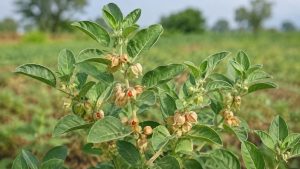
Ashwagandha is a relatively compact shrub. Depending on growing conditions, it can develop into a branching plant with gray-green leaves, small yellow-green flowers, and rounded berries that develop inside papery coverings.
The roots are particularly important in traditional Ayurvedic use. The plant contains naturally occurring compounds called withanolides, along with several other chemical constituents. Scientists are studying these compounds to better understand how different ashwagandha preparations may affect the body.
For gardeners, however, ashwagandha is interesting for another reason: it is a warm-season plant that can fit nicely into a sunny herb garden when the climate is suitable.

What Does Ashwagandha Look Like?
Ashwagandha is not a dramatic garden plant, but it has a distinctive appearance.
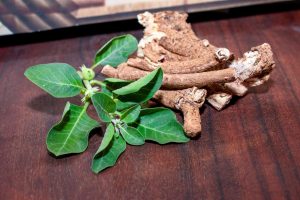
The plant generally develops into a low, branching shrub with soft-looking gray-green foliage. Its leaves are relatively broad and oval-shaped, while its flowers are small and not particularly showy.
After flowering, small berries develop. They can become orange-red when mature and are enclosed by a papery calyx.
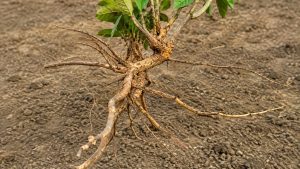
The roots are pale and somewhat thickened. Mature roots are the part most commonly associated with traditional herbal preparations.
One useful identification point is the plant’s overall structure. Ashwagandha tends to look more like a small shrub than the leafy culinary herbs many gardeners are accustomed to growing.
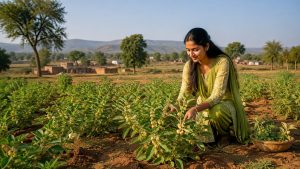
Where Does Ashwagandha Grow Naturally?
Ashwagandha is adapted to warm environments and is particularly associated with dry or semi-arid regions.
It has traditionally been cultivated in parts of India, where warm temperatures and well-drained soils suit its growth. It can also grow in other warm regions when given suitable conditions.
In cooler parts of the United States, gardeners may need to treat it as an annual because cold temperatures can limit its growth.
The plant generally prefers:
- Warm temperatures
- Plenty of sunlight
- Well-drained soil
- Moderate watering
- Protection from prolonged wet conditions
One of the biggest mistakes with plants adapted to dry environments is assuming that more water always means better growth. Ashwagandha generally performs better when its roots are not sitting in constantly wet soil.
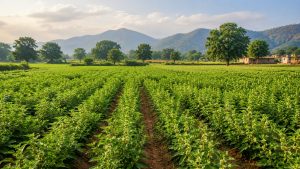
How to Grow Ashwagandha
Ashwagandha can be grown as an ornamental or herbal garden plant in a suitable climate.
Choose a location that receives plenty of direct sunlight. A spot with good drainage is especially important because consistently soggy soil can create problems for the roots.
Soil
A loose, well-draining soil is a good starting point. Heavy clay can be improved with organic matter and other measures that increase drainage.
Before planting, look at how water behaves in the area after rain. If water remains around the planting site for long periods, choose a raised area or a container instead.
Sunlight
Ashwagandha prefers a sunny location.
Aim for a place where the plant can receive several hours of direct sunlight each day. Strong light helps support compact, healthy growth.
If you are growing it indoors, a bright sunny window may work for a young plant, although indoor conditions can be less ideal than a warm outdoor growing area.
Watering
Young plants need consistent moisture while they are becoming established.
Once established, however, ashwagandha generally handles somewhat drier conditions better than constantly wet soil.
Instead of watering automatically every day, check the soil and consider recent weather. Allowing the growing medium to dry somewhat between waterings can help avoid excessive moisture around the roots.
Temperature
Warm weather is important for good growth.
Ashwagandha is not a plant to choose for a cold-season garden. If you live in an area with freezing winters, growing it in a container can make it easier to protect the plant when temperatures fall.
Gardeners in warm regions may be able to grow it outdoors for a longer season.
When Does Ashwagandha Flower?
Ashwagandha produces small flowers during the growing season when conditions are favorable.
The flowers are usually much less noticeable than those of popular ornamental plants, but they are an important stage in the plant’s life cycle because berries develop afterward.
The berries are enclosed by a papery structure that gives them an unusual appearance.
If your main goal is simply to enjoy the plant in the garden, flowering and berry production can be an interesting part of watching its development.
What Is Ashwagandha Traditionally Used For?
Ashwagandha has a long history in Ayurvedic medicine. Traditional preparations have used the plant as a general tonic and in approaches associated with vitality, stress, sleep, and other aspects of health.
It is important, however, to separate traditional use from scientific evidence.
A plant can have centuries of traditional use without every traditional claim being confirmed by modern clinical research. Traditional knowledge can provide useful questions for researchers, but it does not automatically establish that a particular preparation is effective for a specific health condition.
Ashwagandha has been studied in humans for several purposes, including stress and sleep. Research has also examined areas such as anxiety, athletic performance, reproductive health, and other conditions. The results vary considerably depending on the preparation and study design.
Ashwagandha and Stress: What Does the Research Say?
Stress is one area where ashwagandha has received research attention. According to the National Center for Complementary and Integrative Health (NCCIH), some ashwagandha preparations may help reduce stress, and research has also explored possible benefits for sleep.
However, the evidence is still limited, and studies have used different types of preparations. An extract studied in clinical research is not necessarily the same as dried roots, powder, tea, or other forms of the plant.
For this reason, it is more accurate to describe the research as promising but still developing, rather than presenting ashwagandha as a proven treatment for stress or sleep problems.
What Are Withanolides?
Withanolides are a group of naturally occurring compounds found in Withania somnifera.
They are among the compounds that have attracted scientific interest because laboratory research has identified various biological activities associated with them.
However, laboratory findings are not the same as proven health effects in humans.
Researchers continue to study how withanolides and other compounds in ashwagandha may contribute to the effects observed in different experiments. The plant contains many chemical constituents, and the exact contribution of individual compounds is not always clear.
For gardeners, this is another reminder that the plant itself and a concentrated extract made from the plant are not necessarily equivalent.
Ashwagandha Root vs. Concentrated Extracts
This distinction is especially important.
Traditional herbal preparations and modern supplements can differ substantially in concentration and composition. Commercial products may contain root, leaf, root-and-leaf extracts, or other formulations. NCCIH notes that ashwagandha supplements can contain different plant parts and preparations.
A concentrated extract is therefore not simply the same thing as eating or handling the garden plant.
Concentration can change how strongly compounds are delivered, and research findings from one preparation should not automatically be applied to another.
For this reason, people should be cautious about treating online claims about “natural” extracts as though they were equivalent to ordinary culinary herbs.
Can You Grow Ashwagandha in a Home Garden?
Yes, gardeners in warm climates can grow ashwagandha as an interesting addition to an herb garden.
It is especially appealing to gardeners who enjoy plants with cultural and historical significance rather than plants grown only for their appearance.
Give it sunlight, warmth, and well-drained soil. Avoid keeping the roots constantly wet, and protect the plant from cold temperatures.
If you live in a cooler climate, growing it in a container can make seasonal management easier.
For many home gardeners, the plant is best appreciated as a botanical specimen rather than automatically assuming that growing an herb means it is appropriate to prepare or consume it.
Final Thoughts
Ashwagandha is a fascinating plant with deep roots in Ayurvedic traditions and growing interest in modern research. Withania somnifera is a warm-climate shrub that can be an interesting addition to a garden. While some studies show promising results, evidence remains limited for many uses. Understanding traditional practices, scientific findings, and potential safety concerns helps readers make informed decisions about this herbal plant.
Frequently Asked Questions
Is ashwagandha a herb or a shrub?
Ashwagandha is a small evergreen shrub commonly grown and used as an herb. Its scientific name is Withania somnifera.
What part of the ashwagandha plant is traditionally used?
The root is particularly associated with traditional Ayurvedic preparations. Modern supplements may contain root, leaf, or root-and-leaf extracts.
Does ashwagandha have proven health benefits?
Research suggests that some preparations may help with stress and insomnia, but evidence is still limited for many other proposed uses. Different studies also use different preparations, making broad conclusions difficult.
Can ashwagandha cause side effects?
Yes. Reported side effects can include drowsiness and digestive problems such as stomach upset, diarrhea, and vomiting. Rare cases of liver injury have also been reported.
Does ashwagandha interact with medications?
It may. Potential interactions have been reported or identified with several types of medications, including sedatives, thyroid medicines, immunosuppressants, and some medicines for diabetes and high blood pressure.
Is ashwagandha easy to grow?
It can be relatively straightforward in warm conditions. The plant prefers sunlight, warmth, and well-drained soil, while prolonged cold or waterlogged soil can make cultivation more difficult.
Is traditional use the same as scientific evidence?
No. Traditional use provides historical context and can guide scientific research, but it does not by itself prove that an herb is effective for a particular health condition. Scientific evidence must be evaluated separately for each proposed use.