Green beans are a popular warm-season vegetable that can produce a generous harvest in a home garden. They are relatively easy to grow from seed and can thrive in garden beds, raised beds, and suitable containers. With the right planting time, proper spacing, full sunlight, and consistent watering, green bean plants can grow vigorously and produce tender pods throughout the season. Whether you choose bush beans or pole beans, a few simple growing practices can help you achieve healthier plants and a more productive harvest.
What Are Green Beans?
Green beans are the young, edible pods of common bean plants, primarily belonging to the species Phaseolus vulgaris. In the United States, they are also known as snap beans or string beans.
Unlike dry beans, green beans are harvested while the pods are still young and tender. The entire pod can generally be eaten after the stem end is removed. They have a mild flavor and crisp texture and are commonly used in side dishes, salads, soups, stir-fries, and casseroles.
There are two main types of green beans: bush beans and pole beans.
Bush beans grow as compact plants and usually do not need support. They are a good choice for smaller gardens and containers.
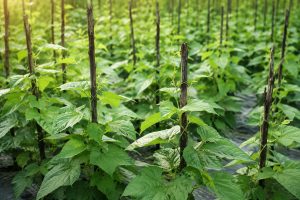
Pole beans produce climbing vines and require a trellis, fence, or other sturdy support. They take advantage of vertical space and can provide a longer harvest under suitable growing conditions.
What Do Green Beans Look Like?
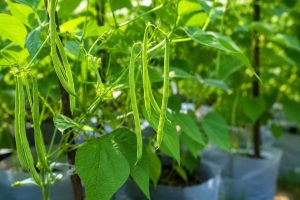
Green bean plants have green leaves, small flowers, and elongated pods.
Most varieties produce green pods, but yellow, purple, and striped varieties are also available. Pod size and shape vary depending on the cultivar.
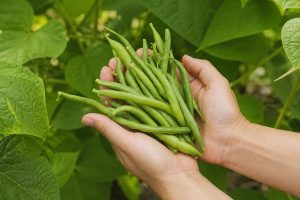
For fresh eating, green beans are usually harvested when the pods are firm, crisp, and tender, before the seeds inside become large.
When Is the Best Time to Plant Green Beans?
Green beans are warm-season vegetables and grow best after cold weather has passed. They are sensitive to frost, so planting too early can lead to poor germination and weak seedlings.
The ideal planting time is generally after the danger of spring frost has passed and the soil has warmed.
Best Temperature for Planting
Green bean seeds germinate best in warm soil.
A soil temperature of about 60°F (16°C) or warmer is generally suitable for planting. Warmer soil can encourage faster germination.
Avoid planting seeds in cold, waterlogged soil.
Before planting, make sure:
- The danger of frost has passed.
- The soil has warmed.
- The planting area drains well.
- Warm weather is expected.
Best Planting Season
Spring is the primary planting season for green beans in much of the United States.
Gardeners can make additional plantings several weeks apart to extend the harvest. In areas with mild autumn weather, green beans may also be planted as a fall crop.
Succession planting is useful because it prevents the entire crop from reaching harvest at the same time.
When to Plant Green Beans by Climate
Planting dates depend on local conditions.
In northern areas, wait until the last spring frost has passed.
In central regions, plant once the soil has warmed consistently.
In southern areas, green beans can often be grown in both spring and fall, although extreme summer heat may reduce production.
Rather than following a single calendar date, use your local frost date, soil temperature, and current weather conditions as a guide.
Green Beans Plant Spacing and Planting Density
Proper spacing gives green bean plants enough room to develop healthy roots, leaves, flowers, and pods. It also improves airflow and makes harvesting easier.
Seed Spacing
Bush bean seeds are commonly planted several inches apart, depending on the variety.
Pole beans can be planted near a trellis or support so that the vines have enough room to climb.
Avoid overcrowding because tightly packed plants compete for sunlight, water, and nutrients.
Always check the seed packet for the recommended spacing for your specific variety.
Row Spacing
Bush beans need enough space between rows for easy access during watering, weeding, and harvesting.
Pole beans require less horizontal space because they grow vertically, but leave enough room around the support for good airflow and maintenance.
Planting Depth
Green bean seeds are generally planted 1 to 1.5 inches deep.
Cover the seeds with loose soil and water gently after planting.
Planting too shallow can allow the seed to dry out, while planting too deeply may make emergence more difficult.
Bush vs. Pole Varieties
Bush beans form compact plants and usually do not need support.
Pole beans produce climbing vines and require a sturdy trellis, fence, or other support.
Bush varieties are convenient for small gardens, while pole varieties can make better use of vertical space.
How to Grow Green Beans for a High Yield
Green beans are easy to grow when their basic needs are met. Good soil preparation, adequate sunlight, proper watering, and regular harvesting are especially important for productive plants.
Choose the Right Location
Choose a location that receives 6 to 8 hours of direct sunlight per day.
Full sunlight supports strong plant growth and helps green beans produce flowers and pods.
Avoid heavily shaded areas and locations where water collects after rain.
Good airflow is also helpful, especially when plants become dense.
Prepare the Soil
Green beans grow well in fertile, loose, well-draining soil.
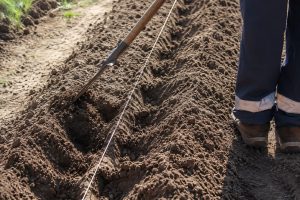
Before planting, loosen compacted soil and remove weeds, rocks, and large roots.
Mixing compost or well-aged organic matter into the soil can improve soil structure and provide nutrients.
Avoid areas that remain saturated because excessive moisture can create root problems.
Plant the Seeds
Green beans are usually direct-sown outdoors.
Plant seeds about 1 to 1.5 inches deep and space them according to the variety.
Cover the seeds with loose soil and water gently.
Keep the soil evenly moist during germination. Once seedlings emerge, thin crowded plants if necessary.
Watering
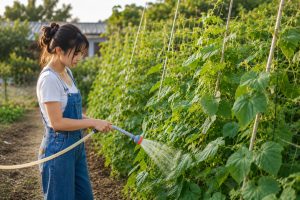
Green beans need consistent moisture, especially during flowering and pod development.
Water when the surface of the soil begins to dry. Keep the root zone moist but not waterlogged.
During hot weather, check the soil more often.
Whenever possible, water near the base of the plants rather than constantly wetting the leaves.
Fertilizing
Green beans do not usually need heavy fertilizer when grown in fertile soil.
Avoid excessive nitrogen because it can encourage leafy growth instead of productive pod development.
Compost added before planting can provide useful organic matter.
If fertilizer is needed, choose a vegetable fertilizer and follow the product label.
Supporting Pole Beans
Bush beans generally do not need support.
Pole beans need a sturdy trellis or other structure before the vines become large.
Useful supports include:
- Trellises
- Garden netting
- Strong poles
- Fences
- A-frame supports
A good support keeps vines upright and makes harvesting easier.
Weed Control
Weeds compete with green beans for water, nutrients, sunlight, and space.
Remove weeds while they are small and be careful when working near young plants.
A layer of mulch can help suppress weeds and reduce moisture loss from the soil.
How and When to Harvest Green Beans
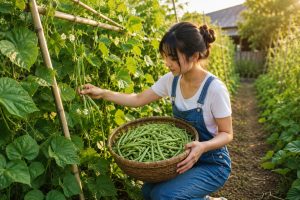
Harvesting at the correct stage helps produce tender pods and encourages continued production.
When Are Green Beans Ready to Harvest?
Green beans are ready when the pods are firm, crisp, and well developed but still young.
The seeds inside should not be overly large.
Look for pods that:
- Have reached the expected size for the variety
- Are firm and smooth
- Have a fresh color
- Snap easily
- Contain relatively small seeds
Avoid leaving mature pods on the plant for too long because they can become tough.
How to Harvest Green Beans
Gently snap or cut each pod from the plant.
Hold the plant with one hand while harvesting with the other to avoid pulling on the branches.
Garden scissors can also be used for clean harvesting.
Handle pole bean vines carefully to avoid damaging the stems.
How Often Should You Harvest?
Check plants every few days during the main harvest period.
Regular picking prevents pods from becoming over-mature and can encourage plants to continue producing flowers and new beans.
Important Tips for Growing Green Beans
A few simple practices can make a significant difference in the health and productivity of a green bean crop.
Avoid Overwatering
Green beans need consistent moisture, but constantly wet soil can cause root problems.
Check the soil before watering and make sure the growing area drains well.
Provide Enough Sunlight
Aim for approximately 6 to 8 hours of direct sunlight each day.
Plants grown in heavy shade may become weak and produce fewer flowers and pods.
Avoid Overfertilizing
Too much nitrogen can encourage excessive leaf growth without improving pod production.
Use compost or a suitable vegetable fertilizer according to the needs of your soil.
Maintain Proper Spacing
Do not overcrowd green bean plants.
Proper spacing improves airflow, makes harvesting easier, and gives plants better access to sunlight, water, and nutrients.
Watch for Pests
Green beans can attract aphids, bean beetles, caterpillars, and spider mites.
Inspect leaves and stems regularly, especially the undersides of leaves.
Early detection makes pest problems easier to manage.
Prevent Common Diseases
Wet foliage, poor airflow, overcrowding, and poor drainage can increase the risk of disease.
To support healthier plants:
- Give plants adequate spacing.
- Water near the soil.
- Improve drainage where necessary.
- Remove badly affected plant material.
- Avoid working with plants when they are wet.
- Rotate crops when practical.
Nutrition and Health Benefits of Green Beans
Green beans are a nutritious vegetable that can be part of a balanced diet.
Key Nutrients
Green beans contain:
- Dietary fiber
- Vitamin C
- Vitamin K
- Folate
- Vitamin A
- Potassium
- Manganese
They also contain various plant compounds with antioxidant properties.
Potential Benefits
Provides dietary fiber
Green beans provide dietary fiber, which is an important part of a balanced diet and supports normal digestive function.
Contains vitamin C
Green beans provide vitamin C, an essential nutrient that supports normal immune function.
Provides vitamin K
Vitamin K contributes to normal blood clotting and bone health.
Adds vegetables to meals
Green beans are an easy way to add more vegetables to everyday meals and can be combined with grains, legumes, proteins, and other vegetables.
Provides a range of nutrients
Eating a variety of vegetables can provide different vitamins, minerals, and plant compounds. Green beans can be one nutritious part of that variety.
How to Eat and Use Green Beans

Green beans are versatile and can be prepared in many simple ways.
How to Prepare Green Beans
Rinse fresh green beans under cool running water and trim the stem ends.
Young beans can be left whole, while larger beans can be cut into smaller pieces.
How to Cook Green Beans
Green beans can be:
- Steamed
- Roasted
- Sautéed
- Stir-fried
- Added to soups
- Added to salads
- Used in casseroles
Steaming keeps the pods tender while maintaining some of their crisp texture.
Roasting creates a deeper flavor, while stir-frying works well with other vegetables and seasonings.
Young, tender green beans can also be eaten raw after proper washing and preparation.
Green beans can be steamed, roasted, sautéed, or added to salads and casseroles. For a classic comfort-food option, try this green bean casserole recipe.
Conclusion
Green beans are a productive warm-season vegetable that can be grown successfully in many home gardens. Plant them after the danger of frost has passed, provide full sunlight, fertile and well-draining soil, proper spacing, and consistent moisture. Bush beans are a convenient choice for compact gardens, while pole beans make good use of vertical space. Regular harvesting helps keep pods tender and encourages continued production. With the right planting time and simple care, green beans can provide a rewarding harvest throughout the growing season.
Frequently Asked Questions
When is the best time to plant green beans?
Plant green beans after the danger of frost has passed and the soil has warmed to around 60°F (16°C) or higher.
How far apart should green beans be planted?
Spacing depends on the variety. Bush and pole beans have different growth habits, so follow the spacing recommendations on the seed packet.
How deep should green bean seeds be planted?
Plant green bean seeds about 1 to 1.5 inches deep in loose, well-draining soil.
How long do green beans take to grow?
Many varieties can begin producing within several weeks after germination. Bush beans often mature sooner, while pole beans may produce over a longer period.
How often should I water green beans?
Water when the soil begins to dry and keep the root zone consistently moist, especially during flowering and pod development.
How can I get green beans to produce more?
Provide full sunlight, proper spacing, fertile soil, consistent moisture, and regular harvesting. Avoid excessive nitrogen fertilizer.
When should I harvest green beans?
Harvest when the pods are firm, crisp, and tender, before the seeds inside become large and the pods become tough.