Growing chili peppers is actually quite simple once you understand what the plants need to grow well. I have been growing peppers in my garden for years, and one of the things I enjoy most is having fresh chilies available whenever I need them.
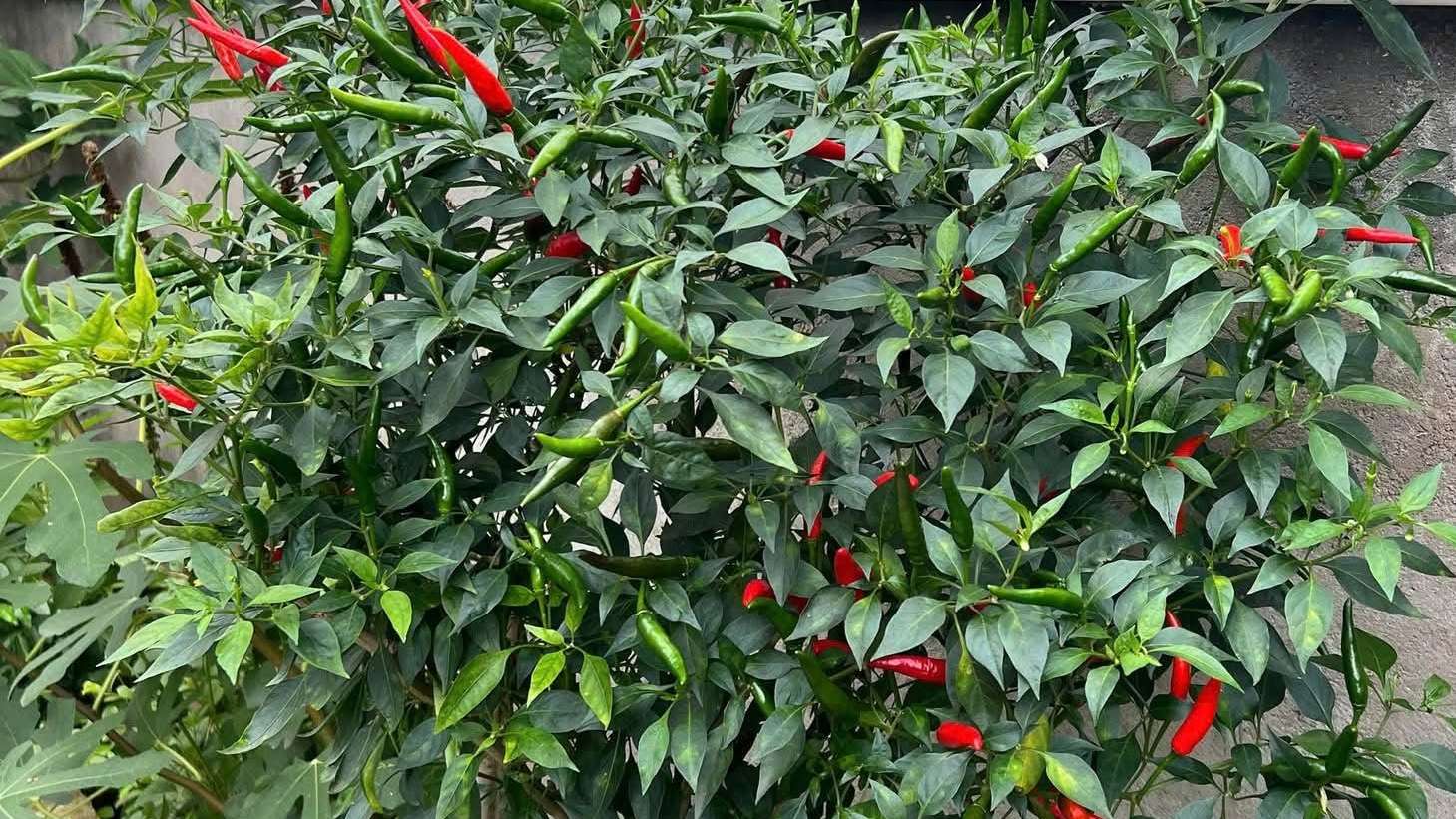
I do not try to make growing peppers overly complicated. I simply pay attention to where the plants grow best, make sure they receive plenty of sunlight, keep the soil healthy, prune them occasionally, and then allow them to grow naturally.
One interesting thing about chili peppers is that they can sometimes grow on their own in the garden. When ripe peppers fall to the ground, the seeds inside may eventually germinate and produce new plants. Some of these naturally growing pepper plants can become surprisingly strong and productive.
Here is the simple approach I use to keep my chili pepper plants healthy and encourage them to produce plenty of fruit.
Start With Healthy Plants in a Sunny Location
Whenever I find a young chili pepper plant growing naturally in my garden, the first thing I look at is its overall condition.
If the plant has a strong stem, healthy green leaves, and a sturdy appearance, I usually leave it where it is instead of immediately trying to move it. If it is growing in a sunny location, I pay even more attention to it.
Chili peppers love sunlight.
A sunny location helps the plants grow strongly and supports flowering and fruit production later in the season.
If a young pepper plant is growing in a good location, I sometimes add a little extra soil around the base. This can help support the plant as it becomes larger and heavier.
I also like to add well-composted chicken manure to the soil. The important part is making sure it has fully aged before using it. Fresh chicken manure can be too strong and may damage plant roots if applied improperly.
My goal is not to add as much fertilizer as possible. I simply want to improve the soil and provide the plant with a steady source of nutrients.
Do Not Overwater Chili Pepper Plants
Another lesson I have learned from growing peppers is that more water is not always better.
Chili plants need water, especially when they are young or during hot and dry weather. However, I do not try to keep the soil constantly wet.
I prefer growing peppers in soil that drains well. When water remains around the roots for too long, the plant can become stressed and the root system may begin to suffer.
For this reason, I water when necessary but always pay attention to the weather and soil moisture rather than following a strict watering schedule.
If the soil is still moist, there may be no reason to water again.
Learning to observe the soil has been much more useful for me than watering on the same schedule every day.
Fertilize in Moderation
I mainly use organic materials such as well-composted chicken manure, although I occasionally add a small amount of balanced fertilizer when needed.
I do not believe that adding more and more fertilizer automatically leads to more peppers. Too much fertilizer can sometimes encourage excessive leaf and stem growth instead of balanced growth and fruit production.
For me, moderation is important.
A healthy chili pepper plant should develop a strong stem and plenty of healthy leaves before producing flowers and fruit. I prefer to provide nutrients gradually instead of trying to force the plant to grow as quickly as possible.
Whenever you use commercial fertilizer, always follow the recommended application rate and instructions on the product label.
Pinch the Growing Tip While the Plant Is Young
One simple technique I often use is pinching the growing tip when a young chili pepper plant is around 8 to 12 inches tall.
Instead of allowing the main stem to continue growing straight upward, I remove the growing tip.
Why do I do this?
I want to encourage the plant to produce more side branches.
With more branches, the plant can develop a bushier and wider shape. These additional branches may create more places for flowers and peppers to develop.
Of course, different pepper varieties grow differently, and not every plant responds in exactly the same way. However, in my garden, this simple technique often helps young pepper plants become bushier and develop more branches.
I also try not to overdo the pruning.
The goal is to encourage a strong plant structure, not to keep cutting the plant constantly.
Remove Old Leaves and Weak Branches
As the plants become larger, I occasionally use clean pruning shears to remove old leaves and small, weak branches.
I usually do this whenever I have time rather than following a strict schedule.
My main goal is to keep the plant open and improve airflow.
When a chili pepper plant becomes extremely dense, leaves and branches can overlap and make the center of the plant crowded. Removing some unnecessary growth can help air move more freely through the plant.
This can be especially helpful during humid weather, when dense and damp foliage may create conditions that encourage certain fungal problems.
Pruning also makes it easier for me to inspect the plant.
I can look more closely for damaged leaves, weak branches, signs of pests, or peppers that are beginning to develop.
However, I never try to remove all the leaves from a plant.
Do Not Worry Too Much About Removing a Few Leaves
Some people may feel nervous when they see a chili pepper plant being pruned.
They may wonder, “If you remove the leaves, how will the plant photosynthesize?”
That is a reasonable question.
But I am not removing every leaf. I only remove older leaves, damaged leaves, overcrowded growth, or branches that no longer seem useful.
A healthy pepper plant can usually produce new growth quite quickly.
In my experience, small new shoots often begin appearing within days after pruning. Sometimes the plant starts looking green and full again surprisingly quickly.
That is why I do not worry too much about removing a few leaves from an overly crowded plant.
The important thing is balance. The plant still needs plenty of healthy leaves to capture sunlight and produce energy, so pruning should always be selective rather than aggressive.
Allow the Plant to Grow and Produce Naturally
Once the plant is healthy and begins flowering, I mostly allow it to continue growing naturally.
I do not try to interfere with every flower or every small pepper that begins to develop.
If the plant receives enough sunlight, has healthy soil, gets appropriate watering, and receives enough nutrients, it can continue producing flowers and fruit.
Sometimes my plants produce more peppers than I can use.
And that is when I do something a little different.
I simply leave some of the peppers on the plant.
Let Some Peppers Ripen and Fall Naturally
I really enjoy seeing fully ripened peppers hanging in the garden.
Their bright colors make the garden feel more lively and interesting.
When I do not need to harvest every pepper, I sometimes allow some of them to continue ripening on the plant. Eventually, a few may fall naturally to the ground.
The seeds inside those peppers can become the beginning of new plants.
Some seeds may germinate when conditions are suitable. Others may be moved around the garden through animals, water, gardening activity, or other natural processes.
Over time, small pepper plants may begin appearing in unexpected places.
Some of these volunteer pepper plants can grow surprisingly well with very little care.
That is one reason I have not always needed to buy new pepper seeds.
Instead of seeing fallen ripe peppers as waste, I sometimes see them as an opportunity for the garden to produce another generation of plants.
Four Things I Always Keep in Mind
After growing chili peppers for many years, my approach has become very simple.
Chili Peppers Love Sunlight
Choose a location that receives plenty of sunlight and gives the plants enough space to grow.
Chili Peppers Prefer Healthy, Nutrient-Rich Soil
Well-composted organic materials and appropriate fertilizer can provide useful nutrients, but more fertilizer is not always better.
Chili Peppers Do Not Need Constantly Wet Soil
Water when the plants and soil actually need it, and avoid allowing the roots to remain in waterlogged conditions.
Chili Pepper Plants Can Benefit From Careful Pruning
Pinching young plants may encourage more branching, while occasionally removing old leaves and weak growth can help improve airflow.
These are simple habits, but they have worked well in my garden.
Growing Chili Peppers Does Not Have to Be Complicated
There are many different gardening techniques, but sometimes the simplest approach is the one that works best.
Start by observing the plants.
Look at the leaves.
Check the soil.
Pay attention to the sunlight.
Remove old or weak growth when necessary, then give the plants enough space to continue growing.
Gardening also teaches patience. A small pepper seedling that unexpectedly appears after a ripe pepper falls to the ground can eventually become a large, productive plant covered with colorful fruit.
That is one of the things that makes growing chili peppers so enjoyable.
You grow a plant, care for it, harvest the first peppers, and eventually the plant may produce seeds for another generation.
For me, that is one of the reasons chili peppers are such rewarding plants to grow.
If you have a sunny corner in your garden, try growing a few chili pepper plants and watch how they develop. With plenty of sunlight, healthy soil, reasonable watering, moderate feeding, and occasional pruning, you may be surprised by how productive these small plants can become.
And if a ripe pepper falls to the ground and a tiny new seedling eventually appears, do not be too quick to pull it out.
It might become your next favorite chili pepper plant.