In modern cuisine, bean sprouts have become a familiar ingredient in kitchens around the world. Usually grown from mung beans, these crisp, tender shoots add freshness and texture to everything from soups and noodle dishes to salads and stir-fries.
But bean sprouts are more than a simple garnish. In this guide, we’ll explore what they are, their nutritional value, their role in global cuisine, how to grow them at home, and important tips for safe handling.
Nature and Definition: What Are Bean Sprouts?
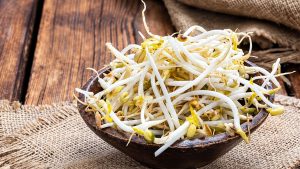
When you search for “bean sprouts” at American supermarkets, Asian grocery stores, or international food websites, you’ll usually find slender, ivory-white shoots with small yellowish seed heads. They have a crisp texture and a mild, slightly sweet flavor that works well with many different foods.
Bean Sprouts vs. Soybean Sprouts
The term “bean sprouts” can sometimes cause confusion because several types of beans can be sprouted. However, the sprouts commonly sold in American grocery stores are usually made from mung beans.
- Mung Bean Sprouts: These are the familiar white sprouts used in many Asian dishes. They have slender stalks, small seed heads, a crisp texture, and a mild flavor.
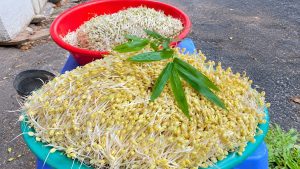
- Soybean Sprouts: Known as kongnamul in Korean cuisine, these sprouts come from soybeans rather than mung beans. They usually have thicker stalks, larger seed heads, and a stronger, nuttier flavor. Soybean sprouts are especially popular in Korean soups, stews, seasoned side dishes, and rice dishes.
The Natural Germination Process
Bean sprouts begin as dry seeds that absorb water and swell during soaking. Once hydrated, the seeds are kept moist and rinsed regularly while the young roots and shoots develop.
For the familiar white appearance, sprouts are commonly grown with limited exposure to light. This helps prevent strong chlorophyll development and keeps the shoots pale rather than green.
During germination, the seed undergoes significant biological changes. Stored nutrients are broken down and used to support the developing plant, while the seed gradually transforms into a tender, water-rich sprout.
A Nutrient-Rich Food Packed Into Every Sprout
Bean sprouts may look simple, but they can provide several useful nutrients while adding very few calories to a meal. Their high water content also gives them a light and refreshing texture.
Low in Calories, High in Water and Dietary Fiber
Mung bean sprouts are naturally low in calories and contain a large amount of water. They also provide dietary fiber, making them an easy ingredient to add to meals without making them overly heavy.
Their crisp texture makes them particularly useful in salads, noodle bowls, soups, sandwiches, and stir-fries. They can add plenty of volume and crunch while keeping the overall dish relatively light.
Dietary fiber is also an important part of a balanced diet and contributes to normal digestive function.
A Source of Vitamin C and B Vitamins
Sprouting changes the nutritional profile of a seed. As the bean begins to germinate, its stored nutrients are used to support new growth.
Bean sprouts can provide vitamin C along with several B vitamins, including folate. These nutrients have important roles in normal body functions such as energy metabolism, cell development, and immune function.
The exact nutrient content can vary depending on the bean variety, growing conditions, freshness, and preparation method.
Essential Minerals and Plant Compounds
Bean sprouts also contain minerals and naturally occurring plant compounds that contribute to their overall nutritional value.
- Potassium, Magnesium, and Vitamin K: Bean sprouts provide potassium and magnesium, which are involved in normal muscle and nerve function. They also contain vitamin K, a nutrient involved in normal blood clotting and bone health.
- Flavonoids and Other Plant Compounds: Sprouted legumes contain naturally occurring plant compounds, including flavonoids and other antioxidants. The amount and type of these compounds can vary depending on the variety of bean and the conditions under which it is sprouted.
The Role of Bean Sprouts in Global Cuisine
Bean sprouts have long been an important ingredient in Asian cooking and have gradually become familiar to home cooks around the world. Their mild flavor allows them to work well with strong sauces, broths, herbs, spices, and other fresh ingredients.
Thai and Southeast Asian Cuisine: A Favorite for Pad Thai
Bean sprouts are closely associated with Pad Thai, one of Thailand’s best-known noodle dishes. Fresh sprouts are often served alongside the noodles or added toward the end of cooking.
Their cool, crisp texture creates a pleasant contrast with soft rice noodles, savory sauces, peanuts, vegetables, and other ingredients.
Across Southeast Asia, bean sprouts are also used in fresh spring rolls, noodle dishes, soups, salads, and stir-fries. In Vietnamese cuisine, they are a familiar accompaniment to dishes such as phở, bún bò Huế, and fresh rolls.
Japanese and Korean Cuisine: Ramen, Namul, and Bibimbap
- Japan: Bean sprouts, commonly called moyashi, are frequently used in Japanese cooking. They may be added to ramen, stir-fries, noodle dishes, and vegetable preparations. Their crisp texture provides a nice contrast to rich broths and softer ingredients.
- Korea: Soybean sprouts and mung bean sprouts are both used in Korean cuisine. Kongnamul Muchim, a seasoned soybean sprout side dish made with ingredients such as sesame oil, garlic, green onions, and sesame seeds, is a popular banchan. Sprouts are also commonly included in dishes such as bibimbap and various soups.
The Growing Popularity in Western Countries
Bean sprouts have become increasingly familiar in the United States, Canada, Europe, and other Western markets as Asian cuisine has become more widely available.
Dishes such as Vietnamese bánh mì, phở, fresh spring rolls, ramen, and Asian-style noodle bowls have introduced many Western diners to the crisp texture of fresh sprouts.
At home, people commonly add bean sprouts to stir-fries, salads, sandwiches, soups, and noodle dishes. Their mild flavor allows them to blend easily with many different ingredients.
The Art of Growing Bean Sprouts at Home
One of the most interesting things about bean sprouts is how quickly they can be grown. Unlike most garden crops, they don’t need soil, fertilizer, or a large growing space.
With suitable beans, clean water, a well-drained container, and regular rinsing, you can grow a small batch indoors within just a few days.
Step-by-Step Guide to Home Sprouting
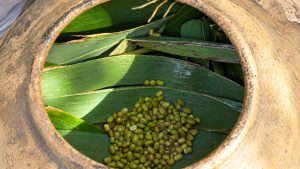
Selecting Seeds: Choose whole, healthy mung beans intended for food use or sprouting. Avoid beans that are damaged, moldy, discolored, or have an unusual smell.
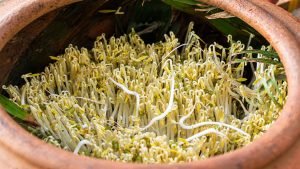
Soaking: Rinse the beans thoroughly with clean water and place them in a clean bowl. Cover them with plenty of water and let them soak for about 8 to 12 hours. The beans will absorb water, swell, and soften during this stage.
Sprouting Setup: Drain the beans completely after soaking. Place them in a clean glass jar, sprouting container, perforated food container, or another suitable setup that provides good drainage and airflow.
Keep the container away from direct sunlight and avoid sealing it in a way that prevents air circulation.
Rinsing Routine: Rinse the beans with clean water about 2 to 3 times a day. After each rinse, drain them thoroughly. Standing water can create conditions that encourage mold and bacterial growth.
Regular rinsing also keeps the beans moist while they develop their roots and shoots.
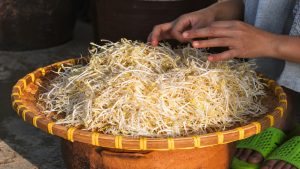
Harvesting: Depending on the temperature, humidity, bean variety, and growing conditions, sprouts may be ready within about 3 to 5 days.
When they reach the size and texture you prefer, rinse them thoroughly and use them promptly. Remove any damaged or questionable sprouts before preparing them for food.
Important Precautions When Using Bean Sprouts
Bean sprouts are easy to grow, but their warm and moist growing environment can also allow harmful bacteria to multiply. Proper hygiene and storage are therefore especially important.
Hygiene, Bacterial Growth, and Food Safety
Raw and undercooked sprouts have been associated with foodborne illnesses caused by bacteria such as E. coli and Salmonella. The warm, humid conditions needed for sprouting can also provide favorable conditions for bacterial growth.
For this reason, people at higher risk of foodborne illness, including pregnant women, young children, older adults, and people with weakened immune systems, should avoid raw or undercooked sprouts and choose thoroughly cooked sprouts instead.
When growing sprouts at home, start with clean equipment and wash your hands before handling the beans. Use clean water for soaking and rinsing, and make sure the container drains completely after every rinse.
Proper Storage and Handling Tips
Fresh bean sprouts contain a lot of water and can quickly lose their crisp texture if they are left at room temperature for too long.
After purchasing or harvesting them, keep the sprouts refrigerated in a clean food-safe container or bag. Good airflow and moisture control can help reduce excessive condensation.
Check the sprouts before using them and discard any that develop an unpleasant odor, slimy texture, mold, or unusual discoloration.
For the best quality, use fresh bean sprouts as soon as possible rather than storing them for an extended period.
Conclusion
From small mung beans to a familiar ingredient found in kitchens around the world, bean sprouts have become an important part of many culinary traditions. Their mild flavor, crisp texture, and versatility make them easy to add to soups, noodle dishes, salads, stir-fries, sandwiches, and fresh rolls.
Whether you enjoy them in a warm bowl of phở, a plate of Pad Thai, or a fresh batch grown at home, bean sprouts are a simple ingredient that can bring freshness and texture to everyday meals. With clean growing practices and proper food handling, they can be an enjoyable addition to a wide variety of dishes.
Bean Sprouts FAQs
What beans are commonly used to grow bean sprouts?
Mung beans are the most common choice for the white, crisp sprouts sold in many grocery stores. Soybeans are also used to produce thicker Korean-style soybean sprouts.
How long does it take to grow bean sprouts?
Most mung bean sprouts are ready to harvest in about 3 to 5 days. Temperature, moisture, airflow, and the quality of the seeds can affect the growing time.
Can you grow bean sprouts without soil?
Yes. They can be grown without soil because the seed contains stored nutrients that support the young plant during germination. Clean water, proper drainage, and regular rinsing are the main requirements.
Should bean sprouts be eaten raw or cooked?
They can be eaten raw, but cooking reduces the risk of foodborne illness. People at higher risk of foodborne illness should choose thoroughly cooked sprouts rather than raw or undercooked ones.
How should fresh sprouts be stored?
Store them in the refrigerator in a clean food-safe container or bag. Keep them cold and