Knowing how to tell if a papaya is ripe can help you choose fruit that is sweet, juicy, and ready to eat. An unripe papaya is usually firm, green, and has little aroma, while a ripe papaya becomes softer, develops a yellow-orange color, and gives off a pleasant fruity scent.
Whether you are buying papayas at the grocery store, picking them from your garden, or letting them ripen at home, learning a few simple signs can make it much easier to find the perfect fruit.
For more information about the fruit, including its nutrition, varieties, growing conditions, and ways to enjoy it, see our complete guide to Papaya Fruit.
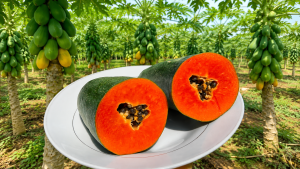
1. Check the Color of the Papaya Skin
One of the easiest ways to tell if a papaya is ripe is to look at the color of its skin. The skin of an unripe papaya is usually mostly green. As the fruit ripens, the green color gradually changes to yellow, golden yellow, or yellow-orange.
A papaya does not always need to be completely yellow to be ready to eat. Depending on the variety and how ripe you like your fruit, a papaya with mostly yellow skin and some remaining green areas may already be sweet and enjoyable.
When shopping for papayas, look for fruit that has developed a noticeable amount of yellow or orange color. If the entire papaya is bright green, it is likely still unripe and may need several more days to soften.
However, color should not be the only thing you check. Some varieties naturally stay greener than others, so it is best to combine the color test with the firmness and smell of the fruit.
2. Gently Press the Papaya
The firmness of a papaya is another important sign of ripeness. An unripe papaya will feel very hard when you gently press the skin with your fingers.
As the fruit ripens, the flesh inside becomes softer. A ripe papaya should have a slight give when you gently press it, similar to a ripe avocado or peach. You should be able to feel a little softness without the fruit feeling mushy.
Avoid squeezing the fruit too hard because this can bruise the delicate flesh. Instead, use gentle pressure on several areas of the papaya.
If the papaya is completely firm, it probably needs more time to ripen. If it is slightly soft but still holds its shape, it is often ready to eat. A papaya that feels extremely soft, has large sunken areas, or feels watery under the skin may be overripe.
For the best flavor and texture, look for a papaya that is soft enough to yield slightly but still feels firm and healthy.
3. Smell the Stem End
A ripe papaya often develops a sweet, fruity aroma. One of the best places to check for this smell is near the stem end of the fruit.
Hold the papaya close to your nose and gently smell the area where the stem was attached. A ripe papaya should have a pleasant, sweet, tropical fragrance. This is a good indication that the fruit is developing its characteristic flavor.
An unripe papaya may have very little smell or may smell mostly like fresh vegetation. If you cannot detect much aroma, the fruit may need more time to ripen.
On the other hand, a strong fermented, sour, or unpleasant smell can indicate that the papaya is past its best. If the fruit also has very soft spots or leaking juice, it is likely overripe.
The smell test is especially useful when the skin color is difficult to judge. By combining aroma with color and firmness, you can get a better idea of whether the fruit is ready.
4. Look for a Healthy, Smooth Appearance
In addition to color, examine the overall appearance of the papaya. A good ripe papaya should generally have smooth skin without extensive bruising, deep cuts, or large damaged areas.
Small spots or minor blemishes are not necessarily a problem. However, large dark patches, mold, leaking liquid, or areas that appear deeply sunken may indicate that the fruit is damaged or beginning to spoil.
Some papayas naturally develop small marks as they mature, so appearance should be considered together with the other ripeness signs.
A healthy-looking papaya with yellowing skin, gentle softness, and a sweet aroma is usually a good choice.
5. Check the Shape and Feel of the Fruit
A ripe papaya should feel relatively heavy for its size. This can indicate that the fruit contains plenty of moisture and has developed a juicy texture.
The fruit should also have a full, well-developed shape. When you pick it up, it should not feel unusually light or hollow.
While weight alone cannot tell you exactly whether a papaya is ripe, it can be another useful clue when choosing between several fruits.
6. What Does an Unripe Papaya Look Like?
An unripe papaya is usually easy to recognize. It often has mostly green skin and feels very firm when touched. It may also have little or no sweet aroma.
The flesh of an unripe papaya is typically harder and less sweet than that of a ripe fruit. Depending on the variety, it may have a mild or slightly bitter flavor.
If you buy an unripe papaya, there is no need to throw it away. You can simply leave it at room temperature and allow it to ripen naturally.
7. How to Ripen a Papaya at Home
If your papaya is still firm and green, place it at room temperature away from direct sunlight. Check it every day for changes in color, softness, and aroma.
As the fruit ripens, the skin should gradually develop more yellow or orange color and the fruit should become slightly softer.
If you want to speed up the ripening process, placing the papaya in a paper bag can help retain naturally produced ripening gases around the fruit. Adding another ripe fruit, such as a banana or apple, may also help encourage faster ripening.
Once the papaya reaches your preferred level of ripeness, you can move it to the refrigerator to slow further ripening. Refrigeration is useful when you are not ready to eat the fruit immediately.
8. How to Tell If a Papaya Is Too Ripe
A papaya that is too ripe may become extremely soft and develop large bruised or sunken areas. The skin may also show extensive dark spots, and the fruit can develop a fermented or unpleasant smell.
Some softening is normal and desirable, but the fruit should still have a fresh, sweet aroma. If you notice mold, significant leaking, or a strong off smell, it is better not to eat the fruit.
Cutting the papaya open can also help you assess its condition. Fresh ripe flesh should have a pleasant color and smell. If the inside looks significantly discolored or has an unpleasant odor, the fruit may have spoiled.
9. The Best Way to Tell If a Papaya Is Ripe
The most reliable approach is to use several signs together rather than depending on just one.
A ripe papaya usually has:
- Yellow, golden, or yellow-orange skin
- A slight softness when gently pressed
- A sweet, fruity aroma near the stem end
- A healthy appearance with limited bruising
- A relatively heavy feel for its size
- Flesh that is soft, juicy, and sweet when cut open
If the papaya is green, very firm, and has little aroma, it probably needs more time to ripen.
Final Thoughts
Learning how to tell if a papaya is ripe is simple once you know what to look for. The most important signs are the color of the skin, the softness of the fruit, and its aroma. A papaya that is beginning to turn yellow or orange, gives slightly when gently pressed, and smells sweet near the stem is usually ready to enjoy.
If your papaya is still firm and green, give it a few more days at room temperature and check it regularly. With a little patience, you can enjoy papaya when it reaches the perfect balance of sweetness, softness, and tropical flavor.
For a deeper look at papaya nutrition, health benefits, varieties, and more, explore our complete guide to Papaya Fruit.