The right soil can make a noticeable difference when growing strawberries at home. Strawberry plants have relatively shallow roots, so they depend heavily on the condition of the soil around them. If the soil drains poorly, dries out too quickly, or lacks organic matter, plants may struggle even when they receive enough sunlight.
From my experience, the best approach is not to make the soil complicated. A loose, fertile, well-draining mixture with enough moisture-holding capacity gives strawberry roots a good environment to grow.
What Makes Good Strawberry Soil?
Strawberries grow best in soil that balances drainage, moisture retention, nutrients, and airflow.
The roots need access to water, but they should not sit in constantly saturated soil. At the same time, soil that drains too quickly can leave plants struggling during hot weather.
A good strawberry soil should be:
- Loose and well-drained
- Rich in organic matter
- Able to hold some moisture
- Free from large clumps and stones
- Suitable for healthy root development
- Not excessively compacted
The physical structure of the soil is just as important as its nutrient content.
Choose a Well-Draining Base
Garden soil can work for strawberries if it has good structure, but heavy clay soil can create problems.
Clay tends to hold water for longer periods and may become compacted. If your garden has heavy soil, improve it with organic matter rather than simply planting directly into it.
Sandy soil has the opposite challenge. It may drain quickly and require more frequent watering.
A balanced soil mixture should allow excess water to move away while retaining enough moisture around the roots.
Add Mature Compost
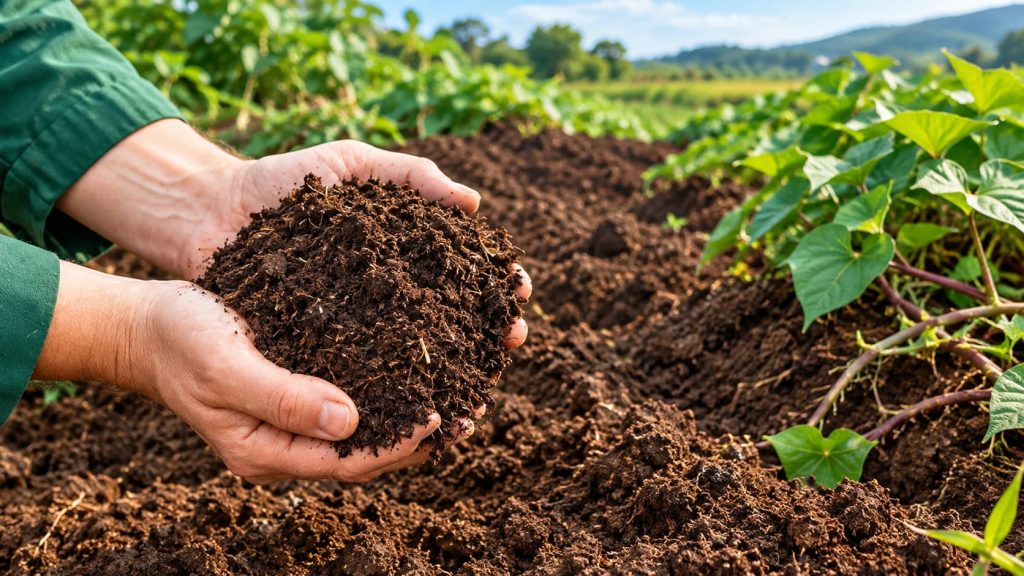
Compost is one of the most useful additions for a home strawberry bed.
Well-aged compost adds organic matter and improves the overall structure of many soils. It can help heavy soil become more workable while giving lighter soil better moisture retention.
Before planting, mix a moderate amount of mature compost into the planting area.
Avoid using fresh manure directly around strawberry roots. Fresh organic materials can be too strong for young plants and may create other problems in the garden.
I prefer mature compost because it is simple, widely available, and useful for improving soil over time.
A Simple Strawberry Soil Mix
For containers or raised beds, you can make a simple growing mixture using several basic ingredients.
One practical approach is to combine:
- High-quality potting soil as the main base
- Mature compost for organic matter
- A material that improves drainage, such as perlite
The exact proportions do not need to be treated as a strict formula. The final mixture should feel light and crumbly rather than dense and sticky.
When you squeeze a handful of moist soil, it should hold together loosely but break apart relatively easily.
That is a useful test when preparing soil at home.
Avoid Soil That Stays Waterlogged
One of the easiest mistakes is creating a soil mixture that holds too much water.
Strawberry roots need moisture, but continuously wet conditions can create an unhealthy root environment.
Before planting, test how quickly water moves through the soil. If water sits on the surface for a long time, improve the soil structure or consider using a raised bed or container with better drainage.
Containers should always have drainage holes.
Do not place a strawberry pot directly into a tray of standing water for long periods. Excess water should have a way to escape.
Soil pH for Strawberries
Strawberries generally prefer slightly acidic soil.
A soil test can tell you whether your garden soil is within a suitable range. Testing is especially useful when plants repeatedly perform poorly despite receiving adequate sunlight and water.
Avoid adding lime or other amendments simply because you have heard they are useful. Soil amendments should be based on the actual condition of your soil.
A basic soil test can help you avoid making unnecessary changes.
Prepare the Soil Before Planting
Good soil preparation starts before the strawberry plants go into the ground.
First, remove weeds and large debris from the planting area. Then loosen compacted soil and mix in mature compost.
Break apart large clumps and create a reasonably even planting surface.
If you are using a raised bed, prepare the entire bed rather than creating small pockets of improved soil around individual plants. This gives the roots more room to explore as they grow.
For containers, fill the pot with a prepared growing mixture and avoid packing it down too firmly.
Soil for Strawberry Containers
Growing strawberries in containers can be convenient, especially when garden soil is poor.
Use a quality potting mix rather than filling the entire container with heavy garden soil.
A container mixture should be lightweight enough for roots to grow through easily while still holding sufficient moisture.
Choose a container with drainage holes and check the soil regularly because containers can dry out faster than garden beds.
During hot weather, container strawberries may need more frequent watering than plants growing in the ground.
Raised Beds Can Improve Soil Conditions
Raised beds are useful when your natural soil has drainage or compaction problems.
They allow you to create a growing environment specifically suited to strawberries.
Fill the bed with a mixture of quality topsoil, compost, and other appropriate organic materials. Avoid creating an extremely rich mixture that encourages excessive leafy growth at the expense of balanced plant development.
Another advantage of raised beds is that the soil warms and drains differently from low-lying ground.
This can make maintenance easier, particularly in gardens where water tends to collect.
Mulch Helps Protect the Soil
Once strawberries are planted, mulch can help maintain better soil conditions.
A layer of clean straw or another suitable garden mulch can reduce evaporation and slow weed growth. It also helps keep developing berries away from bare soil.
Do not bury the strawberry crown under mulch. Keep the central growing point of the plant exposed.
Check the mulch occasionally and refresh it when necessary.
Mulching is particularly useful during hot weather because it can help reduce rapid changes in soil moisture.
Do Not Over-Fertilize the Soil
A common mistake is assuming that more nutrients will always produce more strawberries.
In reality, excessive fertilizer can encourage too much leaf growth and may create an imbalance in the garden.
Start with reasonably fertile soil and use a fertilizer formulated for fruiting plants only when necessary.
Follow the label instructions carefully.
If the plants are growing strongly and producing healthy foliage, there may be no reason to continually add fertilizer.
Good soil structure, adequate sunlight, and consistent moisture should come first.
Refresh Strawberry Soil Over Time
Soil quality can change as plants grow.
Organic matter breaks down, nutrients are used, and the structure of the planting area can change over several seasons.
Adding mature compost at appropriate times can help maintain the soil.
If you grow strawberries in containers, replacing or refreshing the growing medium periodically may also be useful.
Keep an eye on how the plants respond rather than changing everything automatically.
If growth is strong and fruit production is good, major soil changes may not be necessary.
My Practical Soil Checklist
When preparing soil for strawberries at home, I focus on a few simple questions:
- Does excess water drain away easily?
- Does the soil contain enough organic matter?
- Is it loose enough for roots to grow?
- Does the soil retain some moisture between watering?
- Have I tested the soil if there is a suspected pH problem?
- Is the container large enough and equipped with drainage holes?
- Am I avoiding excessive fertilizer?
- Is mulch being kept away from the plant crown?
If the answer to most of these questions is yes, the plants have a solid foundation.
Final Thoughts
The best soil for strawberries does not need to be complicated or expensive. What matters most is creating a loose, fertile, well-drained environment where shallow roots can access both moisture and air.
For a home garden, mature compost, quality soil, and good drainage are usually more valuable than constantly adding fertilizers or special products.
Prepare the soil carefully before planting, watch how quickly it dries after watering, and adjust your approach based on what the plants show you. With the right soil conditions, strawberry plants can establish strong roots and have a much better foundation for healthy growth and fruit production.