Daffodils flowers are one of the first signs I look forward to every spring. I’ve grown them in different spots around the garden, and I’ve found that they are wonderfully easy to care for once planted in the right place.
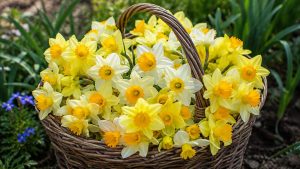
Their cheerful blooms brighten the garden after winter, and the best part is that they can return year after year with very little work. If you’re planting daffodils for the first time, a sunny spot and well-drained soil are a great place to start.
What Are Daffodils Flowers?
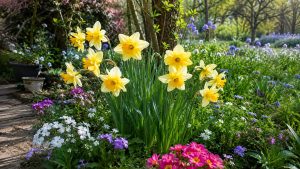
Daffodils flowers are perennial spring-blooming plants in the Narcissus genus. They grow from bulbs and are best known for their cheerful yellow or white petals and trumpet-shaped centers.
There are many daffodil varieties, with different flower shapes, colors, and bloom times. They are popular with gardeners because they are easy to grow, cold-hardy, low-maintenance, and can return year after year.
Popular Types of Daffodils Flowers
Daffodils flowers come in many shapes, sizes, and colors. Some popular types include:
- Trumpet Daffodils: Large trumpet-shaped centers and classic spring blooms.
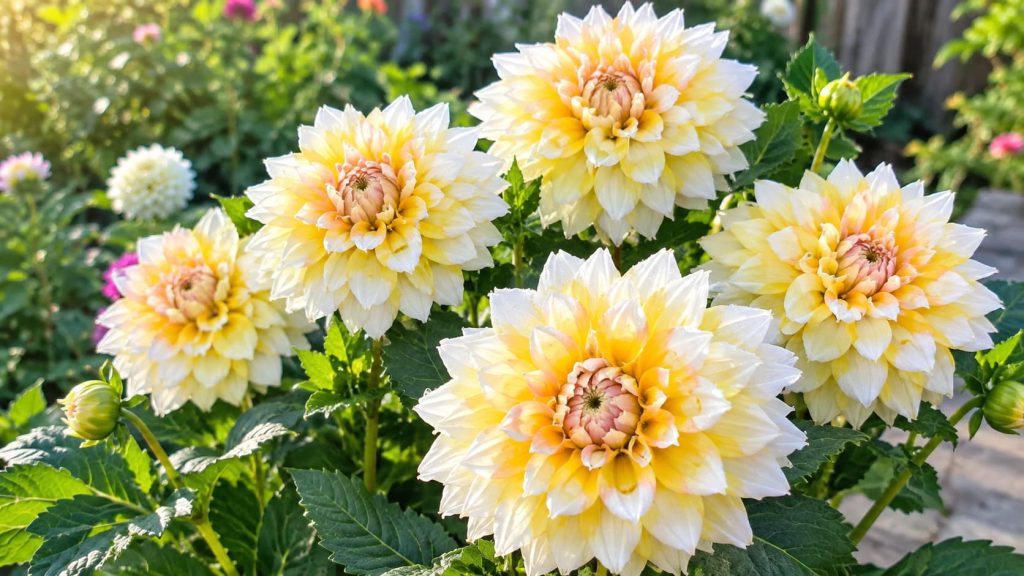
- Double Daffodils: Full flowers with multiple layers of petals.
- Large-Cupped Daffodils: Prominent central cups in yellow, white, and other combinations.
- Small-Cupped Daffodils: Delicate flowers with smaller central cups.
- Jonquilla Daffodils: Smaller, often fragrant flowers that may bloom in clusters.
- Tazetta Daffodils: Several smaller flowers can grow on one stem.
Mixing different types can create a more colorful garden and extend the spring blooming season.
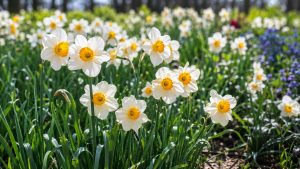
When Do Daffodils Flowers Bloom?
Daffodils flowers usually bloom in spring, although the exact timing depends on the variety, climate, and weather.
Early varieties may begin flowering in late winter, while mid-season and late varieties can continue blooming well into spring.
In warmer climates, flowering may happen earlier. In colder areas, blooms may appear later as the soil warms.
Planting several varieties with different bloom times is one way to extend the daffodil display.
Instead of having every plant bloom at once, you can enjoy flowers over a longer period.
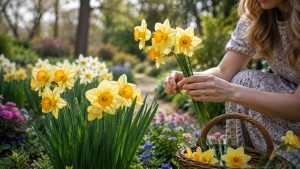
When to Plant Daffodil Bulbs
The best time to plant daffodil bulbs is generally in the fall.
Planting several weeks before the ground freezes gives the bulbs enough time to establish roots before winter arrives.
In many parts of the United States, September through November is a suitable planting window. However, local weather conditions are more important than following a specific date.
The soil should still be workable when you plant.
Avoid planting bulbs in soil that is frozen, extremely wet, or poorly drained.
If you purchase bulbs late in the season, plant them as soon as practical while the ground remains workable.
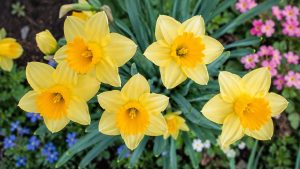
Choosing the Best Location for Daffodils
The right location can make a major difference in how well your daffodils flowers perform.
Daffodils generally prefer full sun to partial shade. A location receiving around six hours of sunlight during the growing season is often ideal.
Good drainage is equally important.
Daffodil bulbs do not like sitting in waterlogged soil for long periods. Excess moisture can increase the risk of bulb problems and poor growth.
Look for a location with:
- Plenty of sunlight
- Well-drained soil
- Good air circulation
- Moderate soil moisture
- Enough room for bulbs to multiply
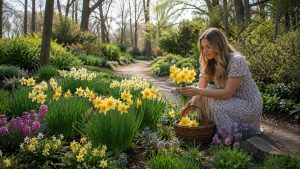
Daffodils can be planted along walkways, around trees, in garden borders, beneath deciduous trees, or in larger naturalized areas.
If you plant them under deciduous trees, they can take advantage of sunlight in early spring before the tree canopy becomes dense.
How to Plant Daffodil Bulbs
Planting daffodil bulbs is relatively simple.
Prepare the Soil
Start by loosening the soil in the planting area.
Work the soil to approximately 12 inches deep if possible. Remove large rocks, weeds, and other debris.
If the soil drains poorly, improve the planting area with organic matter such as compost.
The goal is to create loose soil that allows roots to develop while excess water can drain away.
Plant the Bulbs Pointed Side Up
Place each daffodil bulb with its pointed end facing upward.
A useful general guideline is to plant bulbs about two to three times as deep as the bulb is tall.
For many standard-sized bulbs, this means approximately 4 to 6 inches deep.
However, bulb size and variety can vary, so follow the planting recommendations provided for your particular bulbs when available.
Space the Bulbs Properly
Leave several inches between bulbs so they have room to develop.
For a natural-looking display, plant groups of bulbs rather than placing every bulb in a perfectly straight line.
Clusters of five, seven, or more bulbs can create a fuller and more natural appearance when the flowers open in spring.
Water After Planting
Water the planting area thoroughly after covering the bulbs.
This helps settle the soil and encourages root development.
After the initial watering, rainfall may provide enough moisture during fall and winter. Water again if the soil becomes unusually dry.
How Much Sun Do Daffodils Need?
Daffodils flowers generally perform best in full sun or partial shade.
More sunlight often produces stronger growth and better flowering, although daffodils can tolerate some shade.
Morning sunlight is especially useful in areas where afternoons become hot.
One reason daffodils work well beneath deciduous trees is that they bloom early. They can receive plenty of sunlight before trees develop their full leaves.
If your daffodils produce lots of foliage but very few flowers, insufficient sunlight may be one factor to consider.
How Often Should You Water Daffodils?
Daffodils need moisture while they are actively growing, but they do not need constantly wet soil.
After planting in fall, water the bulbs thoroughly.
During spring growth, check the soil when rainfall is limited. If the upper layer of soil begins to dry, provide a deep watering.
Avoid watering automatically every day.
Overwatering can create conditions that encourage bulb rot, particularly in heavy clay soil or poorly drained planting beds.
Once the foliage begins dying back after flowering, the plant needs less water as it enters dormancy.
Do Daffodils Need Fertilizer?
Daffodils are not heavy feeders.
If you plant bulbs in healthy, fertile soil, they can often grow and flower successfully without large amounts of fertilizer.
Adding compost to the soil before planting can help improve soil structure and fertility.
If your soil is poor, a fertilizer formulated for flowering bulbs can be used according to the product label.
Avoid excessive nitrogen. Too much nitrogen can encourage leafy growth at the expense of flowers.
A simple approach is better than overfeeding. Healthy soil, adequate sunlight, and proper drainage are often more important than large amounts of fertilizer.
How to Care for Daffodils After They Bloom
Post-bloom care is one of the most important parts of growing daffodils flowers successfully.
After the flowers fade, you may notice that the foliage remains green for several weeks.
Do not cut the leaves immediately.
The leaves use sunlight to produce energy that is stored in the bulb. That stored energy helps support next year’s growth and flowering.
Allow the foliage to turn yellow and naturally die back.
Once the leaves have completely yellowed or browned, you can remove them.
Avoid tying or braiding the foliage because doing so can reduce the amount of sunlight reaching the leaves.
It may not look perfect for a few weeks, but allowing the foliage to mature naturally is one of the easiest ways to encourage healthy flowers in future seasons.
Should You Deadhead Daffodils Flowers?
Yes, removing faded flowers can keep your plants looking tidy and prevent unnecessary seed production.
Once a daffodil flower fades, simply remove the spent flower.
However, leave the foliage in place.
There is no need to remove the entire plant after flowering. The green leaves still have an important job to do.
Deadheading is especially useful when you want your garden to look neat while allowing the bulbs to recharge for the next season.
Growing Daffodils Flowers in Containers
Daffodils can also be grown successfully in containers.
Choose a container with drainage holes and enough depth for the bulbs and roots.
Use a quality potting mix that drains well rather than heavy garden soil.
Plant several bulbs together to create a fuller display.
Container-grown daffodils may need more frequent watering than bulbs planted directly in the ground because containers dry out faster.
During active growth, check the pot regularly and water when the soil begins to dry.
After flowering, continue caring for the foliage until it naturally dies back.
In very cold climates, container-grown bulbs may need extra protection because they are more exposed to freezing temperatures than bulbs planted in the ground.
Common Problems With Daffodils Flowers
Daffodils are generally easy-care plants, but a few problems can affect flowering.
Daffodils Have Leaves but No Flowers
Healthy green leaves without flowers can be frustrating.
Several factors may contribute to poor flowering, including:
- Too much shade
- Overcrowded bulbs
- Removing foliage too early
- Poor growing conditions
- Excessive nitrogen
- Bulbs planted incorrectly
- Weak or declining bulbs
Start by checking the amount of sunlight and how the plants were treated after flowering the previous year.
Yellow Leaves
Daffodil leaves naturally turn yellow after flowering.
This is part of the plant’s normal life cycle.
However, if leaves become yellow very early or the plants appear weak, check the soil moisture and drainage.
Constantly wet soil can create problems for bulbs.
Daffodil Bulb Rot
Poor drainage is one of the biggest concerns when growing bulbs.
If water remains around the bulbs for long periods, the bulbs may become damaged.
Planting in well-drained soil and avoiding excessive watering can help prevent this problem.
Do Daffodils Flowers Come Back Every Year?
Yes. Daffodils are perennial bulbs, meaning they can return every spring under suitable growing conditions.
Once established, they can remain in the garden for many years.
Many varieties also produce offsets underground. Over time, one planting can become a larger clump of flowering bulbs.
This natural multiplication is one reason daffodils are so popular for naturalized gardens.
You generally do not need to dig up and replant them every year.
Instead, allow the foliage to die back naturally and let the bulbs rest underground until the following growing season.
How to Make Daffodils Bloom Better
If you want your daffodils flowers to produce a stronger display next spring, focus on basic long-term care.
Give the bulbs enough sunlight, avoid poorly drained soil, and do not remove green foliage too soon.
You can also:
- Deadhead faded flowers.
- Water during prolonged dry periods.
- Avoid excessive fertilizer.
- Divide overcrowded clumps when necessary.
- Plant bulbs at the correct depth.
- Keep competing weeds under control.
The foliage deserves particular attention.
Although it may look untidy after flowering, those green leaves are helping the bulb prepare for another season.
Do Daffodils Attract Pollinators?
Daffodils can provide an early source of food for some pollinating insects when they bloom.
Their spring flowers appear at a time when relatively few garden plants may be flowering.
If you want to create a garden that supports pollinators throughout the season, combine daffodils with other early-, mid-, and late-season flowering plants.
This creates a more continuous supply of flowers rather than relying on one plant species.
Are Daffodils Deer Resistant?
Daffodils are commonly chosen for gardens where deer browsing is a concern.
Their foliage and bulbs contain naturally occurring compounds that make them less attractive to many browsing animals.
However, no plant is completely guaranteed to be untouched by wildlife.
If deer are a major problem in your garden, consider combining daffodils with other plants known to be less appealing to deer.
Final Thoughts
Daffodils flowers bring some of the brightest and most welcome color to the spring garden. Their cheerful blooms appear after winter, while their perennial nature means you can enjoy them again and again.
The secret to growing beautiful daffodils is not complicated. Plant healthy bulbs in fall, give them good drainage and plenty of sunlight, water when needed, and allow the foliage to die back naturally after flowering.
With these simple habits, your daffodils can become a dependable part of the garden for many years, creating a beautiful spring display with surprisingly little work.
Frequently Asked Questions About Daffodils Flowers
Are daffodils easy to grow?
Yes. Daffodils are considered one of the easier spring-blooming bulbs to grow. They mainly need suitable planting depth, sunlight, drainage, and reasonable moisture.
When should I plant daffodil bulbs?
Plant daffodil bulbs in fall, several weeks before the ground freezes. In many areas, September through November is a suitable period.
How deep should daffodil bulbs be planted?
A common guideline is to plant bulbs approximately two to three times as deep as the bulb is tall. Many standard bulbs are planted around 4 to 6 inches deep.
Do daffodils need full sun?
Daffodils grow best in full sun to partial shade. A sunny location generally produces stronger flowering.
Should I cut daffodil leaves after flowering?
No. Leave the green leaves until they naturally turn yellow or brown. The foliage helps replenish the bulb for the following growing season.
Can daffodils grow in pots?
Yes. Daffodils can grow well in containers with good drainage and enough space for the bulbs to develop.
How long do daffodils flowers last?
Individual flowers may remain attractive for several days to a couple of weeks, depending on the variety and weather. Planting different varieties can extend the overall flowering season.