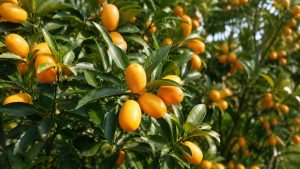
If you are looking at different kumquat varieties, Nagami and Meiwa are two of the most popular choices. At first glance, they can look quite similar, but the fruit shape, flavor, rind, and best uses are noticeably different.
Nagami is the classic oval kumquat with a stronger sweet-and-tart contrast. Meiwa is rounder, has a thicker and sweeter rind, and is generally considered better for eating fresh.
What Is a Nagami Kumquat?
Nagami is one of the most widely grown kumquat varieties. It is also known as the oval kumquat.
The fruit is typically elongated or oval, with bright orange skin when mature. The rind is sweet, while the flesh is distinctly acidic, creating the characteristic sweet-and-sour flavor associated with kumquats.
Nagami fruits are usually around 1¼ to 1¾ inches long and commonly contain a few seeds. The trees are productive and are widely grown in both home gardens and commercial orchards.
Because of its stronger tart flavor, Nagami is particularly versatile for cooking, preserves, marmalade, and eating whole.
What Is a Meiwa Kumquat?
Meiwa is often called the large round kumquat because its fruit is much rounder than Nagami.
The fruit has a thick, sweet rind and relatively sweet flesh. It is usually orange when mature and contains fewer seeds than Nagami, with many fruits having very few or no seeds.
Meiwa is especially valued for fresh eating. When eaten whole, the thicker sweet rind balances the acidic flesh and produces a milder flavor than Nagami.
The tree itself is similar to Nagami but tends to have fewer or shorter thorns.
Nagami vs. Meiwa: Main Differences
| Feature | Nagami | Meiwa |
|---|---|---|
| Fruit shape | Oval and elongated | Round to slightly oval |
| Rind | Sweet, relatively thinner | Thick and very sweet |
| Flesh | More acidic | Sweeter and milder |
| Seeds | Usually a few | Often fewer, sometimes seedless |
| Flavor | Strong sweet-tart contrast | Sweeter, gentler flavor |
| Best use | Fresh eating, cooking, preserves | Fresh eating |
| Cold hardiness | Slightly hardier | Slightly less hardy |
These differences are supported by university citrus references, which describe Nagami as elongated with acidic flesh and Meiwa as rounder with a thicker, sweeter rind and comparatively sweeter flavor.
Which Kumquat Is Sweeter?
Meiwa is generally the sweeter choice.
Its thick, sweet rind contributes a lot to the overall flavor when the fruit is eaten whole. The flesh is also less acidic than Nagami, making the entire fruit taste milder.
Nagami has a more pronounced contrast between its sweet peel and sour flesh. If you enjoy a sharper citrus flavor, Nagami may be more appealing.
Which Is Better for Eating Fresh?
For fresh eating, Meiwa is usually the better choice.
Its thick, sweet rind and comparatively mild flavor make it pleasant to eat whole. University citrus resources specifically describe Meiwa as one of the best kumquat varieties for fresh consumption.
Nagami is also excellent eaten whole, especially if you enjoy tart citrus flavors. Its stronger acidity gives it a more distinctive bite.
Which Is Better for Cooking?
Nagami is a particularly useful choice for recipes where you want a strong citrus flavor.
Its sweet rind and tart flesh work well in:
- Marmalade
- Preserves
- Sauces
- Desserts
- Candied fruit
- Fruit salads
Meiwa can also be used in cooking, but its sweeter and milder flavor makes it especially attractive as a fresh snack.
Which Kumquat Is Easier to Identify?
The fruit shape is probably the easiest way to tell them apart.
Nagami: Think small, elongated orange.
Meiwa: Think small, round orange.
Nagami generally has a higher length-to-width ratio, while Meiwa fruit is shorter and rounder.
Once you see both varieties side by side, the difference becomes fairly obvious.
Are Nagami and Meiwa Trees Different?
The trees have many similarities because both are kumquats and share similar general growing requirements.
However, Meiwa is typically distinguished by its rounder fruit, thicker rind, and somewhat sweeter flavor. It can also have fewer thorns than Nagami.
Both can be grown as attractive small citrus trees, including in containers when growing conditions are suitable.
Which One Should You Grow?
The best choice depends on what you want from the tree.
Choose Nagami if you want:
- A classic oval kumquat
- A stronger sweet-tart flavor
- A productive, widely grown variety
- Fruit for cooking and preserves
- A slightly more cold-hardy option
Choose Meiwa if you want:
- Rounder fruit
- A sweeter overall flavor
- Thick, sweet edible rind
- Fewer seeds
- A kumquat mainly for fresh eating
Nagami has a slight advantage in cold hardiness, while Meiwa is generally favored for its eating quality. University citrus references describe Meiwa as slightly less cold-hardy than Nagami.
Final Thoughts
Nagami and Meiwa are both excellent kumquat varieties, but they offer different eating experiences.
Nagami is elongated, tart, and intensely sweet-and-sour, making it a versatile choice for both fresh eating and cooking. Meiwa is rounder, thicker-skinned, sweeter, and generally milder, making it especially appealing when you want to eat the fruit straight from the tree.
If your priority is fresh eating, Meiwa is hard to beat. If you prefer a stronger citrus bite and want a versatile fruit for recipes, Nagami is an excellent choice.