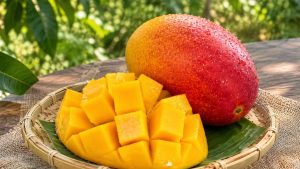
Miyazaki mangoes are among the most talked-about premium fruits from Japan. Their bright red skin, soft flesh, rich sweetness, and carefully controlled growing conditions make them very different from the mangoes commonly found in supermarkets.
But what really catches people’s attention is the price. A pair of high-quality Miyazaki mangoes can cost hundreds of dollars, while specially selected fruit sold through prestigious auctions can reach surprisingly high prices.
So, why are Miyazaki mangoes so expensive? The answer has less to do with the mango itself and more to do with how the fruit is grown, selected, harvested, and marketed.
What Makes Miyazaki Mangoes Different?
Miyazaki mango is associated with mangoes grown in Miyazaki Prefecture on Japan’s southern island of Kyushu. The region has a warm climate, plenty of sunlight, and a long agricultural tradition.
Growers pay close attention to temperature, sunlight, irrigation, and fruit development. Greenhouses are commonly used to create a more controlled environment and protect the fruit from unfavorable weather.
The goal is not simply to produce a large number of mangoes. Premium growers focus on producing fruit with attractive color, excellent sweetness, good texture, and a high level of consistency.
That attention to detail is one of the first reasons the price can be much higher than ordinary mangoes.
How Much Does a Miyazaki Mango Cost?
There is no single fixed price for a Miyazaki mango.
The cost depends on fruit size, quality, appearance, season, grade, retailer, packaging, and whether the mango is sold as an ordinary premium fruit or under a prestigious brand or certification category.
In Japan, consumers may find premium Miyazaki mangoes sold individually or in pairs, while beautifully packaged gift boxes can cost considerably more.
The most famous premium category is Taiyo no Tamago, which translates roughly to “Eggs of the Sun.” These mangoes must meet strict standards before they can carry the name.
Because of these standards, only a portion of the harvest qualifies for the highest grade. That limited supply naturally pushes the price upward.
Why Are Some Miyazaki Mangoes So Expensive?
One of the biggest reasons is the amount of work required to grow them.
Growing premium mangoes in a greenhouse is not the same as simply planting a mango tree and waiting for fruit. Growers monitor the plants throughout the growing season and carefully manage the environment.
Each fruit also needs enough sunlight and favorable conditions to develop its desired color and sweetness.
In some production systems, individual fruits are supported or protected while they mature. Growers may also use special methods to allow fruit to ripen properly on the tree.
All of this requires labor, greenhouse infrastructure, time, and experience.
The final retail price reflects those costs.
Fruit Quality Matters
Appearance plays a major role in the value of premium Japanese mangoes.
A high-quality fruit is expected to have attractive skin color, a good shape, sufficient size, and excellent eating quality. Fruits with blemishes or inconsistent coloring may not qualify for the highest grade.
This is important because premium fruit is often purchased as a gift.
A beautifully presented box of two or three mangoes is not being sold in exactly the same way as a bag of everyday supermarket fruit. The presentation, consistency, and reputation of the product all contribute to its value.
For this reason, two mangoes from the same general growing region can have very different prices.
The Importance of Taiyo no Tamago
When people talk about extremely expensive Miyazaki mangoes, they are often referring to Taiyo no Tamago.
This is a premium brand category with strict standards. The fruit must meet requirements related to weight, sugar content, and appearance before being sold under the name.
Not every Miyazaki mango becomes a Taiyo no Tamago mango.
That distinction is important. Saying that all Miyazaki mangoes cost hundreds of dollars would be misleading. Prices vary widely, and the most expensive examples represent the highest end of the market.
The rarity of fruit meeting the strict requirements is part of what makes these mangoes attractive to collectors, gift buyers, and customers looking for luxury food products.
Auction Prices Can Be Much Higher
Another reason people hear astonishing numbers about Miyazaki mangoes is the Japanese auction system.
The first premium fruits of the season can receive considerable attention. Buyers may compete for highly selected boxes, especially when the fruit is associated with a prestigious brand.
Auction prices are not the same thing as normal retail prices.
An auction-winning box may sell for an exceptionally high amount because of its symbolic value, timing, scarcity, and publicity. That does not mean every Miyazaki mango is sold at that price.
This is similar to other luxury agricultural products where the first or highest-quality items can command prices far above the normal market.
Why Packaging Also Matters
Miyazaki mangoes are often presented in attractive gift packaging.
This may seem like a small detail, but presentation is important in Japan’s gift-giving culture. A carefully selected pair of mangoes in a beautiful box can be purchased as a special present for a family member, business partner, or someone celebrating an important occasion.
The customer is therefore paying for more than the fruit alone.
They are also paying for selection, packaging, quality control, and the reputation attached to the product.
That helps explain why a premium mango can cost much more than an ordinary mango sold loose at a grocery store.
Are Miyazaki Mangoes Worth the Price?
Whether they are worth the price depends on what you expect from them.
If your goal is simply to enjoy a sweet mango, there are many less expensive varieties that can be delicious. You do not need a luxury mango to enjoy the flavor of fresh tropical fruit.
Miyazaki mangoes are more interesting from the perspective of premium fruit production.
They demonstrate how growing conditions, careful management, strict grading, branding, and presentation can transform an agricultural product into a luxury item.
For someone interested in Japanese agriculture or unusual fruit varieties, trying one can certainly be an interesting experience.
Can You Grow Miyazaki Mangoes at Home?
Growing mangoes at home is possible in warm climates, although producing fruit with the same quality standards as premium commercial growers is much more difficult.
Mango trees need plenty of warmth and sunlight. They also need suitable soil, regular moisture management, and protection from cold temperatures.
If you live somewhere with cold winters, growing a mango tree in a container or greenhouse may be more practical.
It is also important to understand that growing a mango tree does not automatically mean you will produce fruit that meets premium Japanese grading standards. Commercial production involves years of experience and careful selection.
For home gardeners, the better goal is usually to grow a healthy tree and enjoy good-quality fruit rather than trying to reproduce the exact commercial system.
Final Thoughts
The high price of Miyazaki mangoes comes from a combination of factors rather than one special characteristic.
Controlled growing conditions, intensive labor, careful fruit management, strict grading, limited supply, attractive presentation, and strong Japanese branding all contribute to the final cost.
The most expensive examples are usually premium fruits sold through high-end channels or auctions, while ordinary Miyazaki mangoes can be much more affordable.
That difference is worth remembering when you see headlines about extremely expensive Japanese mangoes. The price represents not only the fruit but also the work, quality standards, scarcity, and prestige behind it.
If you want to understand the different factors that determine the cost of these premium Japanese fruits, take a closer look at our guide to Miyazaki mango price.