Black cohosh is a striking native woodland perennial best known for its tall flower spikes and deep green foliage. Scientifically known as Actaea racemosa, it grows naturally in the rich forests of eastern North America.
For gardeners interested in native plants, medicinal plant history, and woodland gardening, black cohosh offers an attractive way to bring a piece of Appalachian forest ecology into a shaded garden.
What Is Black Cohosh?
Black cohosh (Actaea racemosa) is a herbaceous perennial in the buttercup family, Ranunculaceae. It is also known by several common names, including black snakeroot, black bugbane, bugbane, rattleroot, and macrotys. Older botanical references may list it under the scientific name Cimicifuga racemosa.
Distribution and Origin
The plant is native to eastern North America, particularly the Appalachian region. Its natural range extends from areas of southern Canada and the northeastern United States southward through the Appalachian Mountains toward Georgia and Missouri. It is especially characteristic of rich, moist deciduous forests and shaded coves.
In its native habitat, black cohosh is usually found beneath a forest canopy rather than in open, hot locations. It favors deep, fertile soils with good moisture and organic matter. Forest communities where it occurs often have a rich understory containing ferns, woodland flowers, and other shade-loving native plants.
Black cohosh is a long-lived perennial that dies back to the ground during winter and returns from underground structures in spring. Mature plants can become quite large, with tall flower stalks rising well above the foliage.
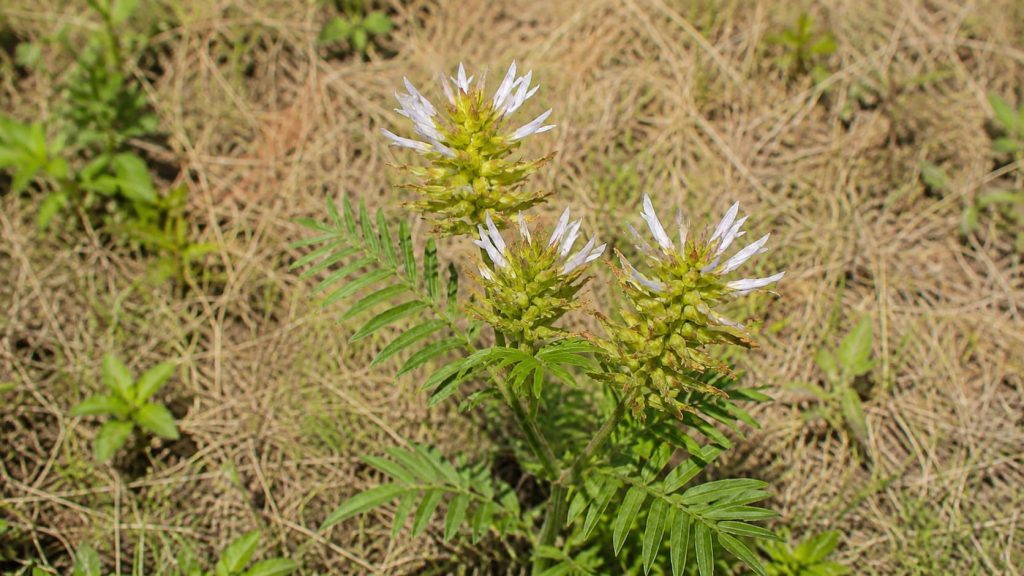
For gardeners, its greatest appeal is the combination of bold foliage and unusual bottlebrush-like flower spikes. The flowers are generally white and appear above the leaves during the warmer part of the growing season.
Because black cohosh is associated with mature woodland ecosystems, it is generally more successful when grown in conditions that resemble its natural environment. A cool, shaded garden bed with rich soil is usually a much better match than a dry, exposed flower border.

How to Identify Black Cohosh
Black cohosh is relatively easy to recognize once the plant reaches flowering size. Its upright growth habit, large divided leaves, and tall white flower spikes create a distinctive woodland appearance.
The stems are upright and sturdy, supporting a substantial mass of foliage. Mature plants can reach several feet in height, and flowering stalks may extend considerably above the main leaf canopy. USDA Forest Service references describe plants reaching up to about 8 feet in favorable conditions.
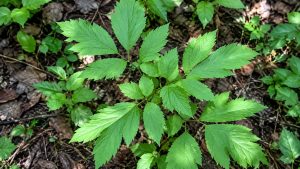
The leaves are one of the most noticeable features. They are large and deeply divided, with multiple toothed leaflets arranged along branching stems. The overall foliage has a coarse but attractive texture that works well in naturalistic shade gardens.
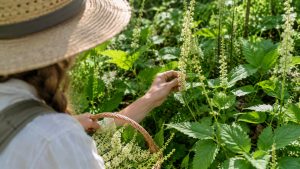
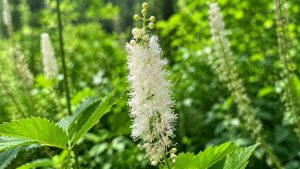
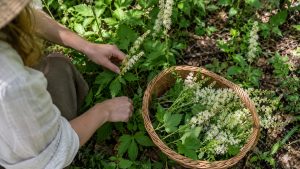
The flowers are produced on tall, narrow spikes. Individual flowers are small, white, and somewhat feathery because of their prominent stamens. A mature flowering spike can be quite long, creating a soft white plume above the darker foliage.
Black cohosh can also produce seed pods after flowering. The pods develop along the flower stalk and mature toward fall. When dry, the seeds can make a rattling sound when the stalks move, which helps explain several of the plant’s older common names.
Below ground, black cohosh develops a thick, knotted rhizome with fleshy roots. This feature is botanically important because the rhizome is the part that has historically been collected.
When identifying the plant, look for the combination of large, highly divided leaves, tall upright stems, and long white flower spikes. Because several woodland plants can look similar when young, positive identification is especially important before collecting any wild plant.
How to Grow Black Cohosh
Black cohosh is best treated as a woodland garden perennial rather than a typical full-sun herb. If you can recreate the conditions of a rich deciduous forest, the plant has a much better chance of establishing well.
Sunlight
Choose partial shade to full shade. Filtered light beneath deciduous trees is particularly suitable.
A location with morning light and afternoon shade can also work, especially where summers are warm. Avoid placing black cohosh in a hot, exposed area where the foliage receives intense afternoon sun.
Too much direct sunlight can dry the soil quickly and make it difficult to maintain the cool, consistently moist conditions this woodland plant prefers.
Soil
Rich, organic soil is one of the most important factors.
Black cohosh naturally occurs in fertile forest soils, so garden beds should contain plenty of mature compost, leaf mold, or other well-decomposed organic matter. A deep layer of organic material also helps the soil retain moisture without becoming permanently waterlogged.
Good drainage still matters. The goal is moist but well-drained soil, not saturated ground.
A woodland-style planting bed with compost and naturally decomposing leaf litter can provide a good growing environment while also supporting healthy soil structure.
Watering
Keep the soil consistently moist, particularly during the establishment period and during extended periods of summer dryness.
Water deeply when the upper layer of soil begins to dry rather than giving the plant frequent shallow watering. A layer of leaf mulch can help slow evaporation and keep the root zone cooler.
Established plants may tolerate short periods of reduced rainfall, but they generally perform better when moisture remains relatively steady.
Temperature
Black cohosh is adapted to temperate woodland conditions and cold winters. It is a good choice for gardeners in regions where winter dormancy is a normal part of the growing season.
In warmer areas, careful site selection becomes more important. A naturally cool, shaded location with dependable soil moisture can help reduce heat stress.
Planting
Plant black cohosh in spring or fall when soil conditions are workable.
Prepare the site by loosening the soil and incorporating compost or well-aged organic matter. Set the plant at approximately the same depth at which it was previously growing, then water thoroughly.
Give mature plants plenty of room. Black cohosh can become a substantial perennial, and crowded plants may compete for moisture and nutrients.
Propagation
Black cohosh can be propagated from seed, although patience is useful because woodland perennials are not always quick to establish.
Division of established plants is another possibility, but disturbing mature rhizomes should be done carefully. If growing black cohosh for a garden project, purchasing nursery-grown plants from a reputable native-plant source is preferable to collecting plants from the wild.
This is particularly important because wild populations have experienced pressure from commercial harvesting. Research has raised concerns about long-term population recovery when below-ground parts are removed from natural populations.
Container Growing
Black cohosh is not an ideal small-container plant because it develops a substantial root system and can become quite large.
If you want to grow it in a container, choose a large, deep container with drainage holes and use a moisture-retentive but well-drained growing medium rich in organic matter. Keep the container in a shaded or partially shaded location.
For long-term growth, however, an in-ground woodland garden is usually the better choice.
Pruning and General Care
Black cohosh generally needs little pruning.
Remove damaged or dead foliage as needed, and cut back the above-ground stems after the plant has naturally entered dormancy in fall or winter.
Avoid excessive disturbance around the base of the plant. A yearly top-dressing of compost or leaf mold can help maintain the rich organic conditions that woodland perennials appreciate.
Common Growing Problems
The most common difficulties are usually related to unsuitable growing conditions rather than complicated maintenance.
Dry soil: Prolonged dryness can cause poor growth and stressed foliage.
Too much sun: Strong afternoon sunlight can increase heat and moisture stress.
Poor soil: Heavy clay, compacted soil, or soil low in organic matter may produce weaker growth.
Poor drainage: Constantly saturated soil can damage underground plant structures.
Slow establishment: Black cohosh may take time to become fully established, particularly when grown from seed or transplanted.
Providing shade, organic-rich soil, and steady moisture is often the best approach.
How to Harvest and Store Black Cohosh
Black cohosh has historically been collected primarily for its underground rhizome and roots. Traditional harvesting references generally place collection in the fall, after the seeds have matured.
For gardeners growing black cohosh as a landscape plant, it is worth considering whether harvesting the underground parts is necessary at all. Removing the rhizome means removing a major part of the perennial plant, and research has highlighted concerns about the ability of wild populations to recover from repeated harvest.
If the plant is being cultivated specifically as a botanical specimen for responsible harvest, use only healthy, established plants and follow applicable local rules. Avoid collecting wild plants from public lands or natural populations without appropriate permission.
After collection, remove excess soil and damaged material. The harvested botanical material should be handled cleanly and allowed to dry thoroughly.
For drying, use a clean, well-ventilated location away from direct sunlight. Gentle air circulation helps reduce moisture without exposing the material to excessive heat.
Once completely dry, store the material in an airtight container in a cool, dark, dry location. Keep it away from humidity, heat, and direct light.
Check stored material occasionally. Discard anything that develops visible mold, unusual moisture, a musty odor, or other signs of deterioration.
For conservation-minded gardeners, growing black cohosh in cultivation rather than collecting it from the wild is the more responsible approach.
Traditional Uses and History of Black Cohosh
Black cohosh has a long history of traditional use among Indigenous peoples of eastern North America. Historical sources describe the plant as being used for a variety of traditional purposes, including preparations associated with women’s health, sore throats, kidney complaints, and other conditions. European settlers later incorporated black cohosh into herbal traditions, and it became known in European herbal practice as well.
The underground rhizome and roots were the parts most commonly associated with historical herbal use. This also explains why black cohosh became an important forest product and why wild harvesting has attracted conservation concerns.
Today, black cohosh is widely discussed in connection with herbal products and scientific research. However, traditional use and modern scientific evidence are not the same thing. A plant’s historical reputation does not by itself establish that it can prevent, treat, or cure a medical condition.
For GardenGuideHub readers, the most useful way to understand this history is as part of the cultural and botanical story of a native Appalachian plant. Its traditional importance is one reason the species has been cultivated and studied, but it should not be confused with established medical advice.
Conclusion
Black cohosh (Actaea racemosa) is a distinctive native woodland perennial with large divided leaves, tall white flower spikes, and a long history connected to Appalachian plant traditions. It performs best in rich, organic, consistently moist soil with partial to full shade. For gardeners, the best approach is to recreate its natural woodland environment and allow the plant time to establish. Responsible cultivation is especially valuable because harvesting underground parts from wild populations can put pressure on natural stands.
Frequently Asked Questions
What is black cohosh?
Black cohosh is a perennial woodland plant scientifically known as Actaea racemosa. It belongs to the buttercup family and is native to eastern North America. It is recognized for its large divided leaves and tall white flower spikes.
Where does black cohosh grow?
It naturally grows in eastern North American forests, particularly rich, moist deciduous woodlands and Appalachian forest habitats. It generally prefers shaded environments with fertile, organic-rich soil.
How do you identify black cohosh?
Look for large, deeply divided leaves, upright stems, and long white flower spikes. Mature plants can become several feet tall. Seed pods develop after flowering and may rattle when dry.
How do you grow black cohosh?
Grow it in partial to full shade with rich, organic, well-drained soil. Keep the soil consistently moist and use leaf mulch or compost to help maintain woodland-like conditions.
How much sunlight does black cohosh need?
Black cohosh generally prefers partial shade to full shade. Filtered light beneath deciduous trees is particularly suitable, especially in areas with hot summers.
How do you harvest and store black cohosh?
The underground rhizome and roots have historically been harvested in fall after seed maturity. Because removing underground parts can affect the plant and wild populations, responsible cultivation is preferable. Thoroughly dried botanical material should be kept in a cool, dark, dry, airtight container.
What is black cohosh traditionally used for?
Black cohosh has a documented history of traditional use among Indigenous peoples of eastern North America and later in European herbal traditions. Historical accounts describe a variety of traditional applications, but these uses should not be interpreted as proof that black cohosh can treat or prevent medical conditions.