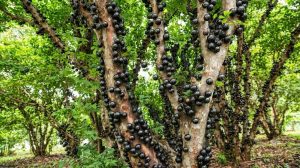
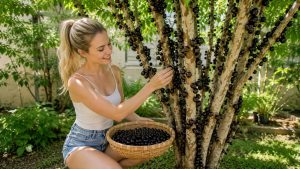
Jaboticaba is one of those fruit trees that always gets attention in the garden. Its dark purple fruit grows directly from the trunk and older branches, which makes it quite unusual.
I like jaboticaba because it is fairly easy to care for once established. It mainly needs consistent moisture, good soil, sunlight, warmth, and patience. In colder areas, growing it in a container can make winter protection much easier.
Here’s how I grow, care for, harvest, and store jaboticaba at home.
What Is Jaboticaba?
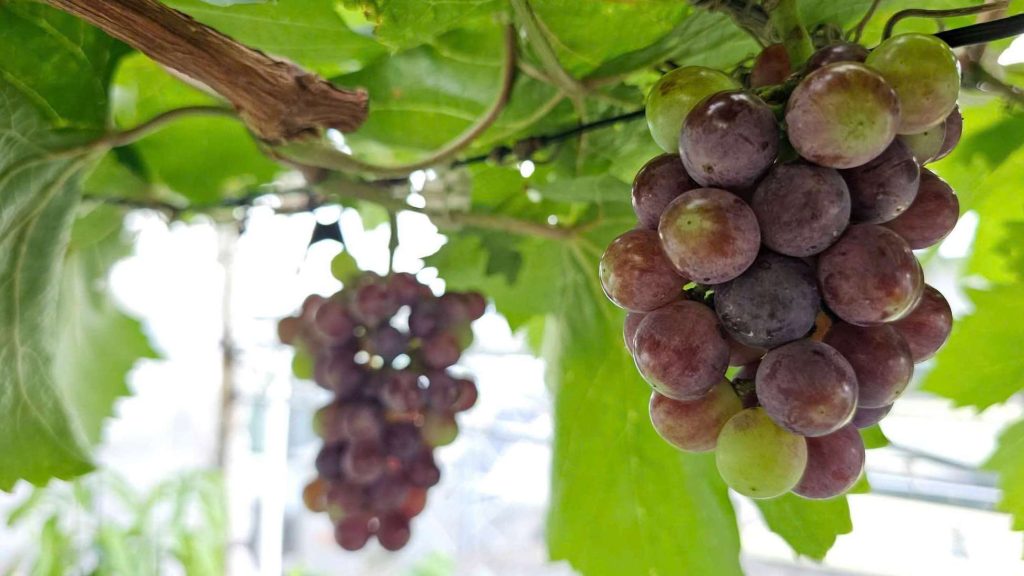
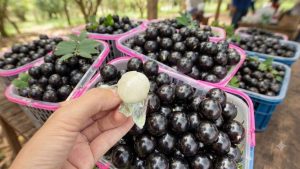
Jaboticaba is a tropical fruit tree native to Brazil and other parts of South America. It is best known for producing round, dark purple fruits directly from its trunk and older branches, a growth habit called cauliflory. The fruit looks somewhat like a grape but has a thicker skin and juicy, sweet flesh. Jaboticaba trees are slow-growing and can live for many years.
Choosing a Jaboticaba Tree
If fruit production is the main goal, I would start with a healthy nursery-grown tree rather than growing jaboticaba from seed.
Seed-grown trees can take many years to produce fruit. Starting from seed can still be a fun project, but you need to be willing to wait.
When shopping for a young tree, look for:
- Healthy green leaves
- A strong main stem
- No obvious damage to the bark
- A healthy-looking root system
- No visible signs of pests or disease
I would rather start with a smaller, healthy tree than buy a large tree that has been stressed in a small container.
A healthy root system gives the tree a much better start after planting.
Finding the Right Place to Plant
Getting the planting location right can save you a lot of work later.
Jaboticaba likes sunlight, but it also likes moisture. If you live in a very hot, dry area, planting a young tree in the most exposed part of the yard can make watering much harder.
A spot with good sunlight and some protection from intense afternoon heat can work well in very hot climates.
I also like to protect young trees from strong wind. Wind can dry out both the leaves and soil surprisingly quickly.
Before planting, check the drainage.
Jaboticaba likes moist soil, but its roots should not sit in standing water. If water remains in the planting hole for a long time, fix the drainage problem before planting.
Getting the Soil Ready
Good soil makes jaboticaba much easier to grow.
The soil should hold moisture without becoming heavy and waterlogged. Adding well-decomposed compost can improve soil structure and add organic matter around the roots.
If your existing soil is fertile and drains well, there is no need to make things complicated.
I would focus on three basics:
- Good drainage
- Consistent moisture
- Plenty of organic matter
Jaboticaba generally prefers slightly acidic soil. If you are unsure about your soil, a basic soil test can help you decide whether any changes are needed.
How to Plant Jaboticaba
When planting a nursery-grown tree, I try to disturb the roots as little as possible.
Dig a hole about as deep as the root ball and wider than the container. Set the tree at roughly the same depth it was growing in the nursery pot.
Do not bury the trunk deeper than it was originally planted.
Once the tree is in place, fill the hole with the surrounding soil and water thoroughly.
Then add a layer of organic mulch around the root zone. Keep the mulch away from the trunk rather than piling it against the bark.
During the first few months, the priority is helping the tree establish its roots. You do not need to rush into heavy fertilizing or pruning.
Watering Jaboticaba
If there is one part of jaboticaba care I would pay close attention to, it is watering.
Jaboticaba prefers consistent moisture. Young trees can struggle if they repeatedly dry out, especially during hot weather.
I do not like following a rigid watering schedule because garden conditions change throughout the year. Instead, check the soil.
If the soil is starting to dry several inches below the surface, give the tree a thorough watering.
During hot weather, check more often.
Container-grown jaboticaba needs even more attention because a pot can dry out much faster than garden soil.
The goal is simple: keep the soil consistently moist, but never waterlogged.

Mulching Makes Jaboticaba Care Easier
A good layer of mulch can make moisture management much easier.
Organic mulch helps reduce evaporation, moderate soil temperature, and slow weed growth around the tree.
It is especially useful during hot summer weather.
As the mulch breaks down, it also adds organic material to the soil.
Keep the mulch a few inches away from the trunk to avoid keeping the bark constantly wet.
Feeding Jaboticaba
I would not go heavy on fertilizer with a young jaboticaba.
This tree is naturally slow-growing, and slow growth does not automatically mean it needs more fertilizer.
If the soil is reasonably fertile, use a balanced fertilizer suitable for fruit trees and follow the product label.
Container-grown trees may need more regular feeding because nutrients can be lost through frequent watering.
If the tree is struggling, check the basics before adding more fertilizer:
- Is the soil too dry?
- Is the soil staying too wet?
- Is the tree getting enough light?
- Is the container too small?
- Has the tree been exposed to cold?
More fertilizer is not always the answer.
Growing Jaboticaba in a Container
Container growing is a practical option for gardeners who live in colder climates.
The biggest advantage is being able to move the tree to a protected location when winter arrives.
Choose a container with drainage holes and enough room for the root system.

I prefer moving the tree into progressively larger containers rather than putting a small tree into an extremely large pot.
Use a quality potting mix that holds moisture but drains well.
The main challenge with container growing is watering. Pots can dry out quickly, especially in full sun and windy weather.
Check the soil regularly instead of assuming that yesterday’s watering is still enough.
Protecting Jaboticaba From Cold
Cold weather is one of the biggest limitations when growing jaboticaba outside its natural range.
Young trees are especially vulnerable.
If you live somewhere with regular freezing temperatures, I would strongly consider container growing.
For an established tree planted outdoors, choose a protected location away from strong winter winds.
If a sudden cold spell is expected, young trees may need additional protection.
Do not assume that a tree is fully cold-hardy just because it has handled a few cool nights. Prolonged freezing temperatures can cause much more damage.
Pruning Jaboticaba
Jaboticaba does not need aggressive pruning.
That is worth remembering because the tree can produce flowers and fruit directly on older wood and the trunk.
I mainly remove:
- Dead branches
- Broken branches
- Damaged growth
- Diseased branches
- Branches that cross badly or interfere with the tree’s structure
Avoid removing large amounts of healthy older wood unless there is a good reason.
A light pruning approach helps preserve the natural shape of the tree and potential fruiting areas.
How Long Does Jaboticaba Take to Fruit?
This is where patience really matters.
The time to fruiting depends on the species, cultivar, propagation method, and growing conditions.
A tree grown from seed can take many years to become productive.
A nursery-grown tree that already has some maturity can produce fruit much sooner.
If your main goal is harvesting fruit, I would choose a healthy nursery-grown tree.
If you enjoy growing plants from seed and do not mind waiting, starting jaboticaba from seed can be a rewarding long-term project.
Do not assume a young tree is unhealthy simply because it grows slowly.
What to Do If Jaboticaba Grows Slowly
Slow growth is common with young jaboticaba.
Before adding more fertilizer, check the growing conditions.
Ask yourself:
- Is the soil drying out?
- Does excess water drain properly?
- Is the tree getting enough sunlight?
- Has the container become too small?
- Has the plant been exposed to cold?
These questions are often more useful than immediately increasing fertilizer.
Jaboticaba rewards patience. Give the tree good conditions and allow it to develop at its own pace.
Yellow Leaves on Jaboticaba
Yellow leaves can have several causes, so I would not immediately assume the tree needs fertilizer.
Start by checking the soil.
If the soil stays wet for too long, poor drainage may be stressing the roots.
If the soil is very dry, inconsistent watering may be the problem.
Nutrient availability, temperature, and limited root space can also affect the foliage.
Look at the entire growing environment before deciding what to change.
When Is Jaboticaba Ready to Harvest?
Knowing when to harvest becomes easy once you learn the signs.
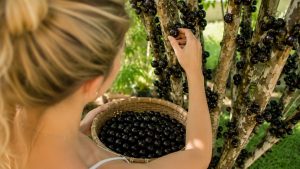
Jaboticaba fruit usually turns dark purple to almost black as it ripens.
I look for fruit that is:
- Fully colored
- Plump
- Well developed
- Slightly soft rather than rock hard
- Easy to remove
Once the fruit starts turning dark, check the tree regularly.
Jaboticaba is highly perishable, so I prefer harvesting ripe fruit and using it soon rather than leaving it on the tree for too long.
How to Harvest Jaboticaba
Harvesting jaboticaba is simple.
I pick ripe fruit by hand and handle it gently. Because the fruit grows directly on the trunk and older branches, most of it can be reached without complicated equipment.
When harvesting:
- Choose fully ripe fruit.
- Gently twist or pull it from the tree.
- Avoid damaging the bark.
- Place the fruit in a shallow container.
- Keep the harvest out of direct sunlight.
Avoid piling a large amount of fruit into a deep container. The weight can bruise the fruit underneath.
If possible, harvest during the cooler part of the day.
What to Do With Jaboticaba After Harvest
This is something I would plan for before the tree starts producing heavily.
Jaboticaba has a short fresh shelf life.
I would not leave freshly harvested fruit sitting on the kitchen counter for hours, especially during warm weather.
After picking, sort through the fruit and remove anything damaged or starting to spoil.
Move the good fruit to a cool location and refrigerate it as soon as practical.
If you have a productive tree, it also helps to have a plan for using the harvest. The fruit can ripen quickly, and you may end up with more than you can eat fresh.
How to Store Fresh Jaboticaba
For short-term storage, refrigeration is the simplest option.
Place the fruit in a clean container and avoid crushing it.
Do not pack the fruit too tightly because damaged skin can lead to faster deterioration.
Check the container regularly and remove fruit that begins to spoil.
Storage life depends on how ripe the fruit was when harvested and how it was handled afterward.
For the best flavor and texture, I prefer eating fresh jaboticaba relatively soon after harvest.
Should You Wash Jaboticaba Before Refrigerating?
If I am not going to eat the fruit immediately, I prefer not to wash it unnecessarily before storage.
Extra moisture can encourage deterioration.
Instead, keep the fruit dry and wash it shortly before eating.
If you have already washed the fruit, allow it to dry thoroughly before putting it in the refrigerator.
Can Jaboticaba Be Frozen?
Yes. Freezing is useful when a tree produces more fruit than you can eat fresh.
First, sort the fruit and remove anything damaged.
Wash it if necessary and dry it thoroughly.
Then place the fruit in a freezer-safe container or bag and label it with the date.
The texture will usually become softer after thawing. For that reason, frozen jaboticaba works well in smoothies, sauces, desserts, and other prepared foods.
Growing Jaboticaba From Seed
Growing jaboticaba from seed is possible, but it is definitely a long-term project.
If you want to try it, collect seeds from fully mature fruit.
Clean away the remaining fruit pulp and plant the seeds while they are still fresh.
I would not let the seeds dry out and then store them for a long time.
Plant them in a moist, well-draining growing medium and keep them warm and consistently moist.
Once seedlings emerge, give them good light while protecting them from extreme heat and cold.
The difficult part is not getting the seeds started. It is waiting for the tree to mature.
A seed-grown jaboticaba can take many years before becoming productive.
Can You Grow Jaboticaba From Cuttings?
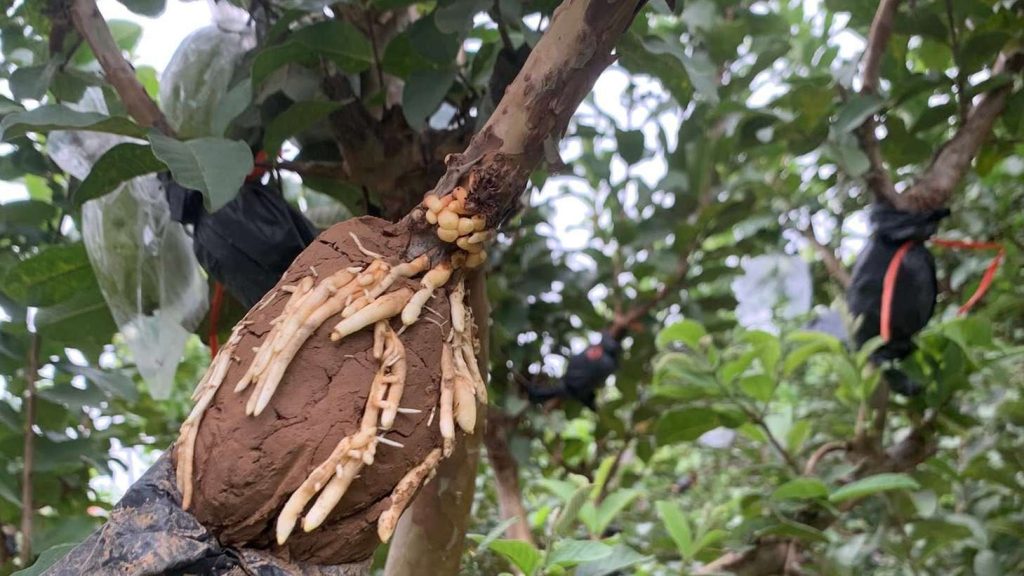
Jaboticaba can also be propagated vegetatively, although success varies depending on the species and propagation method.
For most home gardeners, buying a healthy nursery-grown tree is the easier option.
If fruit production is the priority, a nursery tree also gives you a significant head start compared with growing from seed.
My Jaboticaba Growing Tips
If I were giving a new gardener only a few tips, these would be at the top of my list:
Keep the soil evenly moist. Repeatedly letting a young tree dry out can set it back.
Do not overfertilize. Jaboticaba is naturally slow-growing.
Give it good light. A bright location supports healthy growth and fruit production.
Protect young trees from cold. This is especially important outside warm climates.
Use mulch. It makes maintaining soil moisture much easier.
Prune lightly. Older wood and the trunk can be important fruiting areas.
Be patient. Young trees may need years before they become productive.
Plan for the harvest. Fresh jaboticaba is highly perishable, so know how you will use or store the fruit before the tree produces heavily.
Frequently Asked Questions
Can jaboticaba grow in a pot?
Yes. Jaboticaba can grow well in a large container with good drainage, suitable potting mix, regular moisture, and adequate sunlight.
How long does jaboticaba take to produce fruit?
It depends on the tree and how it was propagated. Seed-grown trees can take many years, while mature nursery-grown trees may fruit much sooner.
Why does jaboticaba fruit grow on the trunk?
Jaboticaba naturally produces flowers and fruit on older wood, including the trunk. This unusual growth habit is called cauliflory.
How do I know when jaboticaba is ripe?
Look for fruit that has developed its mature dark purple to almost black color, is plump, and comes away from the tree easily.
Does jaboticaba need a lot of water?
Jaboticaba prefers consistent moisture, particularly when young. However, the soil should still drain well.
Can jaboticaba survive cold weather?
Jaboticaba prefers warm conditions and can be damaged by prolonged freezing temperatures. Container growing is often a practical option in colder climates.
Can I grow jaboticaba from seed?
Yes, but it requires patience. Fresh seeds should be planted relatively soon, and seed-grown trees may take many years to produce fruit.
Final Thoughts
Jaboticaba is not the fruit tree I would choose if I wanted the fastest possible harvest. It is better suited to gardeners who enjoy watching a tree develop and are willing to give it time.
The basic care is straightforward: provide good soil, consistent moisture, adequate sunlight, and protection from severe cold. Avoid trying to force rapid growth with excessive fertilizer or heavy pruning.
Once the tree becomes established, the reward is a truly unusual harvest. Seeing dark purple fruit growing directly from the trunk is something you simply do not get with most backyard fruit trees.
When the fruit finally ripens, harvest it gently, cool it quickly, and enjoy it while it is fresh. That is one of the best reasons to grow jaboticaba at home.