If you love growing roses, you probably already know that how to prune roses can make a big difference in the health, shape, and flowering of your plants. Proper pruning helps encourage new growth, create a fuller and more balanced shape, and promote more beautiful blooms.
Today, I’m sharing some practical rose-pruning tips based on techniques I’ve used for more than 15 years. With the right timing and a few simple pruning techniques, you can help your rose bushes grow stronger, develop a rounded shape, and produce plenty of flowers throughout the growing season.

1. How to Prune Roses at the Right Time
Timing is one of the most important factors when learning how to prune roses.
For many rose varieties, the best time for major pruning is in late winter or early spring, when the plant is beginning to produce new growth. Light pruning can also be done after a flush of flowers has faded.
If you are pruning after flowering, choose a dry day whenever possible. Avoid pruning during rainy or very wet weather because moisture around fresh cuts can increase the risk of fungal problems.
The exact timing can vary depending on your climate and the type of rose you grow.
2. Prune Stems to Encourage New Growth
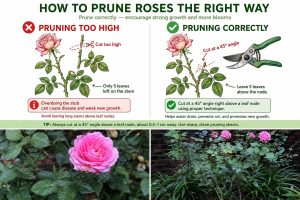
One of the main reasons to prune roses is to encourage fresh, healthy growth.
Trim Back Flowering Stems
After a flush of flowers has finished, you can remove the faded blooms and shorten the flowering stems. Make your cut just above a healthy bud, preferably one that faces outward from the center of the plant.
An outward-facing bud can help direct new growth away from the center, which contributes to a more open and balanced plant.
Avoid making random cuts. Before cutting, look at the direction of the bud and consider where the new branch is likely to grow.
Remove Dead and Weak Stems
Dead, dry, damaged, or very weak stems should be removed.
These branches provide little benefit to the plant and can make the rose bush crowded. Removing them allows the plant to put more energy into strong, healthy growth.
When possible, cut dead wood back to healthy tissue and use clean, sharp pruning shears.
3. Create a Full, Rounded Rose Bush

If your goal is a rose bush with a full and rounded shape, pay attention to the direction in which the branches are growing.
Remove branches that cross over one another or grow toward the center of the plant. Overlapping branches can create a crowded structure and reduce airflow.
A well-pruned rose bush should have enough space between its main branches for sunlight and air to reach the center.
Shape Long and Crowded Stems
Long, weak, or awkwardly positioned branches can make a rose bush look uneven.
Shorten overly long stems to help maintain a balanced shape. Focus on keeping strong branches that are well positioned around the plant.
Rather than trying to make every side perfectly symmetrical, aim for an open, naturally rounded structure.
This approach can help your rose bush look fuller while giving new shoots room to develop.
4. How to Make Clean Pruning Cuts

Clean cuts are an important part of successful rose pruning.
Always use sharp, clean bypass pruning shears. A sharp blade creates a cleaner cut and reduces unnecessary damage to the stem.
When shortening a healthy stem, make the cut slightly above a healthy bud. Avoid cutting too far above the bud because the remaining stub can die back.
It is also a good idea to disinfect your pruning tools, especially if you have been working with a rose that shows signs of disease.
5. Rose Care After Pruning
After pruning, your rose bush needs good growing conditions to recover and produce new shoots.
Water the plant regularly according to its needs, particularly during dry periods. Avoid keeping the soil constantly soggy, as overly wet conditions can cause root problems.
A layer of organic mulch around the root zone can help retain soil moisture and regulate soil temperature. Keep the mulch slightly away from the main stem.
You can also provide an appropriate rose fertilizer or compost during the growing season to support healthy growth.
If your roses have a history of fungal or bacterial diseases, monitor the fresh cuts and new growth carefully. Good airflow, proper watering, and clean pruning tools are important parts of disease prevention.
6. The Benefits of Pruning Roses Correctly
Learning how to prune roses correctly offers several benefits for your garden.
More Flowers
Pruning can encourage new shoots and help repeat-blooming roses produce additional flowers during the growing season.
Healthier Plants
Removing dead, damaged, diseased, and weak branches allows the plant to focus its resources on stronger growth.
Better Air Circulation
Opening the center of the rose bush improves airflow around the branches and leaves, which can help create a less favorable environment for some fungal diseases.
A More Attractive Shape
Regular pruning can help maintain a balanced, rounded shape and prevent the plant from becoming overly crowded or uneven.
7. Common Rose Pruning Mistakes to Avoid
Even simple pruning can go wrong if you remove the wrong branches or use poor techniques.
Avoid these common mistakes:
- Using dull or dirty pruning shears
- Removing too much healthy growth at once
- Leaving dead or diseased wood on the plant
- Cutting randomly without considering bud direction
- Allowing branches to cross and rub against each other
- Pruning during extremely wet conditions
- Ignoring the specific needs of your rose variety
Remember that different roses can have different pruning requirements. Hybrid tea roses, floribundas, shrub roses, and climbing roses should not always be pruned in exactly the same way.
8. Final Tips for Beautiful Rose Bushes
The key to successful rose pruning is not simply cutting as much as possible. Instead, focus on removing unwanted growth while keeping the strongest and best-positioned branches.
When pruning, remember these simple steps:
- Choose the right time.
- Remove dead and damaged stems.
- Remove weak and crossing branches.
- Cut above healthy, outward-facing buds.
- Keep the center of the plant open.
- Shape the bush gradually.
- Provide proper care after pruning.
With regular maintenance and good growing conditions, your rose bushes can develop a fuller shape, stronger growth, and more beautiful blooms.
If you enjoy growing roses, learning how to prune them is a skill worth mastering. A few thoughtful cuts can make a noticeable difference in the appearance and performance of your rose garden. For more information about roses, including different types, growing tips, and general care, check out our complete Roses guide.