Learning how to make compost is one of the easiest ways to turn everyday kitchen and yard waste into valuable organic matter for your garden. Compost improves soil structure, supports beneficial microorganisms, helps retain moisture, and provides nutrients that plants need to grow.
The best part is that making compost at home does not require expensive equipment or complicated techniques. With the right balance of organic materials, moisture, air, and time, you can create rich, dark compost using materials that might otherwise end up in the trash.
Whether you have a large backyard garden, a few raised beds, or a small outdoor space, this guide explains how to make compost step by step and how to maintain a healthy compost pile.
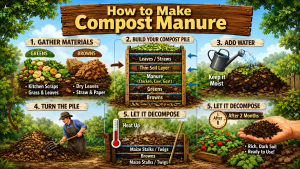
1. What Is Compost?
Compost is organic material that has naturally decomposed into a dark, crumbly substance that resembles rich soil. It is created when microorganisms break down materials such as leaves, grass clippings, fruit scraps, vegetable peels, and other suitable organic matter.
Composting is a natural process that happens in forests and other ecosystems. When leaves and plants fall to the ground, they gradually break down and return nutrients to the soil.
By making compost at home, gardeners can recreate this natural process in a controlled environment.
Finished compost can be added to garden beds, vegetable gardens, flower beds, containers, and lawns. It can also be used as a soil amendment to improve the overall quality of the soil.
2. Choose the Right Location for Your Compost
Before you start composting, choose a suitable location for your compost pile or bin.
An ideal composting location should be:
- Easily accessible
- Close to your garden
- Well-drained
- Large enough for your compost system
- Protected from extreme weather when possible
A location with partial shade is often a good choice. Too much direct sunlight can cause the compost pile to dry out quickly, while excessive shade may keep it too cool and slow decomposition.
You can make compost directly on the ground or use a compost bin or tumbler.
A compost bin can help keep the area neat and make it easier to manage the materials. If you have limited space, a compact composting system may be more practical.
Make sure the compost pile has enough airflow. Avoid placing it in a completely enclosed container without ventilation.
3. Gather Materials for Composting
The next step in learning how to make compost is understanding which materials can be added to your compost pile.
Compost materials are often divided into two main categories: green materials and brown materials.
Green Materials
Green materials are generally rich in nitrogen and help support the activity of microorganisms.
Examples include:
- Fruit scraps
- Vegetable peels
- Fresh grass clippings
- Coffee grounds
- Tea leaves
- Fresh plant trimmings
- Young weeds without mature seeds
Brown Materials
Brown materials are generally rich in carbon and provide structure to the compost pile.
Examples include:
- Dry leaves
- Straw
- Shredded cardboard
- Plain paper
- Small twigs
- Sawdust from untreated wood
- Dry plant stems
A healthy compost pile needs a mixture of both green and brown materials.
If you add too many fresh green materials, the pile may become wet and develop unpleasant odors. If you add too much dry brown material, decomposition may happen slowly.
A balanced mixture helps create the conditions microorganisms need to break down organic matter efficiently.
4. What Not to Put in Compost
Not everything that is organic should go into a backyard compost pile.
Avoid adding materials that can attract pests, create strong odors, or introduce harmful substances into your compost.
Common items to avoid include:
- Meat
- Fish
- Bones
- Dairy products
- Greasy foods
- Oils
- Pet waste
- Diseased plants
- Weeds containing mature seeds
- Chemically treated wood
- Coal or charcoal ash
- Plastics
- Metal
- Glass
Some commercial composting programs accept materials that are not recommended for a typical backyard compost pile. Always check local composting guidelines if you are unsure.
For home composting, it is generally best to focus on plant-based kitchen scraps and yard waste.
5. Build Your Compost Pile
Once you have your materials, it is time to build the compost pile.
Start with a layer of coarse brown materials, such as small twigs or dry stems. This creates airflow at the bottom of the pile.
Next, add a mixture of green and brown materials.
You do not need to create perfectly measured layers every time. The goal is to maintain a good overall balance of moist, nitrogen-rich materials and dry, carbon-rich materials.
If you add a large amount of fresh grass clippings, mix them with dry leaves or shredded cardboard.
If your compost contains lots of dry leaves, add more green materials and a little moisture.
A compost pile that is too wet may become compacted and lack oxygen. A pile that is too dry may decompose very slowly.
For efficient decomposition, aim for a pile that is large enough to retain heat but still easy to manage.
6. Keep the Compost Moist
Moisture is essential for composting.
Microorganisms need water to break down organic materials, but too much moisture can create problems.
The compost should feel similar to a wrung-out sponge. It should be moist but not soaking wet.
If the pile is too dry, add a small amount of water and mix the materials.
If the pile is too wet, add dry brown materials such as:
- Dry leaves
- Shredded cardboard
- Straw
- Dry plant material
Good drainage is also important. If water collects at the bottom of the compost pile, the materials may become too wet and decomposition can slow down.
Check the moisture level regularly, especially during hot and dry weather.
7. Turn the Compost Regularly
Turning the compost helps introduce oxygen into the pile and distributes moisture and materials more evenly.
You can use a garden fork or compost aerator to mix the pile.
There is no need to turn compost every day. Turning it every few weeks can help speed up decomposition, especially if you want finished compost more quickly.
When turning the pile, move materials from the outside toward the center. The middle of the pile is usually warmer and more active than the edges.
If your compost pile smells unpleasant or appears compacted, turning it can help improve airflow.
However, do not worry if you cannot turn your compost frequently. A compost pile can still decompose naturally with minimal intervention, although the process may take longer.
8. How Long Does Compost Take to Make?
The time required to make compost depends on several factors.
A well-managed compost pile with a good balance of materials, sufficient moisture, and regular aeration may produce finished compost in a few months.
A compost pile that is rarely turned or contains mostly dry materials may take much longer.
Factors that affect composting speed include:
- Temperature
- Moisture
- Oxygen
- Material size
- Carbon-to-nitrogen balance
- Frequency of turning
- Size of the compost pile
Cutting or shredding larger materials into smaller pieces can help them break down faster.
During warm weather, microbial activity usually increases, allowing compost to decompose more quickly. In colder months, decomposition may slow significantly.
Patience is an important part of composting. Even if the process takes longer than expected, the finished product can still be valuable for your garden.
9. How to Know When Compost Is Ready
Finished compost should look and smell very different from the original materials.
Good compost is usually:
- Dark brown to nearly black
- Crumbly
- Earthy-smelling
- Cool in the center
- Difficult to recognize as the original ingredients
You may still see a few pieces of twigs or other materials that have not fully decomposed. These can be screened out or returned to the compost pile.
If the compost is still hot, very wet, or smells strongly unpleasant, it may need more time.
Once finished, compost can be mixed into garden soil or added around established plants.
10. How to Use Homemade Compost in Your Garden
There are many ways to use homemade compost.
Improve Garden Soil
Mix compost into garden beds before planting. It can improve soil structure and help create a better environment for plant roots.
Add Compost to Raised Beds
Compost can be incorporated into raised-bed soil to increase organic matter.
Use Around Plants
Spread a thin layer of compost around established plants as a soil amendment. Keep it slightly away from the plant stem.
Use in Vegetable Gardens
Compost can be added to vegetable garden soil before planting. It provides organic matter and supports healthy soil biology.
Add to Flower Beds
Flower gardens can also benefit from compost. Incorporating organic matter into the soil can help create better growing conditions for many flowering plants.
Improve Lawn Soil
A thin layer of screened compost can be used as a lawn topdressing in suitable conditions.
11. Common Composting Problems and How to Fix Them
Sometimes a compost pile does not break down as expected.
Compost Smells Bad
A strong unpleasant smell may indicate that the pile is too wet or lacks oxygen.
Add dry brown materials and turn the pile to improve airflow.
Compost Is Too Dry
Add a small amount of water and mix the pile.
Also add more green materials if the pile contains mostly dry leaves and other brown materials.
Compost Is Not Breaking Down
The pile may be too small, too dry, or lacking nitrogen-rich green materials.
Add fresh grass clippings, vegetable scraps, or other suitable green materials and mix the pile.
Compost Is Full of Flies
Fruit flies and other insects may appear when food scraps are exposed.
Cover fresh kitchen scraps with a layer of brown material such as dry leaves or shredded cardboard.
Avoid adding meat and dairy products to a typical backyard compost pile.
12. Tips for Making Compost Faster
If you want to speed up the composting process, there are several simple steps you can take.
First, chop large materials into smaller pieces. Smaller pieces have more surface area for microorganisms to work on.
Second, maintain a good balance between green and brown materials.
Third, keep the pile consistently moist without making it waterlogged.
Fourth, turn the pile occasionally to introduce oxygen.
Finally, make sure your compost pile is large enough to retain heat.
You do not need special compost starter products to make compost. Natural microorganisms are already present in organic materials and soil.
Conclusion
Learning how to make compost is a simple and rewarding way to recycle organic waste while improving your garden soil.
Start with a mixture of green and brown materials, choose a suitable location, maintain the right moisture level, and provide enough airflow. Turn the pile occasionally and give the microorganisms enough time to break down the organic matter.
With patience and basic care, kitchen scraps and yard waste can eventually become rich, dark compost that benefits your garden.
Whether you are growing vegetables, flowers, herbs, or trees, homemade compost is a practical way to add organic matter to your soil and create a healthier growing environment. Once you understand the basic principles of composting, you can turn everyday organic waste into a valuable resource for your garden year after year.