By the time September rolls around, I start paying a little more attention to the fruit trees and vines around the garden. The mornings are cooler, the days are getting shorter, and some of the fruit that seemed to take forever to ripen suddenly looks ready.
Fall has a different feel from summer when it comes to fruit. You don’t get the same rush of berries and stone fruits. Instead, the harvest shifts toward apples, pears, grapes, persimmons, pomegranates, and a few less familiar fruits.
If you’re wondering what fruits are in season in fall, here are nine worth looking for.
1. Apples
Apples are the fruit I think of first when someone mentions fall.
There’s not much better than picking an apple on a cool morning, especially when it’s crisp enough to make that first bite loud. Apple season can begin in late summer, but many varieties reach their best during September and October.
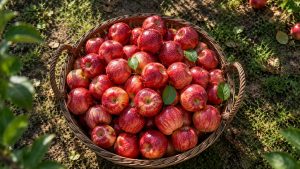
Honeycrisp, Gala, Fuji, Granny Smith, and Pink Lady are common choices, but local orchards often grow varieties you won’t see at a regular grocery store.
One mistake I used to see gardeners make is picking apples based only on their color. That’s not always reliable. Some apples develop their full color before they’re actually ready, while others can look surprisingly green even when they’re mature.
A gentle lift and twist is often a better clue. If the apple comes away from the branch without much effort, it’s worth tasting.
And if you end up with more apples than you can eat, don’t worry. That’s a good problem to have. Apples can become pies, applesauce, muffins, or simply sit in a basket on the kitchen counter for a few days.
2. Pears
Pears can be a little confusing when you’re growing them for the first time.
You see a beautiful pear hanging on the tree and naturally think it should stay there until it’s soft. In many cases, that’s actually too late.
A lot of pears are picked while they’re still firm and then allowed to ripen indoors. Once they’re ready to eat, the flesh becomes softer and much more fragrant.
Bartlett pears are especially juicy when ripe, while Bosc pears tend to stay firmer and work nicely in cooking.
I like checking pears by gently pressing the area near the stem rather than squeezing the middle of the fruit. If it gives slightly and smells sweet, it’s usually getting close.
The nice thing about pears is that you don’t have to eat the whole harvest on one day. Pick them in stages and let a few ripen at a time.
3. Grapes
Late summer and early fall are exciting times for anyone growing grapes.
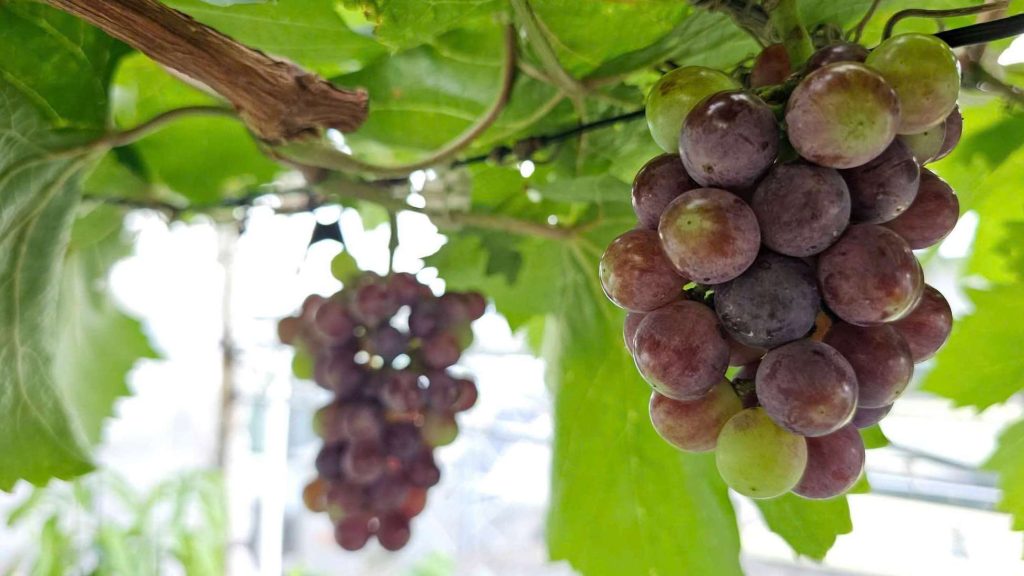
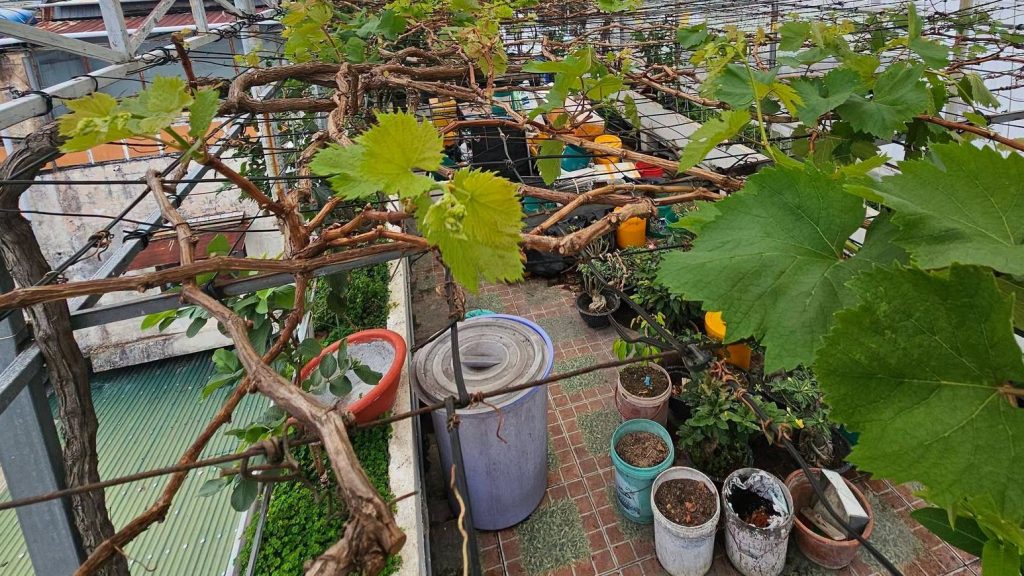
The vines can look almost ordinary for most of the year. Then suddenly you have bunches hanging everywhere, and the question changes from “Will I get grapes?” to “Are these ready yet?”
This is where tasting beats guessing.
Take a grape from different parts of the vine. If they’re sweet, juicy, and have the flavor you expect from the variety, you’re getting close to harvest.
Color can help, but it isn’t the whole story.
Birds are often a better indicator that the grapes are getting good than anything else in the garden. Once birds start paying attention, I know it’s time to check the vines more often.
Fresh grapes are easy to enjoy, of course, but they’re also useful for juice, jelly, and other homemade treats.
4. Persimmons
Persimmons seem almost made for autumn.
The orange fruit stands out against green or changing leaves, and a tree full of them can look beautiful in October and November.
The tricky part is knowing which type of persimmon you’re growing. Some varieties need to become very soft before they’re pleasant to eat. Others can be enjoyed while they’re still firm.

This matters because biting into an unripe astringent persimmon is not an experience you forget quickly.
Once properly ripe, though, persimmons are wonderfully sweet. They can be eaten fresh or used in breads, cakes, puddings, and smoothies.
If you’re growing a persimmon tree, don’t rush the harvest. Learn how your particular variety should look and feel when ripe. That little bit of patience makes a big difference.
5. Pomegranates
Pomegranates are another fruit that brings plenty of color to the fall garden.
From the outside, they don’t look particularly delicate. The skin is tough, and the fruit can feel almost heavy in your hand. Cut one open, though, and there’s a completely different story inside.
The juicy seeds are the part most people are after.
When pomegranates mature, the fruit often becomes more angular instead of perfectly round. The color can deepen as well, although appearance depends on the variety.
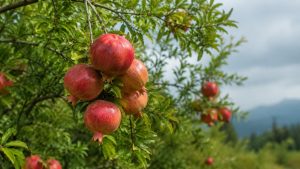
One thing worth watching for is splitting. Mature fruit can sometimes crack open on the tree, particularly when moisture conditions change.
If you’re growing pomegranates, check the fruit regularly as harvest approaches rather than leaving everything for one big picking day.
The seeds are great in salads, yogurt, oatmeal, and desserts. Sometimes I’ll add a handful to an otherwise ordinary dish just for that little burst of sweet-tart flavor.
6. Cranberries
Cranberries have a very different personality from most of the fruits on this list.
They’re small, bright red, and seriously tart when eaten raw. I don’t think many people would choose a handful of fresh cranberries as an afternoon snack.
But cook them with a little sweetness, and they become something completely different.
Fall is when cranberries really start showing up in American kitchens, especially as Thanksgiving gets closer. Cranberry sauce, baked goods, relishes, and drinks are all common ways to use them.
Cranberries are also interesting from a gardening perspective because they aren’t an easy backyard crop for most people. They have particular soil and growing requirements, and commercial production is concentrated in areas where those conditions naturally occur.
Still, if you’ve never seen a cranberry harvest, it’s worth putting one on your list. It’s quite different from picking apples from a backyard tree.
7. Figs
Fresh figs have one big problem.
Once they’re perfectly ripe, they don’t like waiting around.
A fig can look almost ready one day and then become incredibly soft the next. That’s why I prefer checking fig trees regularly when the fruit starts changing.
A ripe fig usually becomes soft and may begin to droop from the branch. Depending on the variety, the skin can be green, brown, purple, or somewhere in between.
If you grow figs in a warm climate, the main crop can arrive in late summer or fall.
The reward for catching the right moment is excellent. Fresh figs are soft, sweet, and completely different from the dried figs found in stores.
They don’t need much preparation, either. Eat them fresh, slice them into a salad, or put them on toast. If you have too many, drying or making preserves can help you use the extra fruit.
8. Kiwifruit
Kiwifruit is probably not the first fruit you associate with an American fall garden, but some varieties are harvested during autumn.
The familiar fuzzy kiwifruit has brown skin and bright green flesh. Hardy kiwifruit is different. The fruits are smaller and have smooth skin that can be eaten.
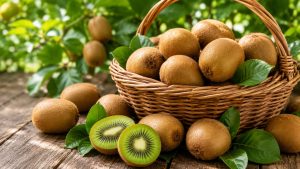
Growing kiwi is a little more involved than planting a strawberry patch. The vines are vigorous and need a strong support system. Some varieties also require male and female plants to produce fruit.
Once the vines get established, though, they can be surprisingly productive.
If you’re considering kiwi for your garden, give some thought to where the vine will grow before planting it. A small support structure that looks perfectly adequate at planting time can feel very small a few years later.
9. Quince
Quince is one of those fruits that can surprise people.
It looks somewhat like a lumpy apple or pear, and the yellow fruit has a wonderful fragrance when mature. But if you bite into one expecting the texture of an apple, you’ll quickly understand why quince is usually cooked.
Raw quince is very firm and astringent.
Cooking changes everything. The flesh softens and develops a rich, fragrant flavor that works beautifully in jams, jellies, sauces, baked desserts, and other dishes.
It’s not the most common fruit at American grocery stores, which is part of its appeal for gardeners. If you like growing things that aren’t found in every backyard, quince is worth considering.
When Are Fall Fruits in Season?
The exact timing depends heavily on where you live.
A gardener in California may harvest certain fruits weeks earlier than someone in the Northeast. Even within the same state, elevation and local weather can change the harvest window.
Generally, though, September through November is when many fall fruits are at their best.
You may find:
- Apples in late summer through fall
- Pears in late summer and fall
- Grapes in late summer and early fall
- Persimmons in fall
- Pomegranates in fall
- Cranberries in fall
- Figs in late summer and fall in warmer areas
- Kiwifruit in fall
- Quince in fall
If you’re growing fruit yourself, don’t rely on a calendar alone. Weather, variety, and the condition of the fruit are much better guides.
Making the Most of the Fall Harvest
One of the things I enjoy about fall fruit is that it doesn’t all need to be eaten fresh.
A basket of apples can turn into a pie.
Pears can be sliced into a salad or baked with a little cinnamon.
Grapes disappear quickly around the kitchen.
Pomegranates can brighten up a simple bowl of yogurt.
Figs are best eaten soon after picking, while quince becomes something special once it’s cooked.
That’s also why farmers markets can be especially fun in autumn. You start seeing fruit that isn’t necessarily available all year, and local growers often have varieties that never make it onto supermarket shelves.
If you have your own garden, fall is also a good time to pay attention to what worked and what didn’t. Maybe your apple tree produced more than expected. Maybe the birds got most of your grapes. Maybe you waited too long to pick the figs.
Those little observations are useful when planning the next season.
Final Thoughts
Fall has a quieter kind of harvest.
Summer feels like everything is growing at once. Autumn is different. The garden slows down, but there is still plenty to pick.
Apples, pears, grapes, persimmons, pomegranates, cranberries, figs, kiwifruit, and quince each have their own harvest window and their own little quirks.
And that’s probably what I like most about growing fruit. You learn that there isn’t always one perfect rule for knowing when something is ready. Sometimes you have to look, touch, taste, and pay attention.
By the time the leaves are falling, those small lessons from the garden are often just as satisfying as the fruit itself.