Tomato plants need the right combination of sunlight, water, healthy soil, and nutrients to grow well. While good soil can provide many of the nutrients tomatoes need, regular feeding can support stronger growth, flowering, and fruit production throughout the growing season.
Choosing the right fertilizer is especially important as tomato plants move from early growth to flowering and fruiting.
What is the best fertilizer for tomato plants? In general, a fertilizer made specifically for tomatoes or vegetables, with moderate nitrogen and adequate phosphorus and potassium, is a good choice. However, the best fertilizer depends on the plant’s growth stage, soil condition, and whether you grow tomatoes in the ground or in containers.
Using the right fertilizer at the right time can help tomato plants develop strong roots, healthy foliage, abundant flowers, and more fruit without encouraging excessive leaf growth or causing nutrient problems.
1. What Is the Best Fertilizer for Tomato Plants?
The best fertilizer for tomato plants is usually one that provides the nutrients tomatoes need without excessive nitrogen.
Tomato fertilizers often have an N-P-K ratio that is different from standard lawn or all-purpose fertilizers. The three numbers represent nitrogen (N), phosphorus (P), and potassium (K).
For example, a fertilizer labeled 5-10-10 contains less nitrogen and relatively higher amounts of phosphorus and potassium. This type of fertilizer is often used for flowering and fruiting vegetables.
A balanced fertilizer such as 10-10-10 can also be useful, particularly when the soil needs a more even supply of nutrients.
However, there is no single fertilizer that is perfect for every tomato plant. The best choice depends on the nutrients already available in your soil.
If possible, test your soil before applying large amounts of fertilizer. A soil test can help you understand which nutrients are lacking and prevent unnecessary fertilization.
The most important thing is to avoid overfertilizing. More fertilizer does not always mean more tomatoes.
2. What Nutrients Do Tomato Plants Need?
Tomato plants need several nutrients throughout the growing season. The three primary nutrients are nitrogen, phosphorus, and potassium.
Nitrogen
Nitrogen supports healthy green leaves and stems. It is particularly important when tomato plants are young and developing vegetative growth.
However, too much nitrogen can create a problem. Plants may produce lots of large leaves and strong stems but fewer flowers and fruits.
For this reason, gardeners often avoid high-nitrogen fertilizers once tomatoes begin flowering.
Phosphorus
Phosphorus supports root development and contributes to flower and fruit production.
Healthy roots help tomato plants absorb water and nutrients efficiently, making phosphorus an important part of overall plant nutrition.
However, adding extra phosphorus is not always necessary. If your soil already contains enough phosphorus, additional applications may provide little benefit.
Potassium
Potassium plays an important role in overall plant health and fruit development. It also supports the plant’s ability to manage water and maintain healthy growth.
A fertilizer containing adequate potassium can be useful when tomato plants begin flowering and producing fruit.
Tomatoes also need smaller amounts of nutrients such as calcium, magnesium, sulfur, iron, and other micronutrients.
A good fertilizer program should provide balanced nutrition rather than focusing on one nutrient alone.
3. Best Fertilizer for Tomato Seedlings
Young tomato seedlings usually do not need heavy fertilization.
If seedlings are growing in a good-quality seed-starting mix or potting soil, they may have enough nutrients during the first few weeks of growth.
Once seedlings develop several sets of true leaves, you can begin feeding them with a mild, balanced fertilizer.
Liquid fertilizers are often convenient for young plants because they can be diluted and applied gradually. Always follow the instructions on the product label.
Avoid using a strong fertilizer on small seedlings. Too many nutrients can damage delicate roots and cause poor growth.
The main goal at this stage is to encourage healthy roots and strong early development.
Tomato seedlings also need plenty of sunlight. Place them in a bright location where they can receive adequate light each day.
Healthy seedlings that receive proper light, water, and nutrition will have a better start when they are eventually transplanted into the garden.
4. Best Fertilizer for Flowering and Fruiting Tomato Plants
Once tomato plants begin producing flowers, their nutrient needs become especially important.
At this stage, avoid excessive nitrogen. High levels of nitrogen can encourage the plant to produce more leaves and stems instead of focusing on flowers and fruit.
A fertilizer with moderate nitrogen and adequate phosphorus and potassium can be a good choice during flowering and fruiting.
Many gardeners use tomato-specific fertilizers during this stage because they are formulated with fruiting vegetables in mind.
Once small tomatoes begin forming, potassium becomes particularly important for supporting fruit development.
However, fertilizer is only one part of successful tomato production. Plants also need:
- Plenty of sunlight
- Consistent watering
- Well-drained soil
- Good air circulation
- Suitable temperatures
- Proper spacing
If a tomato plant has healthy leaves but produces few flowers, the problem may not be fertilizer. Excessive heat, insufficient sunlight, irregular watering, and other environmental conditions can also affect flowering and fruit production.
For this reason, look at the entire growing environment before increasing fertilizer applications.
5. Best Organic Fertilizer for Tomato Plants
Organic fertilizers can be a good option for gardeners who want to improve soil health while feeding their tomato plants.
Compost
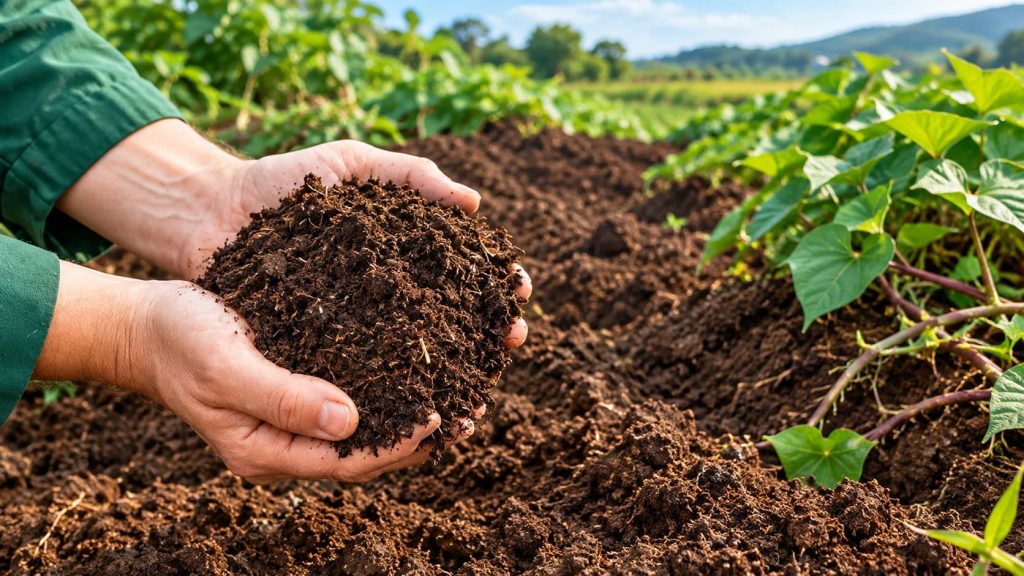
Compost is one of the most useful additions for tomato soil. It adds organic matter, improves soil structure, and provides a range of nutrients.
Adding compost before planting can create a healthier environment for tomato roots.
Aged Manure
Well-aged or composted manure can add nutrients and organic matter to garden soil.
Always use properly aged manure rather than fresh manure around growing tomato plants.
Fish Emulsion
Fish emulsion is a liquid organic fertilizer that provides nutrients relatively quickly. It is usually diluted with water and applied according to the product instructions.
It can be useful during the growing season, but it should not be overused.
Worm Castings
Worm castings are another popular organic soil amendment. They can be mixed into the soil before planting or added around established plants.
Organic fertilizers can provide valuable nutrients, but they still need to be used carefully. Natural products can also cause nutrient imbalances when applied in excessive amounts.
For best results, combine organic fertilizers with healthy soil management rather than relying on fertilizer alone.
6. How Often Should You Fertilize Tomato Plants?
How often you should fertilize tomato plants depends on the fertilizer you use, the soil condition, and the plant’s growth stage.
Some slow-release fertilizers provide nutrients over several weeks or months. Other products, such as liquid fertilizers, may need to be applied more frequently.
A common approach is to provide nutrients when planting and then feed the plants again when they begin flowering or producing fruit, if additional nutrition is needed.
Always follow the fertilizer label for application rates and timing.
Avoid fertilizing every time you water unless the product specifically recommends this method.
Overfertilizing can cause several problems, including excessive foliage, fertilizer burn, nutrient imbalances, and reduced fruit production.
If your tomato plants are growing well, have healthy green leaves, and are producing flowers and fruit, they may not need additional fertilizer immediately.
The best fertilizer schedule is one that responds to the plant’s needs rather than following a strict routine.
Fertilizing is only one part of successful tomato care. To help your plants grow strong and produce a healthy harvest, it is also important to understand proper watering, sunlight, soil preparation, spacing, and plant support. Learn more in our complete guide on how to grow tomatoes.
7. Common Tomato Fertilizer Mistakes to Avoid
Even with a good fertilizer, improper application can cause problems. Avoid these common mistakes when feeding tomato plants.
Using Too Much Nitrogen
High-nitrogen fertilizer can encourage excessive leaf growth and may reduce flowering and fruit production.
Overfertilizing
Applying more fertilizer than recommended does not make tomato plants grow faster. Excess nutrients can damage roots and create nutrient imbalances.
Fertilizing Without Testing the Soil
If your soil already contains sufficient nutrients, adding more fertilizer may be unnecessary. A soil test can help you make better decisions.
Ignoring Other Growing Conditions
Poor growth is not always caused by a lack of fertilizer. Lack of sunlight, poor drainage, overwatering, underwatering, pests, and diseases can all affect tomato plants.
Applying Fertilizer Incorrectly
Follow the instructions on the fertilizer package. Granular fertilizer should be applied at the recommended rate and kept away from direct contact with the plant stem unless the product instructions say otherwise.
Forgetting About Container Tomatoes
Tomatoes grown in containers may lose nutrients more quickly because of frequent watering. Container plants may therefore need more regular feeding than tomatoes grown directly in the ground.
8. Final Thoughts
Choosing the right fertilizer can make a big difference in how tomato plants grow and produce fruit. However, fertilizer works best when it is combined with healthy soil, adequate sunlight, consistent watering, and good overall plant care.
So, what is the best fertilizer for tomato plants? For most gardeners, a tomato or vegetable fertilizer with moderate nitrogen and adequate phosphorus and potassium is a good starting point. A fertilizer such as 5-10-10 may be suitable during flowering and fruiting, while a balanced fertilizer such as 10-10-10 can work well when plants need more even nutrition.
Organic options such as compost, aged manure, fish emulsion, and worm castings can also be valuable parts of a tomato feeding program.
However, the best fertilizer ultimately depends on your soil and the needs of your plants. Before adding fertilizer, consider testing your soil and checking whether your tomatoes are receiving enough sunlight and water.
Remember that healthy tomato plants need more than fertilizer. Provide at least 6 to 8 hours of sunlight, maintain consistent moisture, use well-drained soil, and give plants enough space to grow.
With the right balance of nutrients and proper care, your tomato plants can develop strong growth, produce abundant flowers, and reward you with a healthy harvest throughout the growing season.
Frequently Asked Questions
What is the best fertilizer ratio for tomato plants?
A fertilizer with moderate nitrogen and adequate phosphorus and potassium is often a good choice. A ratio such as 5-10-10 is commonly used for flowering and fruiting tomatoes, but the ideal ratio depends on your soil.
Is 10-10-10 fertilizer good for tomatoes?
Yes. 10-10-10 fertilizer provides equal amounts of nitrogen, phosphorus, and potassium and can be useful when tomatoes need balanced nutrition. Avoid applying more than recommended.
Should I use high-nitrogen fertilizer on tomato plants?
Generally, high-nitrogen fertilizer is not the best choice once tomato plants begin flowering. Too much nitrogen can encourage excessive leaf growth instead of flowers and fruit.
How often should I fertilize tomato plants?
The frequency depends on the type of fertilizer and your soil conditions. Follow the product label and avoid overfertilizing. Slow-release fertilizers usually require fewer applications than liquid fertilizers.
Is compost good for tomato plants?
Yes. Compost adds organic matter, improves soil structure, and provides a range of nutrients. Mixing compost into the soil before planting can help create a healthy growing environment for tomatoes.
GardenGuideHub.com