Bougainvillea is one of the most resilient and rewarding plants you can grow, but without regular pruning, it can quickly become a tangled mass of long stems and sharp thorns.
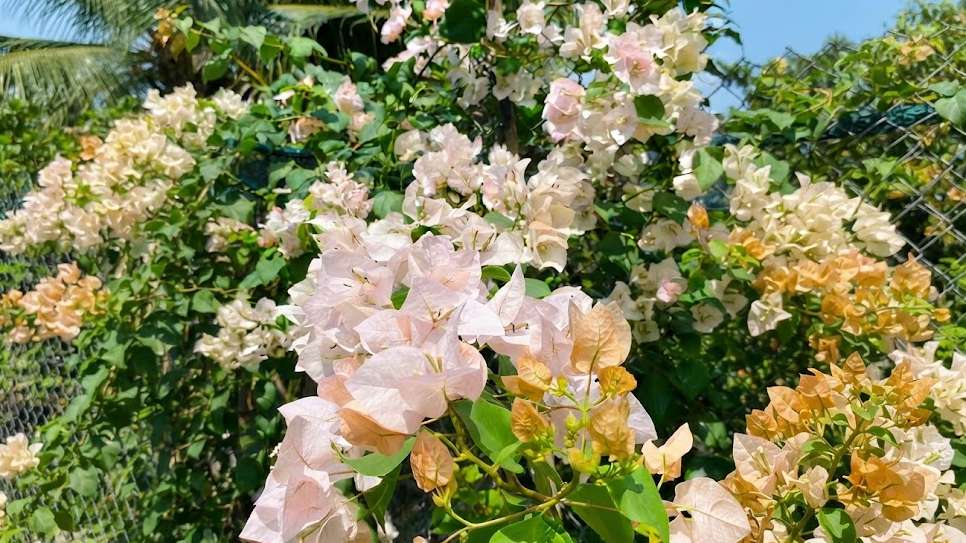
Its colorful bracts are produced on new growth, so thoughtful pruning plays an important role in maintaining a compact shape and encouraging repeated flushes of color.
Whether you want to tidy up a mature plant after flowering, train it along a fence or trellis, or shape it into a bonsai, the right pruning techniques can make Bougainvillea easier to manage and much more attractive.
When Is the Best Time to Prune Bougainvillea?
Timing matters because aggressive pruning can temporarily reduce flowering or encourage tender new growth at the wrong time of year. The ideal schedule depends somewhat on your climate, but most gardeners can divide pruning into structural pruning and regular maintenance.
Major Pruning in Late Winter or Early Spring
Late winter or early spring is generally a good time for major structural pruning, especially in areas where Bougainvillea slows down during the cooler months.
Use this period to remove overgrown branches, reshape the plant, and establish its basic framework before vigorous spring growth begins. Since the plant is entering an active growth period, new shoots can develop quickly after pruning.
If you live in an area that experiences frost, wait until the risk of freezing temperatures has passed before making major cuts.
Light Pruning After Flowering
Bougainvillea often flowers in repeated flushes rather than producing all of its color at once. Once a flowering cycle fades, light pruning can help maintain a tidy shape and encourage additional branching.
Rather than cutting the entire plant back after every flush, focus on the longest or overly vigorous shoots. A modest trim can encourage side branches that may produce new flowering growth.
Avoid Heavy Pruning Before Winter
Avoid severe pruning in late fall, particularly in climates where temperatures can drop below freezing. A hard cut can stimulate soft new shoots that may not have enough time to mature before cold weather arrives.
If the plant needs attention before winter, limit your work to removing dead, damaged, or obviously problematic growth.
Start With a Clean-Up Pruning
Before shaping the plant, take a few minutes to inspect the entire canopy. Look for dead, damaged, diseased, crossing, or badly positioned branches.
Remove dead and damaged wood first, cutting back to healthy tissue or a suitable branch junction. Branches that rub against each other should also be removed or redirected because constant friction can damage the bark.
Always use clean, sharp pruning shears. Disinfecting your tools before and after pruning is a simple precaution that helps reduce the chance of spreading plant pathogens between cuts.
Thin Out Old and Overcrowded Stems
As Bougainvillea matures, some older branches can become thick and woody while producing less vigorous growth than younger stems. Removing selected older branches can rejuvenate the plant and improve light penetration into the center.
Instead of cutting everything back at once, choose a few crowded or poorly positioned stems and remove them at their base or cut them back to a strong lateral branch.
Opening the center of the plant improves air movement and allows more sunlight to reach interior growth. This can also make future pruning much easier because the plant develops a more organized framework rather than becoming an impenetrable tangle.
Trim Branch Tips to Encourage More Growth
Tip pruning is one of the simplest ways to keep Bougainvillea compact and encourage additional branching.
After a flowering flush fades, trim the ends of overly long flowering branches by a few inches. Make each cut just above a healthy leaf node or side bud.
When the growing tip is removed, the plant can redirect growth toward buds farther down the stem. These buds may develop into lateral shoots, creating more potential flowering sites.
Avoid removing large amounts of healthy green growth simply to force more flowers. Consistent light pruning is usually easier on the plant and more effective for maintaining its shape.
Training Bougainvillea on a Fence or Trellis
Bougainvillea naturally produces long, flexible canes, making it well suited to fences, trellises, arbors, and other garden structures. However, it does not attach itself to supports like plants with tendrils or adhesive roots.
Choose three to five strong main canes to form the basic framework. Gently guide them in the direction you want the plant to grow, then secure them with soft garden ties.
Avoid tying stems tightly against the support. Leave enough room for the branches to expand as they become thicker.
As the main canes reach the desired height or length, pinch or trim their tips. This encourages lateral shoots to develop along the framework, helping the plant fill out rather than continuing to produce long, bare stems.
For a fence or wall, spreading the main branches horizontally can create a broader flowering canopy. On an arbor, guide several strong canes upward and then across the top to create coverage over time.
Shaping Bougainvillea as a Bonsai
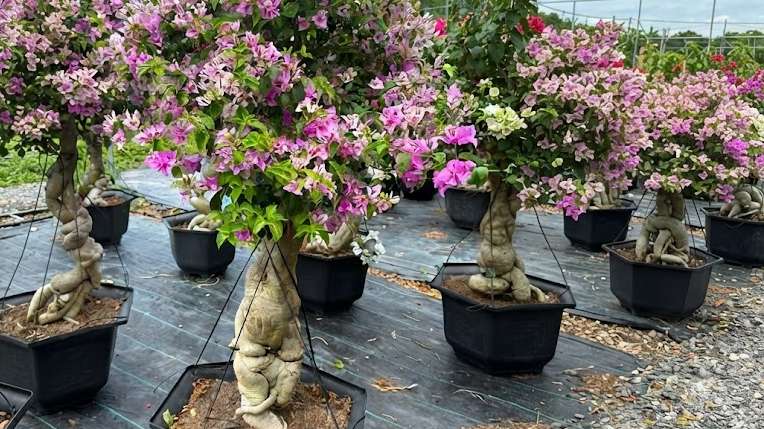
Bougainvillea is also popular among bonsai growers because it can develop a thick trunk, textured bark, and attractive branching structure.
Young plants are often allowed to grow freely for a period before major shaping begins. This gives the trunk time to develop thickness and character.
Flexible branches can be shaped with bonsai wire. Wrap the wire around the branch at a gentle angle and bend it gradually rather than forcing the stem into position. Check wired branches regularly because fast-growing Bougainvillea can quickly become marked by wire.
Once the basic structure has been established, pinch back vigorous new shoots to maintain compact proportions. For bonsai, allowing a few leaves to remain on each shoot can help maintain a dense canopy while keeping the overall shape under control.
Pruning Safety and Tool Care
Bougainvillea thorns can be surprisingly sharp, so protective clothing is important. Wear thick gardening gloves and long sleeves when working around mature plants.
Keep your bypass pruners sharp so they make clean cuts rather than crushing stems. Wipe the blades with rubbing alcohol before and after pruning, especially when working with multiple plants.
Always make clean cuts rather than leaving ragged stubs. When possible, prune just above a healthy node or side branch so the plant has a clear point from which new growth can develop.
Final Thoughts
Successful Bougainvillea pruning is less about cutting as much as possible and more about understanding where new growth will develop. Remove dead and damaged wood first, thin overcrowded branches, and lightly trim vigorous shoots after flowering.
For plants growing on fences and trellises, establish a few strong main canes and guide them gradually into the desired shape. If you are creating a bonsai, focus on developing the trunk and primary branches first, then maintain the smaller shoots with regular pinching.
With the right timing, clean tools, and a consistent approach, pruning can keep Bougainvillea manageable while encouraging a fuller, more colorful display. For a broader guide covering watering, fertilizing, sunlight, soil, propagation, and year-round maintenance, see the Ultimate Bougainvillea Care Guide.