Growing pandan at home is especially rewarding when you can step outside and cut a few fresh leaves whenever you need them. The plant is quite easy to maintain, but knowing when and how to harvest pandan leaves makes a big difference.
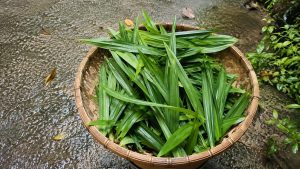
I prefer not to cut too many leaves at once. Instead, I take a few mature leaves when I need them and leave plenty of healthy growth on the plant. This simple approach allows the plant to continue growing and gives me a steady supply of fresh leaves.
If your plant is already well established, you can start harvesting regularly without making the process complicated.
When Should You Harvest Pandan Leaves?
The best time to harvest is when the pandan plant is healthy and producing plenty of mature leaves.
Look for leaves that are long, fully developed, and green. These leaves have had enough time to mature and are usually strong enough to harvest without putting too much stress on the plant.
I would avoid taking too many leaves from a young plant.
When pandan is newly planted, it needs time to establish its roots and produce new growth. Let the plant become stronger before you begin harvesting heavily.
Once it has several healthy leaves and is growing steadily, you can start taking what you need.
Harvest in the Morning
If possible, harvest pandan leaves in the morning.
The leaves are usually fresh and well hydrated after the cooler nighttime hours. Morning is also a comfortable time to work in the garden before the temperature becomes too hot.
You do not have to follow a strict schedule, though.
If you need pandan in the afternoon for cooking, there is nothing wrong with cutting a few leaves then. The important thing is choosing healthy, mature leaves and cutting them properly.
Which Leaves Should You Cut?
When you look at a pandan plant, you will usually see leaves of different sizes.
For regular cooking, choose mature leaves that are long, green, and healthy.
I normally leave the youngest leaves in the center of the plant alone. These newer leaves are still developing, so removing them too early can slow down the plant’s growth.
Older leaves that are badly damaged, yellowing, or completely dry can also be removed when necessary.
This gives you two useful jobs at the same time: harvesting good leaves for the kitchen and cleaning up the plant.
How to Harvest Pandan Leaves
You don’t need complicated equipment to harvest pandan.
A clean pair of garden scissors or a sharp knife is enough.
Choose the leaf you want to harvest and follow it down toward the base.
Make a clean cut close to the base of the leaf without damaging the surrounding shoots or newer leaves.
Avoid pulling or twisting the leaf out with excessive force.
A clean cut is easier on the plant and leaves the area looking tidy.
If you only need a small amount for cooking, there is no reason to cut several large leaves. Take what you need and leave the rest growing.
Don’t Overharvest
This is probably the most important harvesting habit.
It can be tempting to cut a large number of leaves when you have a healthy pandan plant, especially when you are preparing a large meal.
But the leaves are still helping the plant grow.
I prefer to harvest gradually instead of removing a large portion of the foliage at one time.
If the plant is small, take only a few mature leaves.
If the plant is large and well established, you can harvest more, but it is still better to leave plenty of healthy leaves behind.
A plant with enough foliage will have a better chance of continuing to produce new growth.
How Often Can You Harvest Pandan Leaves?
There is no universal harvesting schedule because every plant grows at a different rate.
A healthy, established plant may produce new leaves regularly during warm growing conditions.
Instead of deciding that you must harvest every certain number of days, look at the plant.
If you see plenty of new leaves developing and the plant remains healthy after harvesting, you can continue taking a few mature leaves when needed.
During cooler periods, growth may slow down. In that case, reduce harvesting and give the plant more time to recover.
Pruning Pandan at the Same Time
Harvesting and pruning can go together.
When you notice an old, damaged, yellow, or completely dry leaf, you can remove it rather than leaving it on the plant.
This keeps the plant looking cleaner and makes it easier to see the new growth developing from the center.
However, there is no need to cut healthy leaves simply to make the plant look smaller.
Pandan naturally produces long leaves, and some spreading is normal.
I mainly prune when there is a clear reason, such as removing damaged foliage or controlling an overly crowded plant.
Managing New Shoots
As pandan becomes established, it may produce new shoots around the base.
These shoots can eventually grow into additional plants and make the clump much larger.
If you have plenty of space, you can simply leave them alone.
If the plant is growing in a small pot or a limited garden area, you may need to remove or separate some of the extra shoots as the clump becomes crowded.
Don’t feel that you need to remove every new shoot.
A few healthy shoots can help you maintain a productive pandan clump for years.
Harvesting From a Potted Pandan Plant
Potted pandan is especially convenient because you can keep it close to the kitchen.
When you need leaves, simply check the plant and select a few mature ones.
Because container plants have limited root space, I recommend being a little more conservative with harvesting.
If the plant is already crowded or growing slowly, give it time to recover before taking more leaves.
Also check the pot regularly.
If the roots have filled the container and the plant has stopped growing well, moving it into a larger pot can give it more room.
Healthy roots support healthy leaf production.
What to Do With Freshly Harvested Leaves
Fresh pandan leaves can be used immediately after harvesting.
Give them a good rinse under clean running water before using them in the kitchen.
You can tie several leaves into a knot before adding them to rice, soups, or other dishes. This makes them easier to remove after cooking.
Pandan leaves can also be cut into smaller pieces or blended when you want to extract their fragrance and natural color.
If you are not using the leaves right away, keep them cool and protected from drying out.
Freshly harvested leaves generally have the best fragrance, which is another advantage of growing pandan at home.
Signs You Are Harvesting Too Much
Your plant can tell you when you are taking more than it can comfortably replace.
If new growth becomes noticeably slower, the plant looks thin, or there are very few healthy leaves left, reduce harvesting.
Give the plant time to produce new foliage before cutting again.
This is especially important with young plants.
A common mistake is treating a newly planted pandan like a mature clump. A young plant needs time to build itself up before it can handle regular harvesting.
Once it becomes larger and produces plenty of leaves, harvesting becomes much easier.
My Simple Harvesting Routine
I like to keep pandan harvesting very simple.
When I need leaves for cooking, I walk outside and look for several mature, healthy leaves.
I cut only what I need using clean scissors, making a clean cut close to the base.
While I am there, I remove any obviously damaged or dry leaves.
Then I leave the plant alone and let it continue growing.
There is no complicated pruning schedule and no need to cut the plant back heavily.
The goal is simply to take a few useful leaves while keeping the plant healthy and productive.
Final Thoughts
Learning how to harvest pandan leaves is quite simple once the plant is established.
Choose mature, healthy leaves, harvest in moderation, and use clean scissors or a sharp knife to make clean cuts near the base.
Leave the youngest leaves and plenty of healthy foliage on the plant so it can continue producing new growth.
You can also remove old or damaged leaves while harvesting to keep the plant tidy.
The best part of growing pandan at home is that you don’t have to harvest everything at once. When you need a few leaves for cooking, simply step outside, cut what you need, and let the plant continue growing.
With a little regular attention, a healthy pandan plant can provide fresh, fragrant leaves for a long time.