Cutting a pomegranate can look intimidating the first time you try it. The fruit has a thick, tough skin and hundreds of juicy seeds packed inside. If you cut straight through the middle, you can also end up with juice splattered across your cutting board.
The good news is that learning how to cut a pomegranate is actually quite simple. With a sharp knife and a few careful cuts, you can open the fruit cleanly and remove the seeds without much mess.
In this guide, I’ll show you the method I use to cut a pomegranate, separate the sections, and get the seeds out quickly.

What You Need to Cut a Pomegranate
You don’t need any special kitchen equipment. A few basic tools are enough:
- One ripe pomegranate
- A sharp paring or chef’s knife
- A cutting board
- A large bowl
- A spoon or your hands
- A bowl of cool water, if you want to use the water method
A sharp knife is especially helpful because you only need to score the skin. You don’t want to cut deeply into the fruit and damage a lot of the seeds.
How to Tell If a Pomegranate Is Ready to Cut
Before cutting, choose a pomegranate that feels heavy for its size. This usually means it contains plenty of juicy seeds.
The skin should feel firm rather than soft or mushy. Depending on the variety, the color can range from pinkish-red to deep red or reddish-brown.
One useful trick is to look at the shape. A ripe pomegranate often has slightly flattened sides rather than being perfectly round. The skin may also feel a little tight around the seeds.
Avoid fruit with large soft spots, leaking juice, or extensive mold.
Step 1: Wash the Pomegranate
Start by rinsing the pomegranate under cool running water. Even though you won’t eat the outer skin, washing it helps remove dirt and anything that could transfer to the fruit when your knife passes through the skin.
Dry the fruit with a clean kitchen towel.
Place it on a stable cutting board.
Step 2: Cut Off the Top
Look at the pomegranate and find the small crown-like part at the top. This is sometimes called the calyx.
Using a sharp knife, carefully slice around the top of the fruit.
You only need to cut through the skin and a little of the white pith underneath. Don’t make a deep cut.
Once you’ve cut around the top, lift the small section away.
Removing the top gives you a better view of the natural sections inside the pomegranate.
Step 3: Score the Skin
This is the part that makes opening a pomegranate much easier.
Look inside the opening and identify the pale white membranes that divide the fruit into sections. You don’t have to see every membrane perfectly. Just look for the natural lines running from the top toward the bottom.
Make several shallow cuts down the outside of the pomegranate, following those lines.
Usually, four to six sections are enough.
The important thing is not to cut all the way through the fruit. The goal is simply to score the tough skin so that the pomegranate can be pulled apart with your hands.
Step 4: Pull the Pomegranate Apart
Once you’ve scored the skin, gently use your thumbs to separate the fruit along the cuts.
The pomegranate should begin opening into several sections.
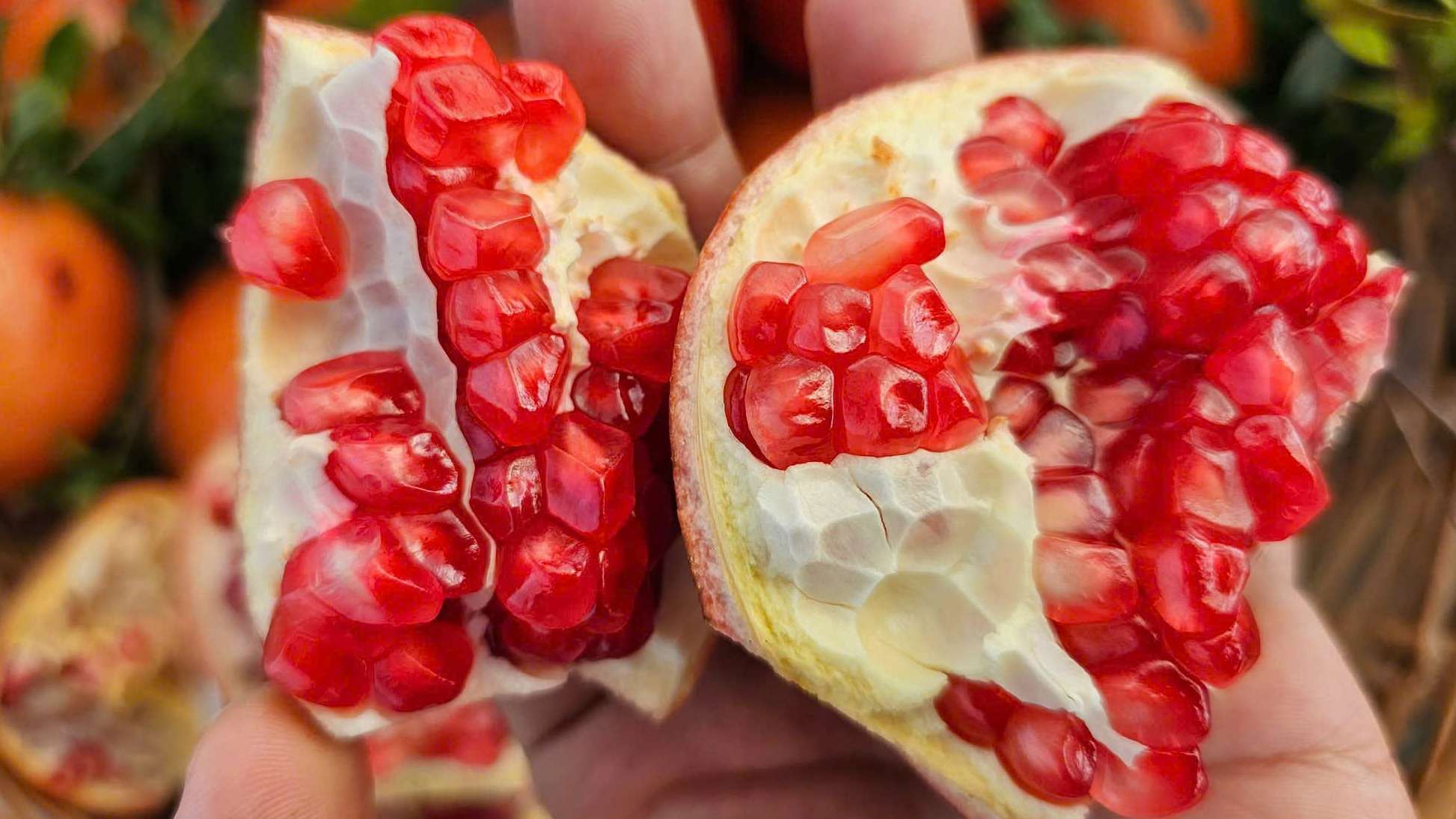
You may notice the white membranes separating the clusters of seeds. These membranes aren’t dangerous, but they have a bitter taste, so most people remove them before eating the seeds.
At this stage, you can either remove the seeds by hand or use the water method.
Step 5: Remove the Seeds by Hand
For a relatively quick method, hold one section over a large bowl.
Use your fingers to gently loosen the seeds from the white membrane. The juicy seeds should come away fairly easily when the fruit is ripe.
Work your way around the section until most of the seeds have fallen into the bowl.
Continue with the remaining sections.
This method gives you good control and doesn’t require additional equipment. However, your fingers may become stained with pomegranate juice.
If you want to keep your hands cleaner, the water method can be easier.
How to Deseed a Pomegranate in Water
The water method is one of the easiest ways to remove pomegranate seeds while reducing splashing.
Fill a large bowl about halfway with cool water.
Break the pomegranate into sections and place them in the water.
While the sections are submerged, gently separate the seeds from the white membranes with your fingers.
The seeds will sink toward the bottom of the bowl, while many pieces of white membrane will float or become easier to separate.
Skim the membranes from the surface and remove them.
Once you’ve separated most of the seeds, drain the water using a colander.
Spread the seeds on a clean towel or paper towel and gently pat them dry.
This method takes a little longer, but it can make the whole process much less messy.
Why You Shouldn’t Cut a Pomegranate Straight in Half
You can certainly cut a pomegranate in half, but it isn’t always the easiest approach.
When you cut directly through the middle, the knife passes through many of the seeds. The pressure can release juice onto the cutting board and countertop.
Scoring the skin and opening the fruit along its natural sections is usually cleaner.
It also makes it easier to separate the seeds without crushing them.
If you’re only cutting the fruit in half to squeeze it for juice, however, cutting it across the middle can still be useful.
How to Remove the White Pith
The white material inside a pomegranate is called pith or membrane.
You don’t need to remove every tiny piece, but most people prefer to remove as much as possible because it has a bitter flavor.
If you’re using the water method, gently swish the seeds around with your fingers. The lighter pieces of membrane are easy to spot and can be removed from the surface.
If you’re working without water, simply pick out the larger pieces as you separate the seeds.
Don’t worry about making the seeds perfectly clean. A small amount of membrane won’t cause a problem.
How to Cut a Pomegranate Without Making a Mess
Pomegranate juice can stain some surfaces and fabrics, so a little preparation helps.
First, use a large cutting board rather than a small one. This gives you more room to work.
Second, don’t squeeze the fruit while you’re cutting it. Let the knife and your fingers do the work gently.
Third, use a bowl when removing the seeds rather than leaving them scattered across the cutting board.
If you’re particularly concerned about stains, the water method is a great option.
I also recommend wearing an apron or clothing you don’t mind getting a little juice on when you’re preparing several pomegranates at once.
How to Store Pomegranate Seeds
Fresh pomegranate seeds are best when eaten soon after removing them, but you can store them for later.
Place the cleaned seeds in an airtight container and keep them refrigerated.
For the best quality, use them within several days.
You can also freeze pomegranate seeds. Spread them in a single layer on a tray and freeze them until firm. Then transfer them to a freezer-safe container or bag.
Frozen seeds are useful for smoothies, oatmeal, sauces, and other recipes.
How to Eat Pomegranate Seeds
Once you’ve removed the seeds, there are plenty of easy ways to use them.
You can eat them straight from the bowl as a snack or sprinkle them over:
- Greek yogurt
- Oatmeal
- Salads
- Smoothie bowls
- Rice dishes
- Roasted vegetables
- Desserts
The seeds have a sweet-tart flavor and add a pleasant crunch to many foods.
One of my favorite simple options is adding a handful of fresh pomegranate seeds to plain yogurt with a little honey.
Common Mistakes When Cutting a Pomegranate
One of the biggest mistakes is cutting too deeply into the fruit. You only need shallow cuts through the skin.
Another common mistake is trying to pull the fruit apart before scoring it. The thick skin can resist, and you may crush some seeds in the process.
Using a dull knife is also frustrating. A sharp knife allows you to make controlled cuts without applying excessive pressure.
Finally, don’t spend too much time trying to remove every tiny piece of white membrane. A few small pieces are easy to pick out later.
Frequently Asked Questions
Do you cut a pomegranate before eating it?
Yes. Pomegranate seeds are inside a thick outer skin, so the fruit needs to be opened first. The seeds can then be separated from the white membranes.
What is the easiest way to cut a pomegranate?
Scoring the skin around the natural sections and then pulling the fruit apart is one of the easiest methods. You can then remove the seeds by hand or in a bowl of water.
Can you eat pomegranate seeds?
Yes. The juicy red seeds, called arils, are the edible part of the fruit. They can be eaten fresh or added to many different dishes.
How do you cut a pomegranate without getting juice everywhere?
Avoid cutting directly through the center of the fruit. Instead, score the skin and open the pomegranate along its natural sections. Removing the seeds in a bowl of water can reduce splashing even further.
How long do pomegranate seeds last in the refrigerator?
Fresh seeds can generally be kept in a sealed container in the refrigerator for several days. Check them before eating and discard them if they develop an unusual smell, appearance, or texture.
Can you freeze pomegranate seeds?
Yes. Spread the seeds on a tray and freeze them until firm, then transfer them to a freezer-safe container or bag. They work especially well in smoothies and cooked recipes.
Final Thoughts
Once you know where to make the cuts, cutting a pomegranate becomes much easier than it first appears. Start by removing the crown, score the skin along the natural sections, and gently pull the fruit apart.
For the least mess, remove the seeds in a bowl of water. If you don’t mind getting a little juice on your hands, separating the seeds by hand is quick and straightforward.
The key is to work gently rather than trying to force the fruit open. A ripe pomegranate will usually separate naturally, leaving you with a bowl full of juicy, sweet-tart seeds ready to enjoy.