Learning how to grow roses can help you create a beautiful and colorful garden filled with fragrant flowers. Roses are one of the most popular flowering plants in the world, and with the right growing conditions, they can thrive for many years.
Whether you are planting your first rose bush or want to improve the health of existing plants, understanding the basics of sunlight, soil, watering, fertilizing, pruning, and pest control can make a big difference.
In this complete guide, you will learn how to grow roses successfully, from choosing the right variety and planting location to caring for your roses throughout the growing season.
What Are Roses?
Roses are flowering plants in the genus Rosa and are grown in gardens around the world. They come in a wide variety of colors, shapes, sizes, and growth habits.
Depending on the variety, roses can grow as compact bushes, climbing plants, ground covers, or large shrubs.
Common types of roses include:
- Hybrid tea roses
- Floribunda roses
- Grandiflora roses
- Climbing roses
- Shrub roses
- Miniature roses
- Ground cover roses
- English-style roses
Different varieties have different care requirements, so it is important to choose a rose that is well suited to your climate and garden space.
How to Grow Roses
The best way to grow healthy roses is to provide plenty of sunlight, fertile soil, good air circulation, and consistent moisture.
Roses are not necessarily difficult to grow, but they perform best when their basic needs are met. Choosing the right planting location is one of the most important steps.
Let’s look at how to grow roses successfully from planting to long-term care.
Choose the Right Location
Roses generally grow best in a sunny location.
Most rose varieties need at least 6 hours of direct sunlight per day. Morning sunlight is especially helpful because it dries moisture from the leaves and can reduce the risk of fungal diseases.
Choose a location with good air circulation. Avoid planting roses in a narrow space surrounded by walls, fences, or dense vegetation.
Poor airflow can create a humid environment around the leaves, which may increase the risk of common rose diseases.
When choosing a location, also consider the mature size of the rose. A climbing rose needs much more vertical and horizontal space than a miniature rose.
Prepare the Soil
Roses grow best in fertile, well-draining soil that contains plenty of organic matter.
Before planting, loosen the soil to a depth of approximately 12 to 18 inches. Remove large rocks, weeds, and other debris.
Adding compost or well-rotted organic matter can improve soil structure and help provide nutrients.
Roses prefer soil that drains well but still retains enough moisture for healthy root growth.
Avoid planting roses in areas where water regularly collects after rain. Poor drainage can cause root problems and weaken the plant.
If you are unsure about your soil quality, consider having the soil tested before planting.
When Is the Best Time to Plant Roses?
The best planting time depends on your climate and the type of rose you purchase.
Bare-root roses are usually planted during the dormant season, often in late winter or early spring. In some regions, they can also be planted in fall.
Container-grown roses are more flexible and can often be planted throughout the growing season, provided the weather is not extremely hot or dry.
Avoid planting during periods of extreme heat or when the ground is frozen.
Planting during mild weather gives the rose time to establish its root system before facing stressful conditions.
How to Plant Roses
Planting roses correctly gives them the best possible start.
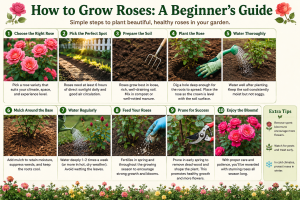
Follow these basic steps:
- Choose a sunny location with good air circulation.
- Dig a hole that is wider and deeper than the rose’s root system.
- Improve the soil with compost if necessary.
- Place the rose in the hole at the appropriate depth for your climate and rose type.
- Spread the roots gently if planting a bare-root rose.
- Fill the hole with soil and gently firm it around the roots.
- Water thoroughly after planting.
- Add a layer of organic mulch around the base of the plant.
Avoid placing thick mulch directly against the main stem or crown of the rose.
How Far Apart Should Roses Be Planted?
The correct spacing depends on the mature size of the rose variety.
Small or miniature roses may need only 1 to 2 feet of space, while larger shrub roses may require 3 to 5 feet or more.
Climbing roses should have enough room to spread and grow vertically.
Always check the recommended mature size of your specific variety before planting.
Proper spacing improves air circulation and reduces overcrowding, which can help keep the foliage healthier.
How Often Should You Water Roses?
Newly planted roses need regular watering while their roots become established.
Water deeply rather than giving the plant small amounts of water every day. Deep watering encourages the roots to grow further into the soil.
Established roses usually need additional water during hot or dry weather.
The exact amount of water depends on your climate, soil type, rainfall, and the age of the plant.
A good approach is to check the soil regularly. If the top few inches of soil feel dry, water deeply at the base of the plant.
Avoid frequent overhead watering, especially late in the day. Wet foliage that remains damp for long periods can increase the risk of fungal diseases.
Do Roses Need Full Sun?
Yes, most roses grow best in full sun.
Aim for at least 6 hours of direct sunlight each day. Some varieties can tolerate partial shade, but roses grown with insufficient sunlight may produce fewer flowers and weaker growth.
Morning sun is especially valuable because it helps dry moisture from the leaves.
If your garden receives limited sunlight, look for rose varieties that are known to tolerate partial shade.
How to Fertilize Roses
Roses are relatively heavy feeders during the growing season, particularly when they are actively producing new growth and flowers.
A balanced rose fertilizer can help provide essential nutrients. Follow the instructions on the product label and avoid applying more fertilizer than recommended.
Compost and other organic matter can also help improve soil quality over time.
The best fertilizing schedule depends on your climate, soil conditions, and rose variety.
Avoid heavy fertilization late in the growing season in colder climates because it may encourage tender new growth that is more vulnerable to winter damage.
How to Mulch Roses
Mulching is an easy way to improve rose care.
Apply a layer of organic mulch around the base of the plant to help:
- Retain soil moisture
- Reduce weed growth
- Moderate soil temperature
- Improve soil quality as the mulch breaks down
Good mulch options include shredded bark, compost, pine needles, and other organic materials.
Keep mulch a few inches away from the main stem to reduce the risk of moisture-related problems.
How to Prune Roses
Pruning is an important part of rose care, but the best pruning method depends on the type of rose.
In general, pruning helps remove dead, damaged, or diseased growth and can encourage healthy new growth.
When pruning:
- Use clean, sharp pruning shears.
- Remove dead or damaged branches.
- Cut away weak or crossing stems.
- Improve airflow by removing overcrowded growth.
- Make clean cuts just above a healthy outward-facing bud when appropriate.
Do not remove healthy growth unnecessarily.
The ideal pruning time varies by rose type and climate. Many roses are pruned in late winter or early spring before strong new growth begins.
Climbing roses may require a different pruning approach because many varieties produce flowers on older canes.
How to Deadhead Roses
Deadheading means removing faded flowers before they produce seeds.
Regular deadheading can help keep rose bushes looking neat and may encourage some repeat-flowering varieties to produce additional blooms.
To deadhead, cut the spent flower and stem back to an appropriate leaf set or strong bud.
The exact location of the cut depends on the rose variety and your desired shape.
Do not remove large amounts of healthy foliage when deadheading.
How to Support Climbing Roses
Climbing roses need support to grow properly.
You can train climbing roses along:
- Trellises
- Arbors
- Fences
- Pergolas
- Garden arches
Secure the canes gently using soft ties. Avoid tying them too tightly because the stems need room to expand as they grow.
Training the canes horizontally or at an angle can encourage more flowering shoots along the length of the plant.
Remember that climbing roses generally need regular training and pruning to maintain their shape.
Common Rose Problems
Roses can experience several common pest and disease problems.
Aphids
Aphids are small insects that often gather on new shoots, flower buds, and young leaves.
Aphid infestations can cause distorted growth and may attract ants.
Regularly inspect new growth and use appropriate garden pest management methods when necessary.
Black Spot
Black spot is a common fungal disease that causes dark spots on rose leaves.
Affected leaves may eventually turn yellow and fall from the plant.
Good air circulation, proper spacing, and watering at the base of the plant can help reduce disease pressure.
Remove fallen leaves and keep the area around the rose clean.
Powdery Mildew
Powdery mildew appears as a white, powdery coating on leaves and stems.
It can become more common when plants experience poor airflow and certain environmental conditions.
Plant roses in locations with good circulation and avoid overcrowding.
Japanese Beetles and Other Insects
Some rose gardens may experience damage from various insects that feed on leaves or flowers.
Inspect your plants regularly and identify the pest before choosing a control method.
Encouraging beneficial insects and maintaining healthy plants can also support a more balanced garden ecosystem.
How to Keep Roses Healthy
Healthy roses are generally better able to handle environmental stress and pest pressure.
Follow these simple care practices:
- Give roses enough sunlight.
- Water deeply when needed.
- Keep foliage as dry as possible when watering.
- Provide good air circulation.
- Remove dead or diseased plant material.
- Apply mulch to conserve moisture.
- Fertilize according to soil and plant needs.
- Prune at the appropriate time.
- Monitor plants regularly for pests and diseases.
Regular observation is one of the best ways to catch problems early.
Can You Grow Roses in Pots?
Yes, many roses can be grown successfully in containers.
Choose a container that is large enough to support the mature root system of the variety you select. The pot should have drainage holes to prevent excess water from accumulating.
Compact shrub roses, miniature roses, and patio roses are often suitable for container growing.
Use a high-quality potting mix rather than heavy garden soil.
Container-grown roses usually need more frequent watering than roses planted in the ground because containers can dry out faster.
Place the pot where the rose can receive plenty of sunlight and provide adequate air circulation around the plant.
How to Grow Roses From Cuttings
Roses can sometimes be propagated from stem cuttings, although success rates vary depending on the rose variety and growing conditions.
Choose a healthy stem and take a cutting from suitable new or semi-mature growth.
Remove the lower leaves and place the cutting in a suitable propagation medium that remains moist but not waterlogged.
Keep the cutting in a warm location with bright, indirect light while it develops roots.
Because different roses root at different rates, propagation from cuttings requires patience.
How Long Do Roses Live?
With proper care, many rose bushes can live for many years.
The lifespan depends on the variety, climate, growing conditions, and overall plant health.
Some established roses can remain productive for decades.
Choosing a suitable location and providing consistent care can help your roses stay healthy and productive for a long time.
How to Get Roses to Bloom More
If your roses are producing plenty of leaves but few flowers, several factors may be responsible.
Common causes include:
- Not enough sunlight
- Excessive nitrogen fertilizer
- Poor pruning
- Lack of water
- Nutrient deficiencies
- Pest or disease problems
- Stress from extreme weather
Start by checking how much sunlight the plant receives.
Next, examine your watering and fertilizing practices. Too much nitrogen can encourage leafy growth at the expense of flowers.
Regular deadheading may also encourage repeat-blooming varieties to produce more flowers.
Remember that some rose varieties naturally bloom only once each season, while others can flower repeatedly.
How to Protect Roses in Winter
Winter protection depends on your climate and the type of rose.
In colder regions, a layer of mulch around the root zone can help protect the roots from temperature fluctuations.
Avoid piling mulch directly against the main stem.
Some gardeners also use protective coverings or other methods for particularly sensitive varieties.
Before winter, remove diseased plant material and make sure the plant is healthy going into the dormant season.
The best winter protection method depends on your local climate and the hardiness of your specific rose variety.
How to Grow Roses Successfully
For the best results, remember these essential rose-growing tips:
- Choose the right rose variety for your climate.
- Plant roses in a location with at least 6 hours of sunlight.
- Use fertile, well-draining soil.
- Provide good air circulation.
- Water deeply and consistently when needed.
- Avoid frequent overhead watering.
- Apply mulch around the root zone.
- Fertilize according to the plant’s needs.
- Prune at the appropriate time.
- Deadhead faded flowers when appropriate.
- Monitor regularly for pests and diseases.
- Give climbing roses proper support.
- Protect sensitive varieties during extreme winter weather.
Frequently Asked Questions About Growing Roses
How long does it take for roses to grow?
Roses can establish relatively quickly when planted under good conditions, but the time needed to reach mature size depends on the variety. Some roses may produce flowers during their first growing season, while others need more time to become fully established.
What is the best place to plant roses?
The best place to plant roses is a sunny location with fertile, well-draining soil and good air circulation. Most roses perform best with at least 6 hours of direct sunlight each day.
How often should I water roses?
Newly planted roses need regular watering as they establish their roots. Established roses generally need deep watering during dry periods. Check the soil moisture and water when the soil begins to dry.
Do roses need full sun?
Most roses grow best in full sun and need around 6 or more hours of direct sunlight each day. Some varieties can tolerate partial shade, but flowering may be reduced.
When is the best time to plant roses?
The best planting time depends on your climate and the type of rose. Bare-root roses are often planted during the dormant season, while container-grown roses can usually be planted during mild weather throughout much of the growing season.
How do I make my roses bloom more?
Provide plenty of sunlight, water consistently, avoid excessive nitrogen fertilizer, remove faded flowers from repeat-blooming varieties, and prune correctly. Healthy plants with good growing conditions are more likely to produce abundant flowers.
Can roses grow in pots?
Yes. Many compact rose varieties can grow well in containers. Choose a large pot with good drainage, use quality potting mix, and provide plenty of sunlight.
How often should I fertilize roses?
The ideal fertilizing schedule depends on the rose variety, soil conditions, and climate. Use a suitable rose fertilizer according to the product label and avoid overfertilizing.
Final Thoughts
Learning how to grow roses successfully is easier when you understand the basic needs of these beautiful flowering plants. Start by choosing a rose variety that suits your climate and garden space, then plant it in a sunny location with fertile, well-draining soil.
Consistent watering, proper fertilizing, regular pruning, good air circulation, and careful monitoring can help your roses stay healthy and produce beautiful flowers.
Whether you grow a single rose bush in a container or create an entire rose garden, the right care can reward you with colorful blooms and fragrance throughout the growing season. With patience and regular maintenance, roses can become a long-lasting and beautiful part of your garden.