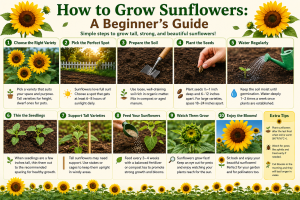
How to grow sunflowers successfully starts with choosing the right variety, planting seeds in a sunny location, and providing enough water during the early stages of growth. Sunflowers are among the easiest and most rewarding flowers to grow, making them an excellent choice for beginners and experienced gardeners alike.
Known for their tall stems and cheerful yellow blooms, sunflowers can brighten up almost any garden. Some varieties grow only a few feet tall, while others can reach impressive heights. You can also find sunflowers with red, orange, bronze, cream, and multi-colored petals.
In this guide, you will learn how to grow sunflowers from seed, including when to plant, where to plant, how often to water, how to fertilize, and how to care for sunflowers throughout the growing season.
What Are Sunflowers?
Sunflowers are flowering plants in the genus Helianthus. The most commonly grown garden sunflower is Helianthus annuus, an annual plant that completes its life cycle in one growing season.
Sunflowers are popular because they are:
- Easy to grow from seed
- Fast-growing
- Attractive to pollinators
- Available in many colors and sizes
- Suitable for gardens and containers
- Useful for cut flowers
- A source of edible seeds for people and wildlife
Depending on the variety, sunflowers can grow from less than 2 feet tall to more than 10 feet tall.
How to Grow Sunflowers
The easiest way to grow sunflowers is to sow the seeds directly into the garden after the risk of frost has passed.
Sunflowers do not usually like their roots to be disturbed, so direct sowing is often preferable to transplanting.
Choose a location with plenty of sunlight, prepare the soil, plant the seeds at the recommended depth, and keep the soil consistently moist while the seeds germinate.
With the right conditions, sunflower seeds can germinate quickly and produce strong plants within a few weeks.
Choose the Right Sunflower Variety
Before planting, consider how much space you have available.
Sunflower varieties can be divided into several general types.
Giant Sunflowers
Giant varieties are popular for competitions and dramatic garden displays. They can grow very tall and may need support in windy locations.
Dwarf Sunflowers
Dwarf varieties are ideal for small gardens, raised beds, and containers. They usually grow shorter and produce flowers that are easier to enjoy up close.
Branching Sunflowers
Branching varieties produce multiple flowers from a single plant. They can provide a longer display of blooms and are excellent for cutting gardens.
Single-Stem Sunflowers
Single-stem varieties typically produce one main flower and are often grown for cut flowers.
Choose a variety based on your garden space, desired height, and whether you want flowers for decoration, pollinators, or seeds.
When Is the Best Time to Plant Sunflowers?
The best time to plant sunflowers is generally after the danger of frost has passed and the soil has warmed.
Sunflowers are warm-season plants and grow best when temperatures are consistently mild to warm.
You can sow sunflower seeds directly outdoors once the soil is warm enough for germination.
For a continuous display of flowers, consider planting seeds every 2 to 3 weeks during the early part of the growing season. This method, known as succession planting, can help provide new blooms over a longer period.
The exact planting time depends on your local climate.
Choose the Best Location
Sunflowers need plenty of sunlight to grow well.
Choose a location that receives at least 6 to 8 hours of direct sunlight per day.
Sunflowers naturally grow toward the light, and adequate sunlight helps them develop strong stems and large flowers.
If you are growing tall varieties, choose a location where they will not shade smaller plants.
Tall sunflowers can cast significant shadows, especially when planted on the south side of a garden bed.
Prepare the Soil
Sunflowers grow in a wide range of soil types, but they perform best in fertile, well-draining soil.
Before planting, loosen the soil to a depth of approximately 12 inches.
Remove large rocks and weeds that could interfere with root growth.
Adding compost or well-rotted organic matter can improve soil structure and provide nutrients.
Avoid areas where water regularly collects after rain. Although sunflowers need consistent moisture, overly wet soil can cause root problems.
How to Plant Sunflower Seeds
Planting sunflower seeds is simple.
Follow these steps:
- Choose a sunny planting location.
- Prepare the soil and remove weeds.
- Plant seeds approximately 1 to 2 inches deep.
- Space the seeds according to the mature size of the variety.
- Cover the seeds with soil.
- Water gently but thoroughly.
- Keep the soil moist until the seeds germinate.
Sunflower seeds usually germinate within about 7 to 14 days under suitable conditions.
Once seedlings appear, thin them if necessary to provide enough space for healthy growth.
How Far Apart Should Sunflowers Be Planted?
The correct spacing depends on the variety.
Small dwarf sunflowers can be planted closer together, while giant varieties need considerably more room.
For many medium-sized varieties, spacing plants about 1 to 2 feet apart is a good starting point.
Always check the seed packet for the recommended spacing because mature plant size can vary significantly.
Proper spacing improves air circulation and gives the roots enough room to develop.
How Often Should You Water Sunflowers?
Sunflower seedlings need consistent moisture while they are becoming established.
Water when the soil begins to dry, especially during hot or dry weather.
Once established, sunflowers are relatively drought-tolerant, but they grow best when they receive consistent moisture.
During periods of extreme heat, deep watering can help support healthy growth.
Water at the base of the plant rather than frequently wetting the leaves.
Container-grown sunflowers may need more frequent watering because pots dry out faster than garden soil.
Do Sunflowers Need Full Sun?
Yes. Sunflowers grow best in full sun.
Most varieties need approximately 6 to 8 hours of direct sunlight each day.
Insufficient sunlight can result in weaker growth, smaller flowers, and plants that lean toward available light.
If you are growing sunflowers for their large blooms, choose the sunniest location in your garden.
Do Sunflowers Need Fertilizer?
Sunflowers generally do not require heavy fertilization if they are planted in fertile soil.
Too much nitrogen can encourage excessive leaf and stem growth while reducing flower production.
If your soil is poor, adding compost before planting can help improve fertility.
A balanced fertilizer may be appropriate in nutrient-deficient soil, but always follow the product label instructions.
For giant sunflower varieties, proper nutrition can be especially important because the plants produce significant amounts of growth in a relatively short period.
How to Support Tall Sunflowers
Tall sunflower varieties may need support, especially in windy locations or areas that experience heavy rain.
You can use:
- Bamboo stakes
- Garden stakes
- Plant supports
- Trellises for some smaller varieties
Install support early in the growing season before the plant becomes too large.
Tie the stem gently using soft garden ties. Avoid tying the stem too tightly because it needs room to expand.
Planting tall sunflowers near a fence or other sheltered structure can also help protect them from strong winds.
How Long Does It Take for Sunflowers to Bloom?
Most sunflowers take approximately 70 to 100 days from planting to flowering, although the exact time depends on the variety and growing conditions.
Dwarf varieties may bloom sooner, while giant varieties can take longer to reach their full height.
Factors such as temperature, sunlight, soil quality, and water availability can also affect growth speed.
Check the seed packet for the expected days to maturity when selecting a variety.
How to Care for Sunflowers
Sunflowers are relatively low-maintenance plants.
During the growing season:
- Water when the soil becomes dry.
- Remove weeds around young plants.
- Provide support for tall varieties.
- Monitor plants for pests.
- Avoid excessive fertilizer.
- Keep enough space between plants for good airflow.
Once established, sunflowers usually require little attention.
Their large flowers can also attract bees, butterflies, and other beneficial pollinators to the garden.
Common Sunflower Problems
Although sunflowers are easy to grow, they can experience several common problems.
Sunflowers Falling Over
Tall sunflowers may fall over because of strong winds, heavy flower heads, or weak stems.
Planting them in a sheltered location and providing support can help prevent this problem.
Leaves Turning Yellow
Yellow leaves can result from several factors, including overwatering, poor drainage, nutrient problems, or natural aging.
Check the soil moisture before adding more water.
Sunflower Leaves Wilting
Wilting may occur during hot weather or when the plant does not receive enough water.
Check the soil and water deeply if it is dry.
If the soil is consistently wet, poor drainage may be contributing to the problem.
Powdery Mildew
Powdery mildew can appear as a white coating on leaves.
Good air circulation and proper spacing can help reduce the risk of fungal problems.
Avoid overcrowding plants and remove severely affected foliage when appropriate.
Common Sunflower Pests
Several insects may feed on sunflower plants.
Common pests include:
- Aphids
- Caterpillars
- Beetles
- Grasshoppers
- Sunflower moth larvae
Inspect your plants regularly, especially the undersides of leaves and developing flower heads.
Encouraging beneficial insects can help create a healthier garden ecosystem.
If you notice significant pest damage, identify the pest before choosing an appropriate control method.
How to Grow Sunflowers in Pots
You can grow many sunflower varieties in containers, especially dwarf types.
Choose a large container with drainage holes. The container should be large enough to support the mature root system of the variety you choose.
Fill the pot with a quality potting mix and place it in a location that receives plenty of sunlight.
Container-grown sunflowers may need more frequent watering than plants grown directly in the ground.
For best results, choose compact varieties that are specifically suited to container growing.
How to Grow Sunflowers for Cut Flowers
Sunflowers make excellent cut flowers.
If you want to grow sunflowers for bouquets, consider choosing branching or cut-flower varieties.
Harvest flowers in the early morning when the plants are well hydrated.
Cut the stems at an angle using clean, sharp garden shears.
Remove lower leaves that would sit below the water line and place the flowers in clean water as soon as possible.
Regular harvesting can encourage some branching varieties to produce additional flowers.
How to Harvest Sunflower Seeds
If you want to collect sunflower seeds, allow the flower heads to mature on the plant.
As the sunflower finishes flowering, the back of the flower head gradually changes color and begins to dry.
You can harvest the seeds once they are mature.
If birds are eating the seeds before you can collect them, you can protect the flower heads with a breathable covering.
After harvesting, allow the seeds to dry completely before storing them.
Some sunflower varieties produce seeds suitable for people, while others are primarily grown as ornamental plants or for wildlife.
How to Save Sunflower Seeds for Next Year
Saving sunflower seeds is easy if you grow an open-pollinated variety.
Allow the flower head to mature and dry on the plant.
Once the seeds are fully developed, remove them from the flower head and allow them to dry in a cool, dry location.
Store the seeds in an airtight container in a cool, dark place.
Label the container with the variety and harvest date.
Keep in mind that seeds collected from hybrid varieties may not produce plants that are identical to the parent plant.
Do Sunflowers Come Back Every Year?
Most common garden sunflowers are annual plants, meaning they complete their life cycle in one growing season.
However, some perennial sunflower species can return year after year.
If you want sunflowers that come back annually, look for perennial varieties suitable for your climate.
Annual sunflowers can also reseed themselves naturally if mature seeds fall to the ground.
How to Get Sunflowers to Grow Taller
If you want to grow tall sunflowers, choose a giant or tall-growing variety.
Provide:
- Full sunlight
- Fertile soil
- Consistent moisture
- Adequate spacing
- Protection from strong winds
Avoid excessive nitrogen fertilizer because it can promote excessive leafy growth without necessarily producing stronger plants.
Some giant varieties may also benefit from staking.
How to Get Sunflowers to Bloom More
To encourage healthy sunflower blooms, make sure your plants receive enough sunlight and water.
Choose a variety suited to your growing conditions and follow the recommended spacing on the seed packet.
If you want more flowers, consider planting branching varieties, which naturally produce multiple blooms.
Succession planting can also help extend the flowering season by providing new plants at different stages of growth.
How to Grow Sunflowers Successfully
For the best results, remember these simple sunflower-growing tips:
- Choose a variety that fits your available space.
- Plant seeds after the danger of frost has passed.
- Choose a location with 6 to 8 hours of direct sunlight.
- Plant seeds approximately 1 to 2 inches deep.
- Keep young seedlings consistently watered.
- Use well-draining, fertile soil.
- Avoid excessive nitrogen fertilizer.
- Provide support for tall varieties.
- Protect young plants from pests.
- Give plants enough space to grow.
- Harvest mature seeds if desired.
- Save seeds from suitable varieties for future planting.
Frequently Asked Questions About Growing Sunflowers
How long does it take to grow sunflowers?
Most sunflowers take around 70 to 100 days from planting to flowering, depending on the variety and growing conditions. Some dwarf varieties may bloom sooner.
What is the best month to plant sunflowers?
The best time to plant sunflowers is after the danger of frost has passed and the soil has warmed. The exact month depends on your local climate.
Do sunflowers need full sun?
Yes. Sunflowers generally need around 6 to 8 hours of direct sunlight each day for strong growth and healthy flowers.
How often should I water sunflowers?
Water young sunflowers regularly to keep the soil evenly moist. Established plants can tolerate some dry conditions but grow best with consistent moisture, especially during hot weather.
How deep should sunflower seeds be planted?
Most sunflower seeds should be planted approximately 1 to 2 inches deep. Always check the seed packet for specific instructions for your variety.
Can sunflowers grow in pots?
Yes. Dwarf and compact sunflower varieties can grow well in containers. Choose a large pot with drainage holes and place it in full sunlight.
Why are my sunflowers falling over?
Sunflowers may fall over because of strong winds, heavy flower heads, or weak stems. Tall varieties may benefit from staking or other plant supports.
Do sunflowers come back every year?
Most common garden sunflowers are annuals and do not naturally return the following year. However, some perennial sunflower species can grow back each season.
Can I grow sunflowers from sunflower seeds?
Yes. Garden sunflower seeds can be planted directly into the soil. If you want to grow a specific variety, use seeds sold for gardening rather than processed food seeds.
Final Thoughts
Learning how to grow sunflowers is a simple and rewarding way to add color and life to your garden. With plenty of sunlight, well-draining soil, regular watering, and enough space to grow, sunflowers can quickly become a beautiful feature in your landscape.
Whether you choose a giant sunflower for a dramatic garden display, a dwarf variety for a container, or a branching type for cut flowers, there is a sunflower for almost every garden.
Plant your seeds at the right time, give young plants consistent care, and enjoy watching them grow from tiny seeds into tall, cheerful flowers. With just a little attention, you can grow beautiful sunflowers and even save mature seeds for future planting.