Basil is one of the most rewarding herbs to grow at home, filling the garden with a fresh, sweet aroma and producing flavorful leaves throughout the warm season. From backyard beds to sunny containers, this versatile herb is easy to grow and harvest.
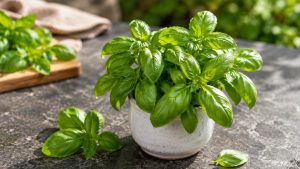
Beyond the kitchen, basil has a long history of traditional use. In this guide, discover basil benefits, popular uses, growing tips, harvesting methods, storage, and essential safety information.
What Is Basil?
Basil is a group of aromatic herbs in the mint family, Lamiaceae. The botanical name most commonly associated with sweet basil is Ocimum basilicum.
Basil is native to tropical and subtropical regions of Asia and Africa and is now cultivated widely around the world. It is especially popular in warm-season gardens because the plant grows best in warm temperatures and does not tolerate frost well.
The leaves are the most commonly used part of culinary basil. Depending on the variety, they may be bright green, dark green, purple, smooth, slightly serrated, large, or small.
When basil plants mature, they produce small flowers near the tips of their stems. These flowers can attract pollinators, although gardeners who want to maximize leaf production often remove flower buds as they appear.
Basil is generally treated as an annual in areas with cold winters. In warm climates, it can continue growing for a much longer period.
Basil Benefits
Basil is primarily valued as a culinary herb, but it also contains naturally occurring plant compounds that have attracted scientific interest.
It is important to separate the nutritional and traditional uses of basil from claims about treating or preventing disease. Eating basil as part of a varied diet is different from taking a concentrated basil extract or supplement.
Basil Contains Plant Compounds
Basil contains a variety of naturally occurring compounds, including aromatic oils and polyphenols.
The exact composition can vary depending on the species, variety, growing conditions, and plant part being studied.
Some of these compounds have antioxidant activity in laboratory research. However, laboratory findings do not automatically mean that eating basil will produce the same effect in humans.
Basil Adds Flavor Without Much Effort
One practical benefit of basil is its ability to add strong flavor to everyday meals.
Fresh leaves can make simple foods more interesting without requiring complicated ingredients. Basil pairs particularly well with tomatoes, garlic, olive oil, vegetables, pasta, and cheese.
Growing it at home also means you can harvest only what you need, which can be especially convenient during summer.
Basil Provides Small Amounts of Nutrients
Fresh basil contributes small amounts of nutrients such as vitamin K and other micronutrients, although typical serving sizes are relatively small.
For this reason, basil is better thought of as a flavorful herb that contributes to a varied diet rather than as a major source of any single nutrient.
Basil Has Been Studied for Antioxidant Activity
Researchers have investigated basil and its plant compounds for antioxidant activity, particularly in laboratory settings.
These findings are interesting, but they do not establish that basil is a treatment for a health condition.
The form of basil also matters. Results involving concentrated extracts or isolated compounds should not automatically be applied to the fresh leaves used in cooking.
Traditional Uses of Basil
Basil has a long history of culinary and traditional use.
Different basil species and preparations have been used in traditional food and herbal practices in parts of Asia, the Middle East, Africa, and Europe.
Depending on the culture and species, basil has traditionally been prepared as a culinary herb, tea, aromatic plant, or herbal preparation.
Some traditional practices have associated basil with digestive comfort, relaxation, or general wellness. However, traditional use provides historical context rather than proof that a herb can treat a medical condition.
Holy basil, also known as tulsi, is another important plant in the Ocimum genus and has a particularly long history of traditional use in South Asian herbal traditions. It should not automatically be treated as identical to sweet basil used in cooking.
When researching basil for traditional or herbal purposes, it is therefore important to identify the exact species and preparation being discussed.
How to Use Basil
Fresh basil is one of the easiest herbs to incorporate into everyday meals.
The leaves can be used whole, torn, chopped, blended, or added near the end of cooking.
Popular uses include:
- Pesto
- Pasta
- Pizza
- Tomato salads
- Sandwiches
- Soups
- Sauces
- Vegetable dishes
- Homemade dressings
- Fresh herb salads
- Garnishes
Fresh Basil
Fresh leaves have a bright aroma and soft texture.
For dishes such as salads and pasta, basil is often added shortly before serving so its fresh fragrance remains noticeable.
Tearing the leaves by hand is another simple option when you want larger pieces without finely chopping them.
Dried Basil
Basil can also be dried for longer storage.
Dried basil has a different flavor and texture from fresh basil, but it works well in sauces, soups, stews, and cooked dishes.
If you grow a large amount of basil at the end of the season, drying or freezing can help reduce waste.
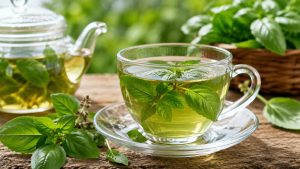
Basil Tea
Basil leaves have also been used traditionally to prepare herbal infusions.
If you choose to drink basil as a tea, remember that a traditional herbal preparation is not automatically a medical treatment. Different basil species and concentrated preparations may have different properties.
How to Grow Basil
Basil is a relatively easy herb for beginners, provided you give it the warm and sunny conditions it prefers.
The basic requirements are simple:
- Warm temperatures
- Plenty of sunlight
- Well-draining soil
- Consistent moisture
- Good air circulation
- Regular harvesting
Choose a Sunny Location
Basil grows best in a location with plenty of direct sunlight.
Around six to eight hours of sunlight per day is a useful target for many home gardens.
If basil does not receive enough light, it may become tall and thin as it stretches toward the available sunlight.
For indoor basil, a bright sunny window can work well. Rotate the pot occasionally so the plant receives light more evenly.
Use Well-Draining Soil
Basil prefers fertile soil that drains well.
Before planting in the garden, incorporating compost can improve soil structure and add organic matter.
For containers, use a quality potting mix rather than heavy garden soil.
The container should always have drainage holes. Basil needs regular moisture, but its roots should not remain in standing water.
Plant Basil in Warm Weather
Basil is sensitive to cold.
For outdoor growing, wait until the danger of frost has passed and the soil has warmed.
If you start basil indoors from seed, gradually introduce young plants to outdoor conditions before transplanting them permanently.
This process helps seedlings adjust to stronger sunlight, wind, and changing temperatures.
Water Basil Properly
Basil prefers consistently moist soil, especially during hot weather.
Instead of following a fixed watering schedule, check the soil regularly. When the upper layer begins to dry, water thoroughly.
Container-grown basil may require more frequent attention because pots can dry out quickly.
Avoid keeping the soil constantly saturated. Too much moisture can create an unhealthy root environment.
Prune Basil Regularly
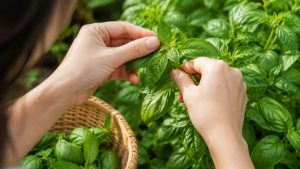
Regular pruning is one of the best ways to encourage a bushier basil plant.
Pinch or cut the growing tip just above a pair of leaves. New branches can then develop from the nodes below the cut.
This approach is more useful than allowing the plant to grow straight upward and only harvesting individual leaves occasionally.
What to Do When Basil Flowers
Basil naturally produces flower buds as it matures.
If your main goal is to harvest tender leaves, pinch off developing flower buds.
If you want to collect seeds or enjoy basil flowers in the garden, you can allow the plant to bloom.
Flowering is a normal part of the plant’s life cycle, not a sign that something is wrong.
For gardeners focused on leaf production, however, regular harvesting before heavy flowering can help keep the plant productive.
How to Harvest and Store Basil
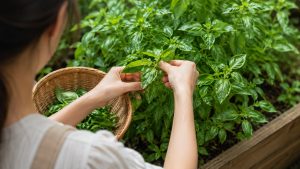
Harvesting basil correctly can encourage continued growth.
Once the plant is well established, cut stems just above a pair of leaves. This encourages new branches to develop below the cut.
Avoid removing nearly all of the foliage at once. The plant needs healthy leaves to continue growing.
When to Harvest Basil
You can harvest basil throughout the growing season once the plant has enough healthy growth to recover from cutting.
Morning is often a convenient time to harvest, particularly once overnight moisture has dried from the foliage.
For larger harvests, cut several stems from different parts of the plant rather than cutting the entire plant in one place.
How to Store Fresh Basil
Fresh basil is delicate and can darken when exposed to cold temperatures or excessive moisture.
One simple method is to place freshly cut stems in a container with a small amount of water, similar to keeping fresh flowers.
Keep the leaves dry and replace the water regularly.
For longer storage, basil can be frozen or dried.
Freezing is useful when you want to preserve larger quantities for sauces or pesto, while dried basil is convenient for cooked dishes.
If you grow basil every year, learning how to store basil properly can help you get more value from your harvest.
Safety, Side Effects & Interactions
Basil used as a culinary herb is generally consumed in relatively small amounts as part of food.
However, fresh basil, herbal preparations, extracts, and essential oils are not necessarily equivalent.
Concentrated products can contain much higher amounts of plant compounds than ordinary culinary servings. Their effects and safety considerations may therefore be different.
Possible Side Effects
Some people may be sensitive or allergic to plants in the mint family.
If you notice an unexpected reaction after consuming a herb, stop using it and seek appropriate medical advice, particularly if the reaction is severe.
There is also less safety information available for some concentrated basil preparations than for ordinary culinary use.
Basil and Medications
Herbal products can potentially interact with medications, but the risk depends on the specific basil species, preparation, concentration, and medication involved.
Anyone taking prescription medication should not assume that a concentrated herbal product is automatically safe simply because the fresh herb is commonly eaten.
If you are considering concentrated basil extracts or supplements, discussing them with a qualified healthcare professional is a sensible precaution.
Pregnancy and Breastfeeding
Culinary amounts of basil are different from concentrated herbal preparations.
If you are pregnant or breastfeeding, it is especially important to distinguish ordinary food use from concentrated extracts, supplements, or medicinal preparations.
Consult a qualified healthcare professional before using concentrated herbal products during these periods.
Essential Oils Are Different From Fresh Basil
Basil essential oil is highly concentrated and should not be treated like fresh basil leaves used in cooking.
Essential oils can have different safety considerations, and ingesting concentrated essential oils without appropriate professional guidance can be unsafe.
For most home gardeners and cooks, fresh basil used as a food herb is the simplest and most familiar way to enjoy the plant.
Frequently Asked Questions
What is basil?
Basil is an aromatic herb in the mint family that is widely grown for culinary use. Sweet basil, or Ocimum basilicum, is one of the most common types.
What are the benefits of basil?
Basil provides flavor and small amounts of nutrients and contains naturally occurring plant compounds that have been studied for antioxidant activity. Research involving concentrated extracts should not automatically be applied to ordinary culinary use.
What is basil traditionally used for?
Different basil species have been used traditionally as culinary herbs, herbal infusions, and aromatic plants. Traditional uses vary by culture and species and should not be interpreted as proven medical treatments.
Does basil need full sun?
Basil grows best with plenty of sunlight. Around six to eight hours of direct sunlight per day is a useful target for many plants.
How often should I water basil?
Water when the upper layer of soil begins to dry. Container basil may need more frequent watering during hot weather because pots lose moisture faster.
How do I make basil grow bushier?
Pinch or cut the growing tips just above a pair of leaves. Regular harvesting encourages the plant to branch and produce more usable foliage.
Can basil grow in a pot?
Yes. Basil grows very well in containers. Choose a pot with drainage holes, use quality potting mix, and place the plant somewhere sunny.
Can basil survive winter?
Basil is sensitive to frost and is usually grown as an annual in areas with cold winters. In warm climates, it may continue growing for a longer period.
Conclusion
Basil is much more than a familiar ingredient for pesto. It is a fast-growing, versatile herb that can fit into almost any home garden, from a large backyard plot to a small patio container.
For the best results, give basil plenty of sunlight, warm temperatures, well-draining soil, and consistent moisture. Regularly pinch the growing tips and harvest stems to encourage a fuller, more productive plant.
Basil also has a long history of traditional use, while modern research continues to examine its naturally occurring plant compounds. The important distinction is that traditional use and laboratory research do not automatically establish a herb as a treatment for disease.