Apple tree grafting is a useful technique for growing new apple trees from a desired variety. Instead of growing an apple tree from seed, grafting allows gardeners to combine a piece of a selected apple variety with a suitable rootstock.
This method is widely used because apple trees grown from seed may not produce fruit identical to the parent tree. Grafting can help preserve desirable characteristics such as fruit quality, tree size, and productivity.
With the right timing, healthy plant material, and careful technique, home gardeners can learn the basics of grafting and successfully establish new trees.
Why Graft Apple Trees?
There are several reasons gardeners choose grafting instead of growing apple trees from seeds.
One major advantage is variety preservation. A scion taken from a known apple variety can produce the same genetic variety when the graft successfully grows.
Grafting can also be used to control tree size. Different rootstocks can produce dwarf, semi-dwarf, or larger trees.
Other benefits include:
- Preserving desirable fruit characteristics
- Producing fruit sooner than many seed-grown trees
- Combining varieties on one tree
- Replacing damaged varieties
- Using rootstocks adapted to local conditions
- Creating trees suitable for smaller gardens
Choosing a Healthy Rootstock
The rootstock is an important part of a successful graft.
Choose a rootstock that is compatible with the apple variety you want to graft. Rootstocks should be healthy, actively growing, and free from obvious disease or serious pest damage.
Consider the mature size of the tree when selecting a rootstock.
Dwarf rootstocks are useful for small gardens and containers, while larger rootstocks may be more appropriate when plenty of planting space is available.
Local climate and soil conditions should also be considered. A rootstock that performs well in one region may not be ideal in another.
Selecting the Right Scion
A scion should come from healthy, vigorous growth of the desired apple variety.
Choose young, mature wood rather than extremely soft new growth. The scion should have several healthy buds.
Avoid wood that shows signs of disease, insect damage, drying, or physical injury.
Scions are often collected during the dormant season when the tree has little active growth. They should be kept cool and protected from drying until they are ready to use.
When Is the Best Time to Graft?
The best grafting time depends on the grafting method and local growing conditions.
Many apple grafts are performed in late winter or early spring, when the scion is still dormant and the rootstock is beginning to become active.
Temperature is also important. Extreme cold, excessive heat, or very dry conditions can reduce the chance of successful graft union formation.
For beginners, it is useful to practice on a few branches or inexpensive rootstocks before attempting to graft valuable trees.
Common Apple Grafting Methods
Several grafting techniques can be used with apple trees. The best choice depends on the size of the rootstock and scion.
Whip and Tongue Grafting
Whip and tongue grafting is a popular technique when the rootstock and scion are similar in diameter.
Matching diagonal cuts are made on both pieces. Additional cuts create a tongue that helps the pieces fit together securely.
The cambium layers should line up as closely as possible.
The graft is then secured with grafting tape or another suitable material to prevent movement and reduce moisture loss.
Cleft Grafting
Cleft grafting can be useful when the rootstock or branch is significantly larger than the scion.
The larger branch is split carefully, and one or more scions are inserted into the opening.
This technique can be useful for changing an established apple tree from one variety to another, although careful aftercare is important.
Bud Grafting
Bud grafting uses a single healthy bud instead of a longer scion.
A bud is carefully removed from the desired variety and inserted into a prepared area of the rootstock.
This technique requires precise cuts and good timing but uses relatively little plant material.
How to Perform a Basic Graft
Before beginning, prepare a clean, sharp grafting knife, suitable grafting tape, healthy rootstock, and a fresh scion.
Make a clean cut on the rootstock and create a matching cut on the scion. Avoid repeatedly cutting the surfaces because rough or damaged tissue can interfere with the graft.
Align the cambium layers.
Perfect alignment around the entire surface is not always necessary, but at least one side should have strong cambium contact.
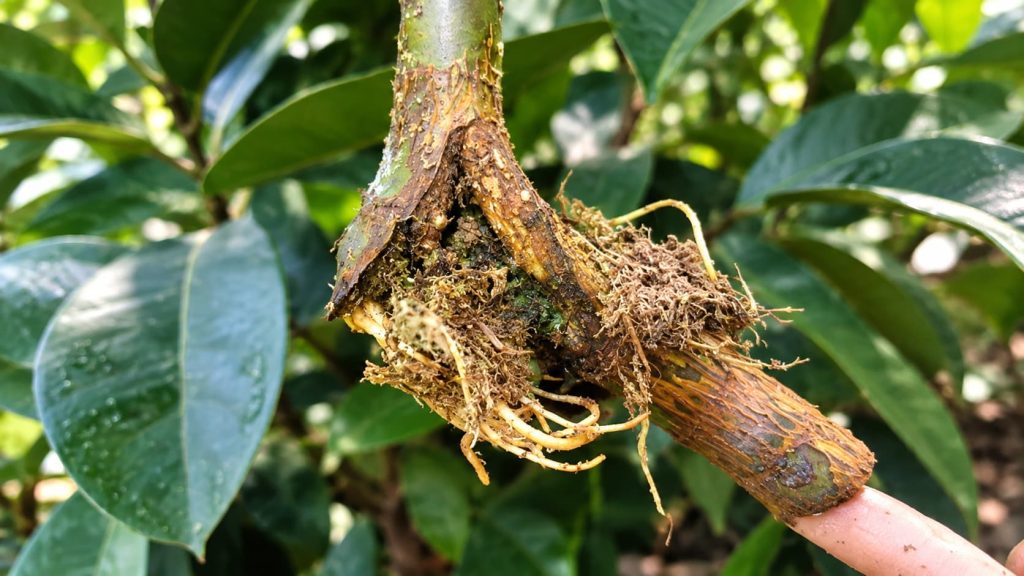
Secure the graft firmly with grafting tape.
The connection should remain stable while the tissues begin to heal.
Caring for a Newly Grafted Tree
After grafting, protect the union from drying and physical movement.
Keep the rootstock adequately watered, but avoid keeping the soil constantly saturated.
Place the tree in appropriate growing conditions with sufficient light.
Watch the graft regularly for signs of growth. New shoots may develop below the graft union from the rootstock. These should generally be removed because they can compete with the desired scion.
Do not disturb the graft union unnecessarily.
Once new growth becomes established, gradually monitor the grafting material and adjust or remove it when appropriate so it does not restrict the developing branch.
Common Grafting Mistakes
Several simple mistakes can reduce grafting success.
One of the most common is poor cambium alignment. If the cambium layers do not make adequate contact, the two pieces may fail to unite.
Other problems include:
- Using dried or unhealthy scions
- Making rough or crushed cuts
- Allowing the graft to move
- Grafting at an unsuitable time
- Letting the graft dry out
- Using contaminated cutting tools
- Allowing rootstock shoots to dominate
- Applying excessive pressure with grafting material
Clean tools and fresh plant material can make a significant difference.
How Long Does an Apple Graft Take to Heal?
A successful graft gradually forms new tissue between the rootstock and scion.
The exact time varies according to the grafting method, temperature, tree health, and growing conditions.
New growth from the scion is a positive sign, but gardeners should not assume that every graft has fully established immediately after shoots appear.
Continue providing appropriate care while the graft develops.
Can You Graft Different Apple Varieties Together?
Yes. Different apple varieties can often be grafted onto a compatible apple rootstock.
This makes it possible to grow multiple varieties on one tree.
A multi-variety tree can be useful when garden space is limited. However, different varieties may have different growth rates and pruning requirements, so regular management is important.
Pollination should also be considered when growing apples. Some varieties may require another compatible variety nearby to produce a good crop.
Final Tips for Successful Apple Grafting
Successful grafting depends on careful preparation and patience.
Start with healthy rootstock and fresh scion wood. Use a sharp, clean knife and make smooth cuts. Focus on good cambium contact and secure the graft so it cannot move.
After grafting, protect the union from drying and monitor the tree regularly. Remove unwanted shoots from below the graft and provide appropriate water and growing conditions.
Grafting is a skill that improves with practice. Beginners may not succeed every time, but each attempt provides useful experience.
For a broader guide to growing, caring for, and harvesting these fruit trees, learn more about apple tree grafting and other practical apple-growing techniques.
Frequently Asked Questions
Can you graft an apple tree at home?
Yes. Home gardeners can graft apple trees with basic tools and practice. Whip and tongue grafting is one technique commonly used with similarly sized rootstock and scion.
Can an apple tree be grafted onto another apple tree?
Yes. Compatible apple varieties can often be grafted onto suitable apple rootstocks or established apple trees.
What is the best time to graft apple trees?
Late winter or early spring is commonly suitable for several apple grafting methods, although the ideal timing depends on the technique and local climate.
Why do apple grafts fail?
Poor cambium contact, dried scions, contaminated tools, movement of the graft, unsuitable timing, and inadequate aftercare can all contribute to graft failure.
How do I know if an apple graft is successful?
Healthy new growth from the scion is a promising sign. Continue caring for the tree because the graft union needs time to become fully established.