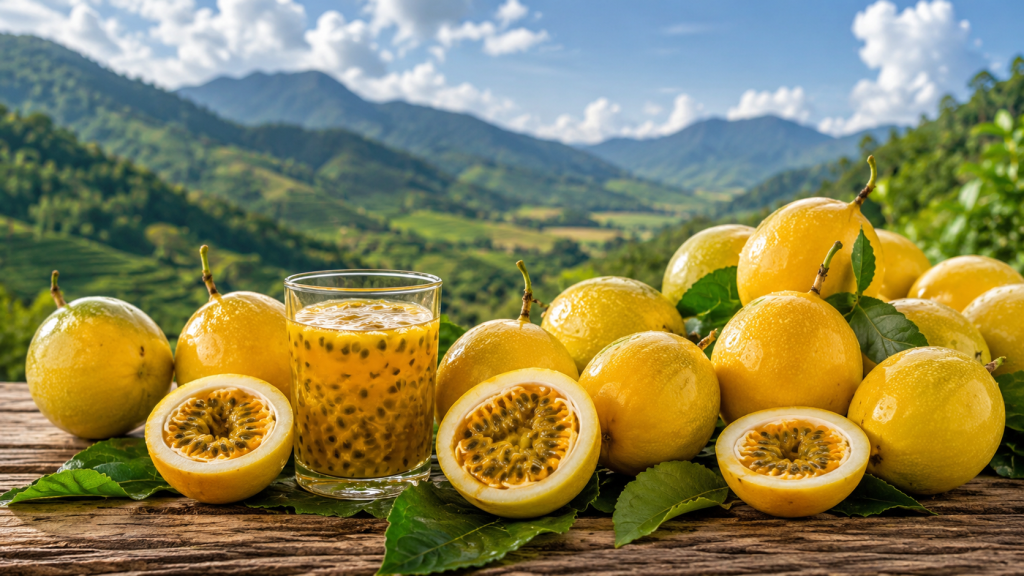
Passion fruit is a small tropical fruit known for its wrinkled skin, juicy pulp, and crunchy edible seeds. Beyond its unique sweet-tart flavor, passion fruit provides fiber, vitamin C, provitamin A, and various plant compounds such as polyphenols and carotenoids. These nutrients make it an interesting addition to a balanced diet.
Research on passion fruit and its bioactive compounds suggests several potential health benefits. However, eating passion fruit should be viewed as part of an overall healthy eating pattern rather than a treatment for any disease.
Table of Contents
- 1. Rich in Antioxidants
- 2. Supports Digestive Health
- 3. May Support Immune Function
- 4. Provides Vitamin A Precursors
- 5. May Help Support Heart Health
- 6. May Support Healthy Blood Sugar Management
- 7. Contains Plant Compounds With Anti-Inflammatory Potential
- 8. May Contribute to Overall Nutrient Intake
- 9. May Support a Healthy Diet
- How to Eat Passion Fruit
- Final Thoughts
1. Rich in Antioxidants
One of the most notable Passion Fruit Benefits is its antioxidant content. Passion fruit contains vitamin C, carotenoids, and polyphenols, which are plant compounds associated with antioxidant activity.
Antioxidants help protect cells from oxidative stress caused by unstable molecules known as free radicals. Passion fruit pulp has been studied for its bioactive compounds, including phenolic acids and polyphenols, which may contribute to its antioxidant properties.
2. Supports Digestive Health
Passion fruit is a good source of dietary fiber, especially considering its small size. Fiber plays an important role in maintaining normal digestive function and supporting regular bowel movements.
Eating enough fiber as part of a balanced diet can help promote healthy digestion. Passion fruit can be eaten with its seeds, which contribute to its overall fiber content.
3. May Support Immune Function
Passion fruit provides vitamin C, an essential nutrient involved in normal immune system function. Vitamin C also acts as an antioxidant and is important for collagen production and maintaining healthy tissues.
Adding passion fruit to a varied diet can therefore contribute to daily vitamin C intake. However, no single food can prevent illness on its own, and immune health depends on overall nutrition and lifestyle.
4. Provides Vitamin A Precursors
Another potential benefit of passion fruit is its contribution of provitamin A compounds, including carotenoids. The body can convert certain carotenoids into vitamin A, a nutrient important for normal vision and immune function.
The amount of provitamin A available can vary depending on the variety of passion fruit and other factors. Nevertheless, including colorful fruits such as passion fruit in a balanced diet can help increase dietary diversity.
5. May Help Support Heart Health
Passion fruit contains fiber and potassium, two nutrients that are important components of a heart-healthy eating pattern. Fiber is associated with cardiovascular health, while potassium plays a role in normal blood pressure regulation.
The fruit also contains polyphenols and other plant compounds that have been investigated for their potential biological effects. Still, more human research is needed before specific heart-health effects can be attributed directly to eating passion fruit.
6. May Support Healthy Blood Sugar Management
The fiber in passion fruit may help slow digestion and the absorption of carbohydrates, which can be useful for maintaining a balanced diet. Some research has also examined passion fruit compounds for their potential effects on carbohydrate-digesting enzymes and metabolic health.
However, these findings do not mean that passion fruit can treat diabetes or replace medical care. More research in humans is needed to understand the practical effects of regular passion fruit consumption on blood sugar control.
7. Contains Plant Compounds With Anti-Inflammatory Potential
Passion fruit contains several bioactive compounds, including polyphenols and carotenoids. Laboratory and review studies have investigated these compounds for antioxidant and potential anti-inflammatory activities.
These findings are promising, but much of the evidence comes from laboratory or experimental research. Therefore, it is more accurate to describe passion fruit as a nutritious food that contains potentially beneficial plant compounds rather than a food proven to treat inflammation.
8. May Contribute to Overall Nutrient Intake
Passion fruit offers several nutrients in a relatively small serving. A single purple passion fruit provides fiber along with vitamin C, vitamin A, iron, and potassium, although the exact nutritional profile varies by fruit size and variety.
Because it combines fiber, vitamins, minerals, and plant compounds, passion fruit can add nutritional variety to meals and snacks. It can be eaten fresh or added to yogurt, oatmeal, smoothies, salads, and desserts.
9. May Support a Healthy Diet
Perhaps one of the simplest Passion Fruit Benefits is that it makes healthy eating more enjoyable. Its distinctive flavor can add natural sweetness and acidity to many dishes without relying entirely on heavily processed ingredients.
The pulp and seeds can be enjoyed together, providing texture as well as nutrients. Choosing whole passion fruit instead of highly sweetened passion fruit beverages may also help reduce unnecessary added sugar intake.
How to Eat Passion Fruit
To eat fresh passion fruit, simply cut the fruit in half and scoop out the pulp and seeds with a spoon. The pulp can be eaten on its own or added to yogurt, oatmeal, smoothies, fruit salads, and other dishes.
For the best nutritional benefits, consider eating the whole edible pulp and seeds rather than consuming only strained juice. This helps retain the fruit’s natural fiber.
Final Thoughts
Passion fruit is a flavorful tropical fruit that offers fiber, vitamin C, provitamin A, and a variety of plant compounds. Potential Passion Fruit Benefits include supporting digestive health, contributing to normal immune function, providing antioxidants, and adding important nutrients to a balanced diet.
Research into passion fruit’s bioactive compounds is encouraging, but some proposed health effects still require stronger human evidence. For the best results, enjoy passion fruit as one part of a varied diet rich in fruits, vegetables, whole grains, legumes, nuts, and other nutritious foods.
References
- Fonseca AM, et al. Purple passion fruit (Passiflora edulis f. edulis): A comprehensive review on the nutritional value, phytochemical profile and associated health effects. Food Research International. 2022.
- Pereira ZC, et al. Passion fruit (Passiflora spp.) pulp: A review on bioactive properties, health benefits and technological potential. Food Research International. 2023.
- Weyya G, Belay A, Tadesse E. Passion fruit (Passiflora edulis Sims) by-products as a source of bioactive compounds for non-communicable disease prevention. Frontiers in Nutrition. 2024.