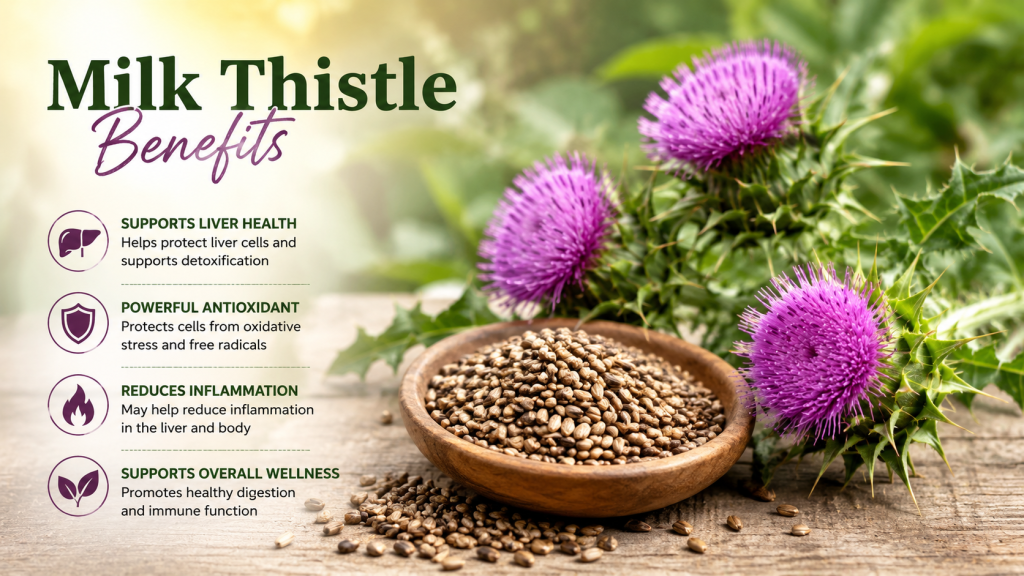
Milk Thistle Benefits are mainly associated with the potential effects of this flowering herb on liver health. The plant, scientifically known as Silybum marianum, contains a group of natural compounds called silymarin, which is responsible for much of the scientific interest surrounding the herb.
People commonly take milk thistle supplements because of their traditional use and research into their potential antioxidant, liver-supporting, and blood sugar-related effects. However, scientific evidence is still developing, and not all proposed benefits have been confirmed by high-quality human studies.
Here is what current research suggests about the potential benefits of milk thistle.
Table of Contents
- 1. May Support Liver Health
- 2. Provides Antioxidant Compounds
- 3. May Support Healthy Blood Sugar Levels
- 4. May Have Anti-Inflammatory Properties
- 5. Milk Thistle and Metabolic Health
- 6. What Is Silymarin?
- 7. How Is Milk Thistle Commonly Used?
- 8. Is Milk Thistle Safe?
- 9. What Does Research Say About Milk Thistle Benefits?
- Frequently Asked Questions
- Conclusion
- Sources
1. May Support Liver Health
One of the main reasons people use milk thistle is to support liver health. The liver plays an important role in many essential processes in the body, including nutrient metabolism and the processing of various substances.
Silymarin, the main group of active compounds in milk thistle, has been studied for its potential antioxidant and other biological properties. These characteristics have led researchers to investigate whether milk thistle may have a role in supporting normal liver function.
However, research involving people with liver conditions has produced mixed results. Studies have examined milk thistle in connection with conditions such as hepatitis and fatty liver disease, but there is currently not enough strong evidence to conclude that milk thistle can treat or cure liver disease.
For this reason, it is more accurate to describe milk thistle as an herb studied for its potential role in liver health rather than as a proven treatment for liver conditions.
2. Provides Antioxidant Compounds
Another potential benefit of milk thistle comes from its antioxidant properties.
Milk thistle seeds contain silymarin, which includes several plant compounds that have been investigated for their antioxidant activity. Antioxidants are substances that help protect cells from oxidative stress caused by unstable molecules known as free radicals.
Laboratory research has shown that silymarin has antioxidant activity, which is one reason scientists continue to study its potential health effects.
However, it is important to understand that laboratory findings do not always translate into the same benefits in humans. More research is needed to determine how the antioxidant properties of milk thistle may affect overall health when the herb is consumed as a supplement.
3. May Support Healthy Blood Sugar Levels
Some research has explored the possible relationship between milk thistle and blood sugar management.
A small number of human studies have suggested that milk thistle extracts may have a positive effect on blood sugar levels in people with type 2 diabetes. Researchers believe that the biological properties of silymarin may partly explain these findings.
However, the available evidence is still limited. More large-scale, high-quality clinical studies are needed before researchers can determine how useful milk thistle may be for supporting healthy blood sugar levels.
People with diabetes should not use milk thistle as a replacement for prescribed medication or professional medical advice. If you are considering taking milk thistle alongside diabetes treatment, it is best to discuss it with a healthcare professional.
4. May Have Anti-Inflammatory Properties
Inflammation is a natural process involved in the body’s response to injury and other challenges. Researchers have investigated whether compounds found in milk thistle may influence certain inflammatory processes.
Some laboratory and early research suggests that silymarin may have anti-inflammatory activity. This has contributed to interest in the herb and its potential role in overall health.
However, research in this area is still developing. It is too early to say that taking milk thistle supplements provides a proven anti-inflammatory benefit in humans.
For now, the anti-inflammatory properties of silymarin are best considered a potential area of research rather than an established health benefit.
5. Milk Thistle and Metabolic Health
Researchers have also studied milk thistle in relation to metabolic health, particularly because of its possible effects on blood sugar and other biological processes.
Some early studies have explored whether silymarin may have beneficial effects on certain metabolic markers. These findings are interesting, but they do not yet provide enough evidence to recommend milk thistle as a treatment for metabolic conditions.
If you are interested in using milk thistle for metabolic health, it is important to consider the overall picture. A balanced diet, regular physical activity, adequate sleep, and appropriate medical care remain important parts of maintaining good health.
Milk thistle may be an area of scientific interest, but it should not replace established approaches to managing health conditions.
6. What Is Silymarin?
Silymarin is one of the most important reasons milk thistle has attracted scientific attention.
It is not a single compound but rather a mixture of several plant compounds found mainly in milk thistle seeds. Silybin, also known as silibinin, is considered one of its major components.
Many studies investigating milk thistle benefits actually focus on silymarin extracts rather than the whole plant. This is important because different milk thistle products may contain different amounts of silymarin.
As a result, the findings from one research study may not necessarily apply to every milk thistle supplement available on the market.
7. How Is Milk Thistle Commonly Used?
Milk thistle is most commonly consumed as a dietary supplement. It is available in several forms, including:
- Capsules
- Tablets
- Liquid extracts
- Powder
- Tea
Supplements containing milk thistle extract are often standardized according to their silymarin content. However, the quality and concentration of products can vary.
If you choose to use a milk thistle supplement, it is important to select products from reputable manufacturers and follow the directions on the product label.
People sometimes use milk thistle tea or whole seeds, but these preparations may not contain the same concentration of silymarin as standardized extracts used in scientific studies.
8. Is Milk Thistle Safe?
Milk thistle is generally considered well tolerated when taken by mouth, but it can cause side effects in some people.
Possible side effects may include:
- Bloating
- Gas
- Nausea
- Diarrhea
- Digestive discomfort
Some people may also experience allergic reactions, especially if they are sensitive to plants in the same botanical family, such as ragweed, daisies, or chrysanthemums.
If you take prescription medication, have a chronic health condition, or are pregnant or breastfeeding, talk with a healthcare professional before using milk thistle supplements.
It is also important to remember that dietary supplements are not a replacement for medical treatment. If you have symptoms or a diagnosed health condition, seek appropriate medical care rather than relying solely on herbal products.
9. What Does Research Say About Milk Thistle Benefits?
The research on milk thistle is promising in some areas but remains inconclusive overall.
Scientists have identified interesting properties in silymarin, particularly its antioxidant activity, and researchers continue to investigate its potential effects on liver health and blood sugar management.
However, clinical studies involving liver diseases have produced inconsistent results. This means there is not currently enough strong evidence to say that milk thistle can prevent, treat, or cure liver disease.
The same principle applies to many other proposed benefits. Early research may be encouraging, but more high-quality human studies are needed to understand whether milk thistle provides meaningful health benefits.
Therefore, the most accurate way to describe milk thistle is as a traditional herb with potential health benefits that are still being studied.
Frequently Asked Questions
What is milk thistle good for?
Milk thistle is commonly used as a dietary supplement because of its traditional association with liver health. Research has also investigated its potential antioxidant properties and possible effects on blood sugar. However, evidence for many proposed benefits remains limited.
Does milk thistle help the liver?
Milk thistle has been widely studied for its potential relationship with liver health. However, clinical research has produced mixed results, and there is not enough evidence to consider it a proven treatment for liver disease.
What is the main active compound in milk thistle?
The main group of active compounds in milk thistle is called silymarin. It contains several plant compounds, including silybin or silibinin.
Is milk thistle safe to take every day?
Milk thistle is generally well tolerated, but individual responses can vary. Anyone taking medication or managing a health condition should consult a healthcare professional before using it regularly.
Conclusion
The potential Milk Thistle Benefits are largely connected to silymarin, a group of plant compounds found in milk thistle seeds. Research has focused particularly on liver health, antioxidant activity, blood sugar management, and possible anti-inflammatory properties.
While some findings are promising, the overall scientific evidence is not yet strong enough to confirm many of the proposed benefits. Milk thistle should therefore be viewed as a botanical supplement with potential health properties rather than a proven treatment for medical conditions.
Sources
- National Center for Complementary and Integrative Health (NCCIH)
- NCBI LiverTox
-
PubMed