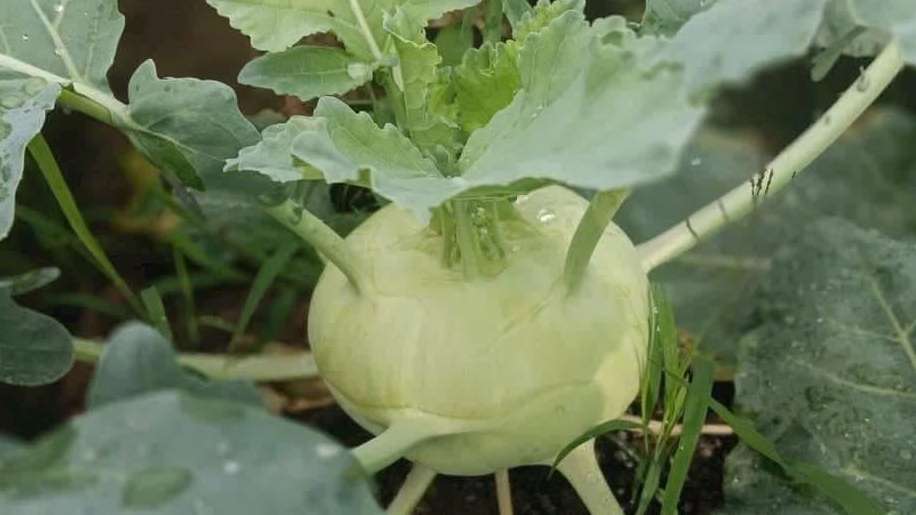
Kohlrabi is a rewarding, fast-growing brassica that adds a unique crunch and mild, sweet flavor to the garden. Because its swollen stem develops just above the soil, it makes an attractive addition to any vegetable garden.
However, like other members of the cabbage family, kohlrabi can be affected by a variety of insect pests and diseases.
Identifying problems early and using safe, organic control methods can help protect your plants without relying on harsh synthetic chemicals.
1. Common Pests of Kohlrabi and How to Identify Them
Keeping a close eye on your kohlrabi plants is the first line of defense. Pests can spread quickly, so catching an infestation early can help prevent serious damage.
- Imported Cabbageworms and Cabbage Loopers: Imported cabbageworms are velvety green caterpillars that blend easily into kohlrabi leaves. Cabbage loopers are pale green caterpillars that move in a distinctive looping motion. Both chew irregular holes in the leaves and can cause significant damage when populations are high.
- Aphids (Cabbage Aphids): These tiny, soft-bodied insects often cluster on the undersides of leaves and around growing tips. They may be green, gray, or powdery blue. By feeding on plant sap, they can cause leaves to curl, yellow, or become distorted.
- Flea Beetles: These extremely small, dark, shiny beetles jump like fleas when disturbed. They chew numerous tiny, round “shot holes” in the leaves of young kohlrabi plants, which can severely stunt seedlings or even kill them.
- Root Maggots: These small, white, legless larvae feed underground on roots and lower stems. Infested plants may wilt during hot weather, develop a bluish-green color, and eventually collapse if the damage is severe.
2. Effective Organic and Natural Pest Control Strategies
Organic pest management focuses on prevention, physical barriers, and beneficial insects rather than trying to eliminate every insect from the garden.
| Pest Type | Preventive Measure | Organic Treatment |
|---|---|---|
| Caterpillars | Use floating row covers immediately after planting. | Hand-pick caterpillars or apply Bacillus thuringiensis (Bt). |
| Aphids | Plant companion flowers to attract beneficial predators. | Spray with insecticidal soap or use a strong stream of water. |
| Flea Beetles | Delay planting until late spring when populations are lower. | Dust leaves with diatomaceous earth or use row covers. |
| Root Maggots | Install physical cabbage collars around the base of stems. | Apply beneficial nematodes to the surrounding soil. |
Encouraging beneficial insects such as ladybugs, lacewings, and parasitic wasps can also help keep pest populations under control. Planting flowers such as sweet alyssum, dill, and yarrow provides food and habitat for many of these helpful insects, supporting a more balanced garden ecosystem.
3. Common Diseases of Kohlrabi and Organic Solutions
Fungal and bacterial diseases are more likely to develop in damp, overcrowded conditions with poor air circulation. Good garden sanitation and proper growing practices are among the most effective ways to reduce these problems.
- Clubroot: This disease is caused by a soil-borne pathogen that attacks the roots. Affected plants may show stunted growth, wilt during warm weather, and develop swollen, distorted, club-shaped roots. Clubroot tends to be more severe in acidic soils. Maintaining a soil pH around 7.0 or slightly higher with agricultural lime, when appropriate, and practicing a 3- to 4-year crop rotation can help reduce the risk.
- Black Rot: This bacterial disease causes yellow, V-shaped lesions that begin along the leaf margins and may be accompanied by darkened veins. Start with certified disease-free seeds and remove infected plant debris promptly to reduce the chance of spreading the disease.
- Downy Mildew: This disease appears as yellowish or angular spots on the upper surfaces of leaves, often with fuzzy white or grayish growth on the undersides. Provide adequate spacing to improve airflow and water at the base of plants in the morning rather than wetting the foliage.
4. Best Practices for Long-Term Prevention
Healthy plants are generally better able to withstand pest and disease pressure. Following a few basic gardening practices can help keep your kohlrabi healthy from planting through harvest:
- Crop Rotation: Avoid planting kohlrabi or other brassicas in the same bed year after year. Rotate them to different areas of the garden to help reduce the buildup of soil-borne pathogens and pests.
- Sanitation: Remove plant debris at the end of the growing season. Clean gardening tools and containers regularly, especially after working with plants showing signs of disease.
- Soil Health: Improve your garden soil with well-rotted compost to support good soil structure, steady nutrient availability, and healthy biological activity.
- Proper Spacing: Give each kohlrabi plant about 6 to 8 inches of space, depending on the variety, to improve air circulation and reduce the humid conditions that can encourage disease.
By monitoring your plants regularly, using organic management practices early, and maintaining clean growing conditions, you can reduce pest and disease problems and enjoy a healthy harvest of crisp, flavorful kohlrabi.
To master every stage of growing this versatile vegetable—from preparing the soil and choosing the right varieties to caring for your plants and managing common problems—check out our complete kohlrabi care guide.