Japanese maple trees are loved for their delicate leaves, graceful branches, and striking fall colors. However, like other ornamental trees, they can sometimes suffer from insect pests and diseases.
Most Japanese maple problems are easier to manage when they are noticed early. Regular inspection, proper watering, good drainage, and a suitable planting location can help keep the tree strong and reduce the risk of serious problems.
Common Japanese Maple Pests
Scale Insects
Scale insects appear as small bumps attached to branches, stems, or leaves. Because they move very little, they can be difficult to notice at first.
Heavy infestations may weaken the tree and cause yellowing leaves, reduced growth, or premature leaf drop.
Inspect branches carefully, especially on older trees. Pruning badly infested branches can help reduce the pest population.
Keeping the tree healthy and avoiding unnecessary stress are also important for preventing serious scale problems.
Japanese Beetles
Japanese beetles can feed on the leaves of many ornamental plants, including Japanese maples. Adult beetles chew holes in leaves, sometimes leaving foliage with a skeletonized appearance.
A few beetles may cause limited damage, but larger populations can affect the appearance and vigor of the tree.
Inspect the foliage regularly when beetles are active. Removing individual beetles by hand can help when infestations are small.
Common Japanese Maple Diseases
Verticillium Wilt
Verticillium wilt is one of the more serious diseases that can affect Japanese maple trees. It is caused by a soil-borne fungus that can enter the tree through its roots.
Symptoms may include wilting leaves, yellowing foliage, branch dieback, and uneven decline. Sometimes only one part of the tree is affected initially.
Prevention is particularly important because infected soil can remain a source of the disease. Plant healthy nursery stock and avoid planting Japanese maple in locations known to have a history of Verticillium wilt.
Anthracnose
Anthracnose is a fungal disease that can affect leaves and young branches, particularly during cool, wet spring weather.
Affected leaves may develop brown or dark areas, while severe infections can cause premature leaf drop.
Good air circulation can help reduce conditions that favor fungal diseases. Remove fallen leaves and avoid keeping the foliage unnecessarily wet.
Leaf Spot
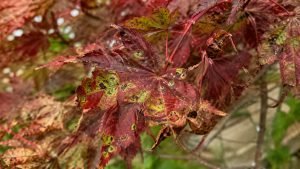
Leaf spot diseases can produce small brown, black, or reddish spots on Japanese maple leaves. Several different fungal organisms can cause leaf spot.
The problem may become more noticeable during rainy or humid weather.
To reduce the risk, keep the area around the tree clean and remove fallen leaves. Give the tree enough space for air to move through the canopy and avoid unnecessary overhead watering.
Powdery Mildew
Powdery mildew appears as a white, powdery coating on the surface of leaves. It tends to develop more easily when humidity is high and air circulation is poor.
Although powdery mildew may make foliage unattractive, it does not always cause serious damage to an established tree.
Avoid overcrowding plants around the maple and maintain good airflow. Regularly checking new foliage can help you notice the problem early.
Root Rot
Root rot is commonly associated with poor drainage and constantly wet soil.
Japanese maples need consistent moisture, particularly when young, but their roots should not remain saturated for long periods. Root problems may cause weak growth, yellow leaves, wilting, and gradual decline.
The best prevention is choosing a well-drained planting site. Avoid planting the tree in areas where water regularly collects after rain.
Leaf Scorch and Other Problems
Not every Japanese maple problem is caused by a pest or disease.
Leaf scorch is a common example. It can cause brown or crispy edges on leaves and may result from intense sunlight, high temperatures, dry soil, or strong winds.
Providing afternoon shade, maintaining consistent soil moisture, and protecting the tree from harsh conditions can help reduce leaf scorch.
Poor planting conditions can also make Japanese maples more vulnerable to pests and diseases. For this reason, proper Japanese Maple care should begin with the right planting location and continue throughout the growing season.
How to Prevent Japanese Maple Pests and Diseases
Prevention is often easier than treating a serious problem. Start by choosing a healthy tree from a reputable nursery.
Plant the tree in well-draining soil and provide the amount of sunlight appropriate for its variety. Japanese maples generally perform well with morning sun and some protection from intense afternoon heat.
Water deeply when needed, particularly during dry periods. Avoid keeping the soil constantly wet.
Mulching can help maintain more stable soil moisture and protect shallow roots. Apply a few inches of organic mulch around the tree, but keep it away from direct contact with the trunk.
Good garden sanitation is also useful. Remove fallen leaves and damaged plant material, especially when you notice signs of fungal disease.
Avoid excessive fertilizer. Too much nitrogen can encourage soft, rapid growth that may be more vulnerable to environmental stress and certain pests.
Regular inspection is one of the simplest prevention methods. Check the leaves, branches, and trunk every week or two during the growing season.
When to Treat a Japanese Maple
Not every pest or disease requires immediate treatment. A few aphids or minor leaf spots may have little effect on a healthy tree.
Before using any pesticide or fungicide, identify the problem as accurately as possible. Different pests and diseases require different treatments, and unnecessary chemical use can affect beneficial insects.
If a large portion of the tree begins to wilt, branches die back quickly, or symptoms continue to spread, professional advice from a local arborist or plant specialist can be helpful.
Final Thoughts
Japanese maple trees can encounter pests such as aphids, scale insects, and Japanese beetles, as well as diseases including Verticillium wilt, anthracnose, leaf spot, powdery mildew, and root rot.
The best defense is maintaining healthy growing conditions. Good drainage, appropriate sunlight, consistent watering, clean garden surroundings, and regular inspection can significantly reduce many common problems.
With proper care and early attention, your Japanese maple can maintain its beautiful foliage and graceful appearance throughout the growing seasons.