How to grow lavender successfully starts with choosing the right variety, planting it in a sunny location, and providing well-draining soil. Lavender is a beautiful and fragrant herb that is surprisingly easy to grow when its basic needs are met.
Known for its purple flowers, silvery-green foliage, and relaxing fragrance, lavender is a popular choice for gardens, containers, borders, and herb gardens. It also attracts bees and butterflies, making it a valuable addition to a pollinator-friendly garden.
Whether you want to grow lavender for its beautiful flowers, soothing fragrance, or culinary uses, this guide will show you how to grow lavender successfully, including planting, watering, pruning, fertilizing, and harvesting.
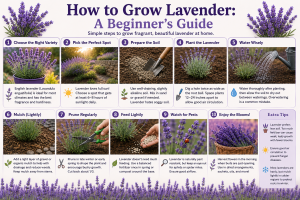
1. Choose the Right Lavender Variety
There are several types of lavender, and choosing the right variety is one of the most important steps when learning how to grow lavender.
The most popular types include:
- English lavender
- French lavender
- Spanish lavender
- Lavandin
English Lavender
English lavender, including varieties such as Lavandula angustifolia, is known for its excellent cold tolerance and sweet fragrance.
It is often a good choice for cooler climates and is commonly grown for dried flowers, essential oils, and culinary uses.
French Lavender
French lavender generally prefers warmer conditions and may have a longer flowering season in suitable climates.
It is often grown as an ornamental plant because of its attractive flowers and distinctive appearance.
Spanish Lavender
Spanish lavender is known for its unique flower heads and decorative appearance. It prefers warm, sunny conditions and well-draining soil.
Lavandin
Lavandin is a hybrid between English lavender and spike lavender. It often grows larger and produces abundant flowers with a strong fragrance.
Before buying a plant, check whether the variety is suitable for your local climate.
2. Choose the Best Location
Lavender needs plenty of sunlight to grow well.
Choose a location that receives at least 6 to 8 hours of direct sunlight each day.
Full sun helps lavender develop strong stems, healthy foliage, and abundant flowers.
Good air circulation is also important. Avoid planting lavender in crowded areas where air cannot move freely around the plant.
If you live in a hot climate, lavender can usually handle strong sunlight as long as the soil drains well.
3. Prepare Well-Draining Soil
One of the most important things to remember when learning how to grow lavender is that lavender does not like wet soil.
Lavender naturally grows in dry, well-drained conditions and is highly sensitive to excessive moisture around its roots.
Before planting, improve heavy or clay soil by adding materials that improve drainage.
Raised beds can also be useful if your garden soil holds too much water.
Avoid planting lavender in low areas where rainwater collects.
If your soil drains poorly, even careful watering may not prevent root problems.
A slightly alkaline to neutral soil is generally suitable for lavender, although the plant can tolerate a range of soil conditions as long as drainage is excellent.
4. How to Plant Lavender
The best time to plant lavender depends on your climate.
In many regions, spring is a good time to plant lavender after the risk of frost has passed. In mild climates, lavender can also be planted in fall.
To plant lavender:
- Choose a sunny location.
- Dig a hole slightly larger than the root ball.
- Place the plant at approximately the same depth as it was growing in its original container.
- Fill the hole with well-draining soil.
- Gently firm the soil around the plant.
- Water thoroughly after planting.
Avoid planting lavender too deeply.
After the plant becomes established, allow the soil to dry slightly between waterings.
5. How Far Apart Should Lavender Be Planted?
The correct spacing depends on the variety and mature size of the plant.
For most lavender varieties, spacing plants about 18 to 24 inches apart is a good starting point.
Larger varieties may need more space.
Proper spacing allows air to circulate around the foliage and helps prevent the plants from becoming overcrowded.
If you are creating a lavender border or hedge, you can plant them closer together, but make sure there is still enough room for mature plants to grow.
6. How Often Should You Water Lavender?
Lavender is relatively drought-tolerant once established.
Newly planted lavender needs regular watering while its roots develop. However, avoid keeping the soil constantly wet.
After the plant becomes established, water deeply but less frequently.
Allow the soil to dry between waterings.
The exact watering frequency depends on your climate, rainfall, soil type, and whether the plant is growing in the ground or in a container.
During periods of hot, dry weather, check the soil regularly.
If the soil feels dry several inches below the surface, it may be time to water.
Container-grown lavender usually needs more frequent watering than plants grown in the ground because pots dry out faster.
7. Does Lavender Need Full Sun?
Yes. Lavender grows best in full sun.
Aim for at least 6 to 8 hours of direct sunlight each day.
Plants grown in too much shade may become weak, produce fewer flowers, and develop less intense fragrance.
If possible, choose the sunniest part of your garden.
Lavender is especially well suited to sunny borders, rock gardens, raised beds, and other locations with excellent drainage.
8. Does Lavender Need Fertilizer?
Lavender generally does not require heavy fertilization.
In fact, too much fertilizer can encourage excessive leafy growth and result in fewer flowers.
If your soil is fertile and well-draining, you may not need to fertilize lavender regularly.
A small amount of compost can be added around the plant if the soil is poor, but avoid adding excessive amounts of rich organic material.
The key to growing healthy lavender is usually good sunlight and drainage rather than heavy feeding.
9. How to Prune Lavender
Pruning is an important part of lavender care.
Regular pruning helps maintain a compact shape, encourages healthy growth, and prevents the plant from becoming excessively woody.
The best time to prune depends on the variety and climate.
After flowering, you can remove spent flower stems and lightly shape the plant.
Avoid cutting too deeply into old, woody stems because lavender may not regrow easily from old wood.
A useful rule is to prune lightly and regularly rather than making severe cuts.
In colder climates, avoid heavy pruning late in the growing season because new growth may be vulnerable to winter damage.
10. How to Deadhead Lavender
Deadheading lavender means removing faded flower stems after blooming.
You can cut the flower stems back to keep the plant looking neat and encourage additional flowering in some varieties.
Deadheading also prevents the plant from putting unnecessary energy into seed production.
If you want to collect lavender seeds, leave some flowers on the plant until they mature.
How to Grow Lavender in Pots
Lavender grows very well in containers when the right conditions are provided.
Choose a pot with drainage holes at the bottom.
The container should be large enough to accommodate the plant’s root system but should not be excessively large.
Use a well-draining potting mix. You can improve drainage by combining standard potting soil with materials designed to increase drainage.
Place the container in a location that receives plenty of sunlight.
Avoid leaving the pot sitting in a tray of water because lavender roots are sensitive to excess moisture.
Container-grown lavender may need watering more often than garden-grown plants, but always check the soil before watering.
Can Lavender Grow Indoors?
Lavender can be grown indoors, but it can be more challenging than growing it outdoors.
The main difficulty is providing enough sunlight and good airflow.
If you want to grow lavender indoors, place it near a very sunny window where it can receive several hours of direct sunlight.
Avoid overwatering and make sure the container has good drainage.
If the plant does not receive enough natural sunlight, it may become weak and produce fewer flowers.
For most gardeners, growing lavender outdoors in full sun is easier.
How to Grow Lavender From Cuttings
Growing lavender from cuttings is a simple way to create new plants from an established plant.
Choose a healthy, non-flowering stem and take a cutting several inches long.
Remove the lower leaves and place the cutting in a well-draining propagation medium.
Keep the medium slightly moist but avoid excessive water.
Place the cutting in a bright location with indirect sunlight while roots develop.
Once the cutting has developed a healthy root system, it can be transplanted into a larger container or garden bed.
Propagation from cuttings is often more reliable than growing lavender from seed because the new plant will generally retain the characteristics of the parent plant.
How Long Does Lavender Take to Grow?
Lavender is a relatively slow-growing perennial compared with some annual garden plants.
Young plants may take a year or more to become fully established.
Once mature, lavender can grow into a long-lived garden plant and produce flowers every year under suitable conditions.
The growth rate depends on the variety, climate, sunlight, soil, and watering practices.
Providing excellent drainage is particularly important for long-term plant health.
Common Lavender Problems
Root Rot
Root rot is one of the most common problems affecting lavender.
It usually occurs when the soil remains wet for too long.
Symptoms may include yellowing leaves, wilting, weak growth, or plant decline.
The best way to prevent root rot is to plant lavender in well-draining soil and avoid overwatering.
Lavender Turning Brown
Lavender may turn brown because of excessive moisture, poor drainage, extreme weather, or natural aging.
Check the soil before watering and make sure excess water can drain away.
Pruning away dead growth can help improve the plant’s appearance, but avoid cutting heavily into old woody stems.
Lavender Not Blooming
If your lavender is not flowering, the plant may not be receiving enough sunlight.
Too much fertilizer can also encourage leaf growth instead of flowers.
Other possible causes include excessive moisture, poor drainage, or a young plant that has not yet become established.
Move container-grown lavender to a sunnier location if necessary and make sure the soil drains well.
Lavender Becoming Woody
Lavender naturally develops woody stems as it ages.
Regular light pruning can help maintain a compact shape.
However, avoid cutting into very old wood because lavender may struggle to produce new growth from those areas.
Common Lavender Pests
Lavender is generally resistant to many common garden pests because of its strong fragrance.
However, some insects may occasionally cause problems.
Possible pests include:
- Aphids
- Spittlebugs
- Whiteflies
- Spider mites
Inspect the plant regularly, especially during periods of warm weather.
Healthy plants growing in suitable conditions are often better able to tolerate minor pest problems.
How to Harvest Lavender
Lavender can be harvested for fresh bouquets, dried flowers, crafts, and other uses.
The best time to harvest is usually when the flower buds are beginning to open but before most flowers are fully open.
Cut the flower stems in the morning after the dew has dried.
Use clean, sharp scissors or pruning shears to make clean cuts.
For dried lavender, gather the stems into small bundles and hang them upside down in a cool, dry, well-ventilated location.
Once completely dry, the flowers can be stored or used for decorative purposes.
How to Dry Lavender
Drying lavender is simple.
Gather several stems together and secure them with a rubber band or string.
Hang the bundles upside down in a dark or shaded, dry location with good airflow.
Avoid areas with high humidity.
The drying process may take several weeks depending on temperature and humidity.
Once the flowers and stems are completely dry, store them in a dry container or use them for crafts and decoration.
How Long Does Lavender Live?
With proper care, many lavender plants can live for several years.
Some varieties may remain productive for a decade or longer when grown in suitable conditions.
The plant’s lifespan depends heavily on climate, drainage, pruning, and overall growing conditions.
The most important factor is avoiding excessive moisture around the roots.
How to Grow Lavender Successfully
For the best results, remember these essential lavender-growing tips:
- Choose a variety suited to your climate.
- Plant lavender in full sun.
- Use well-draining soil.
- Avoid overwatering.
- Allow the soil to dry between waterings.
- Provide good air circulation.
- Avoid excessive fertilizer.
- Prune lightly to maintain a compact shape.
- Do not cut deeply into old woody stems.
- Harvest flowers at the right time.
- Protect plants from excessive winter moisture in cold climates.
Frequently Asked Questions About Growing Lavender
How long does it take for lavender to grow?
Lavender can take a year or more to become fully established, especially when grown from a young plant. Once established, it can grow and flower for many years.
Does lavender need full sun?
Yes. Lavender grows best with at least 6 to 8 hours of direct sunlight each day. Full sun helps the plant produce strong growth and abundant flowers.
How often should I water lavender?
Water newly planted lavender regularly while it becomes established, but allow the soil to dry between waterings. Mature lavender is drought-tolerant and usually needs less frequent watering.
Why is my lavender turning brown?
Lavender may turn brown because of overwatering, poor drainage, extreme weather, or natural aging. Check the soil moisture and make sure the plant is growing in well-draining soil.
Can lavender grow in pots?
Yes. Lavender grows well in containers when planted in well-draining potting mix and placed in full sun. Make sure the pot has drainage holes.
When should I prune lavender?
Light pruning can usually be done after flowering to remove spent flower stems and maintain the plant’s shape. Avoid cutting deeply into old woody growth.
How do I make lavender bloom more?
Provide plenty of sunlight, avoid excessive fertilizer, and make sure the soil drains well. Proper pruning and avoiding overwatering can also support healthy flowering.
Can lavender survive winter?
Some lavender varieties are quite cold-hardy, while others prefer warmer climates. Choose a variety suited to your local growing conditions and protect plants from excessive winter moisture.
Final Thoughts
Learning how to grow lavender is relatively easy when you provide the plant with plenty of sunlight and excellent drainage. Unlike many garden plants, lavender prefers soil that dries out between waterings and generally does not need heavy feeding.
Choose a variety suited to your climate, plant it in a sunny location, and avoid overwatering. With proper care, lavender can reward you with beautiful purple flowers, fragrant foliage, and a long-lasting presence in your garden.
Whether you grow lavender in a garden bed, raised bed, rock garden, or container, this versatile plant can add beauty and fragrance to your outdoor space for years to come.