Longan fruit tropical specialty sweet juicy seed is a delightful masterpiece of nature. When it comes to the delicious specialty fruits of the tropics, how could anyone overlook the perfectly round, intensely sweet longan fruit?
Its small, glossy black seed sits inside a thick layer of juicy flesh, creating a delicate tropical treat that is difficult to forget after the first bite.
Below is a complete journey into this wonderful fruit.
What Is Longan Fruit?
Longan fruit, scientifically known as Dimocarpus longan, comes from a large woody fruit tree belonging to the soapberry family (Sapindaceae). The longan tree is closely related to lychee and rambutan. It develops a broad, evergreen canopy and can grow into a large, attractive fruit tree under suitable conditions.
For generations, longan trees have been a familiar part of rural landscapes throughout Southeast Asia. Beyond providing shade, the tree is also an economically valuable fruit crop and a source of pride for many productive agricultural regions.
What Does Longan Fruit Taste Like?
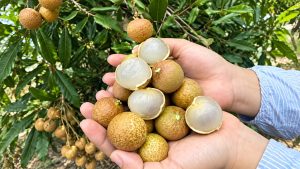
Take a fresh piece of longan fruit and gently bite into it, and a rich sweetness immediately spreads across your palate. At the same time, a naturally fragrant and refreshing aroma fills your senses, giving longan its distinctive character.
The sweetness is not simply one-dimensional. Ripe longan has a deep, lingering flavor that remains pleasantly on the palate after each bite. It is a taste shaped by warm sunshine, tropical weather, and months of growth, all concentrated into clusters of sweet fruit.
Harvest Season: When Longan Fruit Comes Into Season
Longan fruit does not ripen throughout the entire year. It has a distinct growing and harvest season. The tree generally flowers and sets fruit in spring, then spends the hot summer months developing the crop until the main harvest season arrives, commonly from June through August.
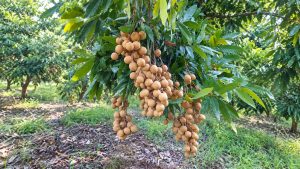
During this time, visiting longan orchards can be an unforgettable experience. In major growing areas such as Hung Yen, Tien Giang, and Ba Ria–Vung Tau, heavily loaded longan trees can create beautiful scenes throughout the countryside.
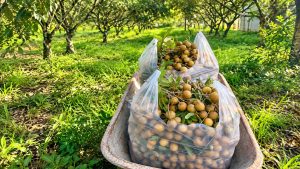
Clusters of longan fruit hang so heavily that smaller branches may bend under their weight, filling the garden or orchard with green foliage and warm brown-golden fruit.
The fruits grow tightly together beneath the bright summer sunlight. The air is filled with the sounds of farmers harvesting, the gentle snipping of pruning shears, and the naturally sweet fragrance of ripe longan fruit.
That fragrance can attract bees and butterflies as they move from one cluster to another, adding even more life to the orchard.
For many families, longan season is also a time of togetherness. Freshly harvested baskets of longan fruit are often shared with relatives and friends or prepared as gifts, making the harvest about more than fruit alone.
Growing Time: How Long Does It Take for Longan Trees to Produce Fruit?
The amount of time from planting to the first harvest depends greatly on the propagation method. Growing a fruit tree requires patience, and the longan tree is no exception.
Growing Longan From Seed
If you begin with seeds saved from freshly eaten longan fruit, the seedlings can grow vigorously and develop strong root systems. However, the biggest disadvantage is the long waiting period.
Seed-grown longan trees commonly require five to seven years, and sometimes even longer, before producing their first flowers and fruit.
Another important consideration is fruit quality. A tree grown from seed may not produce fruit identical to that of the parent tree. The resulting longan fruit can vary in size, sweetness, flesh thickness, seed size, and other characteristics.
For gardeners who enjoy growing unusual fruit trees from seed, this can still be an interesting and rewarding project. However, if your main goal is reliable fruit production, vegetative propagation is generally more practical.
Growing Longan From Air-Layering or Grafting
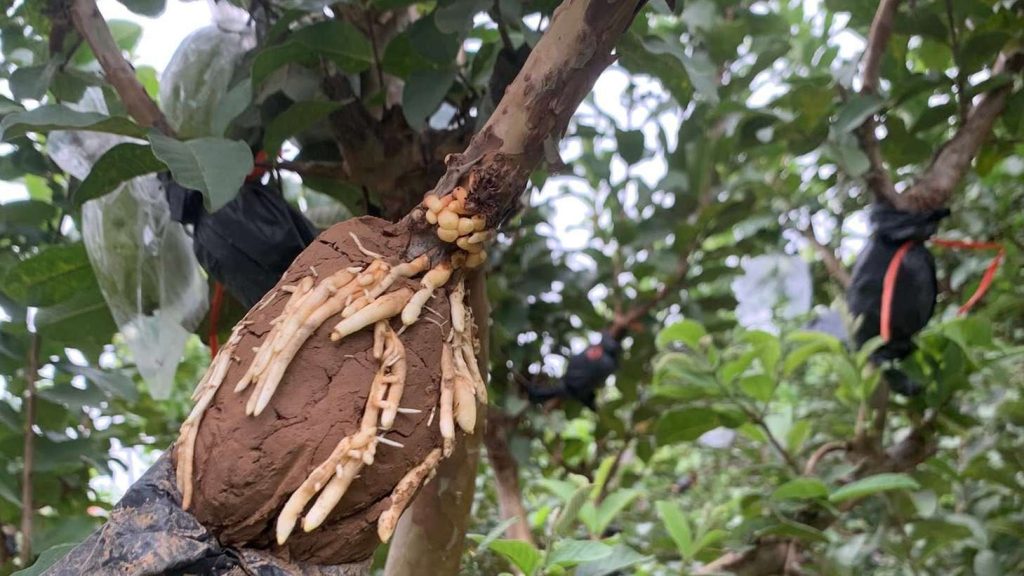
Air-layering and grafting are commonly used by fruit growers because these methods help preserve desirable characteristics from a selected parent tree.
A propagated longan tree can retain traits such as larger fruit, thicker flesh, smaller seeds, and good sweetness.
With proper care, a healthy air-layered or grafted tree may begin producing its first small crop after approximately two to three years.
This can save several years compared with growing a longan tree from seed while also providing more predictable fruit characteristics.
Tips for Growing a Healthy, Productive Longan Tree
Producing a healthy longan tree that can withstand common growing challenges and eventually carry heavy clusters of fruit requires patience, regular care, and an understanding of the tree’s natural growing habits.
Soil and Sunlight
Longan is relatively adaptable, but it grows best in loose, fertile soil that is deep and well drained. Fertile alluvial soil and other well-drained soils rich in organic matter can provide favorable growing conditions.
Good drainage is especially important. Although longan trees need adequate moisture, their roots should not remain in saturated soil for extended periods.
Longan is also a sun-loving fruit tree. When choosing a planting location, select an open area where the tree can receive plenty of direct sunlight rather than being shaded by buildings or larger trees.
Good sunlight supports vigorous photosynthesis and healthy growth. For fruit production, sufficient light also helps developing longan fruit build the sweetness and aroma that gardeners look forward to at harvest time.
Water and Nutrition
Young longan trees and trees developing fruit have relatively high water needs. During these stages, keep the soil adequately moist and avoid prolonged drought stress.
Insufficient moisture can cause young trees to struggle and may contribute to flower or young-fruit drop.
At the same time, good drainage is essential during rainy periods. Standing water around the roots can create unfavorable conditions and increase the risk of root problems.
Fertilization can be divided into several applications throughout the year, with particular attention given to three important periods:
- Before flowering: To support healthy new growth and flower development.
- After fruit set: To support the developing seeds and fleshy fruit.
- After harvest: To help the tree recover and produce healthy new growth for the following season.
The exact fertilizer program should be adjusted according to the tree’s age, soil fertility, growing conditions, and the fertilizer product being used.
The Art of Storing Longan Fruit: Preserving Its Fresh Flavor
Fresh longan fruit can lose moisture relatively quickly after harvest. The skin may gradually turn darker brown, while the flesh can lose quality if the fruit is left at room temperature for too long.
Proper storage can help preserve its fresh texture, sweetness, and aroma.
Short-Term Storage in the Refrigerator
If you want to enjoy fresh longan fruit over the next few days, a few simple steps can help maintain its quality:
- Use clean scissors or pruning shears to divide large longan clusters into smaller bunches and remove any bruised or damaged fruit.
- Gently rinse the fruit with clean water and allow it to drain and dry thoroughly before storage.
- Place the longan fruit in a zip-top bag, a food-storage container lined with paper towels to absorb excess moisture, or wrap it appropriately before placing it in the refrigerator.
With suitable refrigeration, fresh longan fruit can generally maintain good quality for approximately three to five days, although actual storage life depends on how fresh and healthy the fruit was when harvested.
Long-Term Storage and Dried Longan
When longan fruit is in peak season and the harvest is abundant, several preservation methods can help extend its shelf life.
- Freezing: Peel the fruit and carefully separate the flesh from the seeds. Place the flesh in an airtight container or freezer bag and store it in the freezer. This allows you to enjoy the sweet flavor of longan outside the fresh harvest season.
- Drying: The flesh can be carefully separated from the seeds and then dried in the sun or with a food dehydrator at an appropriate temperature. Dried longan develops a golden-brown color and a chewy, fragrant texture. It is traditionally used in various Asian culinary preparations and traditional food practices.
How to Enjoy Longan Fruit to Appreciate Its Full Flavor
The simplest and most traditional way to enjoy longan fruit is to eat it fresh.
Imagine sitting on a porch on a warm summer afternoon with a gentle breeze moving through the trees. You peel away the thin skin by hand, reveal the translucent white flesh, and take a bite.
The texture is pleasantly crisp and juicy, while the concentrated sweetness spreads across your palate.
However, the culinary uses of longan fruit go far beyond eating it fresh.
Lotus Seed and Longan Sweet Soup
One classic combination pairs longan with lotus seeds. The slightly nutty flavor and tender texture of lotus seeds complement the naturally sweet flavor of longan fruit.
The ingredients are traditionally simmered with rock sugar and, in some versions, fragrant ingredients such as pomelo blossom water.
This traditional dessert can be served warm or chilled and is especially enjoyable during hot weather.
Longan and Chrysanthemum Tea or Longan and Goji Berry Tea
Longan fruit can also be incorporated into traditional tea preparations, including combinations with chrysanthemum or goji berries.
These beverages are traditionally enjoyed as soothing drinks and are part of various Asian food traditions.
Rather than viewing them as medical remedies, they can simply be appreciated as flavorful traditional beverages that make a relaxing addition to an evening routine.
Final Thoughts
Longan fruit is much more than a refreshing summer fruit. It represents sweetness, family gatherings, and the simple pleasure of enjoying seasonal fruit together.
From a tiny seed or young propagated plant, a longan tree gradually develops into a broad, leafy canopy. Through seasons of sunshine and rain, it eventually produces clusters of golden-brown fruit filled with translucent, sweet flesh.
For gardeners in suitable warm climates, growing a longan tree can be a rewarding long-term project. The tree provides attractive evergreen foliage while offering the possibility of harvesting fresh longan fruit directly from your own garden.
Perhaps that is what makes longan fruit so special. Its appeal is not only in its sweetness but also in the memories created around it—the harvest season, the shared baskets of fruit, and the simple pleasure of peeling one fresh longan after another.
Have you enjoyed a basket of sweet, freshly harvested longan fruit this season, or are you thinking about planting a longan tree in your own yard and bringing a little piece of that tropical tradition home?