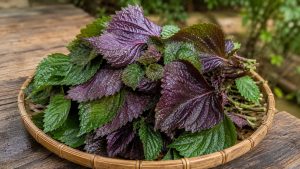
Shiso leaves may look like an ordinary herb at first, but they have a distinctive flavor that can change the character of a dish. Fresh, aromatic, and slightly minty, shiso is used in many Asian kitchens as both a seasoning and a fresh green.
In Japan, Korea, and Vietnam, different types of perilla leaves appear in everyday meals, from rice and noodles to grilled meat and fresh rolls. Some dishes use the leaves whole, while others finely slice them and add them at the end of cooking.
What Do Shiso Leaves Taste Like?
Fresh shiso has a flavor that is difficult to compare with just one herb. Depending on the variety, the leaves can have notes of mint, basil, citrus, and mild spice.
Green shiso is generally fresh and fragrant, while red or purple shiso has a stronger color and can have a slightly more pronounced flavor. The leaves are often used fresh because their aroma is one of their best qualities.
When cooking with shiso, I find that a little can go a long way. You do not always need a large amount to give rice, noodles, meat, or vegetables a noticeable herbal flavor.
Shiso Leaves in Japanese Cuisine
Japan is probably the country most closely associated with shiso. Both green and red varieties are used in Japanese food, although they have different culinary roles.
Green shiso, known as aojiso, is commonly served fresh. It may be placed underneath sashimi, wrapped around food, sliced into thin strips, or used as a garnish.
One simple way to enjoy it is with rice. Fresh shiso can be finely chopped and mixed with warm rice, sesame seeds, or other seasonings. The result is simple but very aromatic.
Shiso is also used with sushi and sashimi. Its fresh flavor works particularly well with fish and seafood because it adds an herbal note without overwhelming the main ingredient.
Another popular preparation is shiso tempura. Whole leaves are coated in a light batter and fried until crisp. The delicate texture of the fried leaf makes this one of the easiest ways to appreciate shiso as a cooked ingredient.
Shiso With Noodles and Rice
Shiso is also a useful topping for Japanese noodles.
Thinly sliced leaves can be added to soba, somen, or other noodle dishes. Because the leaves are usually added near the end, they retain much of their fresh aroma.
For a quick meal, try slicing several fresh shiso leaves into thin strips and adding them to warm rice or cold noodles. You can combine them with sesame seeds, green onions, cucumber, or a simple soy-based seasoning.
This is one reason I like growing shiso at home. You do not need a complicated recipe to use it. A few fresh leaves can turn a basic bowl of rice or noodles into something much more interesting.
Shiso in Korean Cooking
Perilla is also widely used in Korean cuisine. Korean perilla leaves are often called kkaennip, and they are an important ingredient in many home-style dishes.
The leaves can be eaten fresh, seasoned, grilled, or preserved. One familiar preparation is seasoned perilla leaves, where the leaves are layered and coated with a flavorful mixture of ingredients such as soy sauce, garlic, sesame oil, and chili.
Perilla leaves are also commonly served with grilled meat. Their large, slightly textured leaves make them useful for wrapping meat, rice, garlic, and other side dishes.
Another option is perilla leaf fritters. The leaves can be filled, coated, and pan-fried to create a savory dish with a crisp exterior and fragrant herbal center.
Because Korean perilla leaves are relatively large, they work particularly well as wraps. This is different from the way delicate Japanese shiso is often used as a garnish or thinly sliced topping.
Shiso in Vietnamese Cuisine
Perilla is also familiar in Vietnamese cooking, where tía tô is commonly used as a fresh herb.
Vietnamese perilla leaves are often eaten raw alongside vegetables and other herbs. They can be served with grilled meat, noodle dishes, soups, spring rolls, and many everyday meals.
One of the simplest ways to use the leaves is to add them to a bowl of noodles. Tear or slice a few leaves and mix them with the other fresh herbs just before eating.
Tía tô can also be added to soups near the end of cooking. Adding the leaves toward the end helps preserve their aroma and fresh flavor.
For home cooking, you do not have to prepare anything complicated. A small handful of fresh leaves can be served alongside a meal and used as a wrap or herb whenever you want a stronger fragrance.
Fresh Shiso With Meat and Seafood
One of the easiest ways to use shiso is to pair it with protein.
Fresh leaves work especially well with fish and seafood because their bright herbal aroma balances richer flavors. Try serving whole leaves with grilled fish or using thinly sliced shiso as a topping.
Shiso can also be wrapped around grilled meat. In Korean cooking, perilla leaves are commonly used as wraps, while in Japanese-style cooking, smaller shiso leaves can be combined with meat or used as part of a cooked dish.
For a quick meal, place cooked meat inside a fresh shiso leaf with rice and vegetables. You can eat the leaf and filling together, creating a fresh contrast to the warm ingredients.
Using Shiso in Salads and Fresh Dishes
Shiso does not have to be limited to traditional Asian recipes. Fresh leaves can also be added to salads and simple vegetable dishes.
Slice the leaves into thin ribbons and toss them with cucumber, carrots, cabbage, tomatoes, or mixed greens. A light dressing made with soy sauce, rice vinegar, sesame oil, or citrus works well with the herb.
You can also use shiso as a replacement for some of the fresh herbs in wraps and cold noodle dishes. The flavor will be different, but that is part of what makes the plant interesting.
Pickled and Preserved Shiso
Red shiso has an important role in Japanese pickling. It is traditionally associated with umeboshi, Japanese salted plums, where red shiso contributes color and aroma.
The leaves can also be salted or preserved in other preparations. Red shiso is especially valuable when both flavor and natural color are wanted.
For gardeners, this is another reason to grow more than one variety. Green shiso is excellent for fresh eating, while red or purple shiso can be useful for pickling and colorful dishes.
Easy Ways to Start Cooking With Shiso
If you are new to shiso, start with simple dishes rather than complicated recipes.
Try adding sliced leaves to rice, placing whole leaves beside grilled fish, wrapping them around meat, mixing them into a salad, or using them as a topping for noodles.
Fresh leaves are usually best when their aroma is allowed to stand out. Instead of cooking them for a long time, add them toward the end or serve them raw when the recipe allows.
Once you become familiar with the flavor, you can experiment with different varieties and cooking methods.
Final Thoughts
Shiso leaves have a surprisingly wide role in Asian cuisine. In Japan, they are used with sushi, sashimi, rice, noodles, tempura, and pickled foods. In Korea, perilla leaves are often seasoned, preserved, or used as wraps for grilled meat. In Vietnam, tía tô is commonly enjoyed as a fresh herb with noodles, soups, meat, and everyday meals.
The best part is that you do not need a special recipe to enjoy them. Fresh shiso can be used in small amounts, making it an easy herb to grow and use throughout the cooking season.