
There is a special moment in Japan when winter finally begins to fade and the first cherry blossoms open.
One day, the trees may still look quiet and bare. Then, almost suddenly, delicate pink and white flowers begin appearing along streets, rivers, parks, and temple grounds.
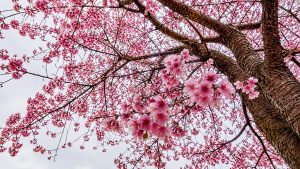
For travelers dreaming of seeing this beautiful season, one question matters more than almost anything else:
When do Japanese cherry blossoms bloom in Japan?
The short answer is usually late March to early April in many of the country’s most popular destinations. But cherry blossom season does not happen on exactly the same dates every year, and the timing changes significantly from south to north.
Understanding how the season moves across Japan can help you choose the right time and place for your trip.
Cherry Blossom Season Does Not Happen Everywhere at Once
Japan stretches a long distance from south to north, so spring arrives at different times across the country.
The cherry blossom front, often called the sakura front, generally begins in warmer southern areas before moving northward.
The Japan National Tourism Organization notes that the broader cherry blossom season can extend from the latter half of March into early May, depending on location. Southern regions such as Kyushu and Shikoku tend to bloom earlier, while Tohoku and Hokkaido offer later-season viewing.
This creates something wonderful for travelers.
If you miss the peak bloom in one city, you may still be able to find blossoms farther north.
When Do Cherry Blossoms Bloom in Tokyo?
Tokyo is one of the most popular places in Japan to experience cherry blossom season.
In an average year, the main viewing period is around late March to early April.
The exact timing changes with winter and early spring temperatures. In 2026, Tokyo’s Somei Yoshino trees were officially recorded as beginning to bloom on March 19 and reaching full bloom around March 28.
For travelers, this means late March can be a particularly exciting time to visit.
Parks and riversides become filled with people enjoying hanami, the Japanese tradition of viewing flowers. You may see families having picnics, friends taking photographs, and visitors simply walking beneath the trees.
It can feel as though an entire city is celebrating spring together.
When Is Cherry Blossom Season in Kyoto?
Kyoto is another dream destination for sakura lovers.
The city’s traditional temples, gardens, narrow streets, and historic neighborhoods create an unforgettable setting for flowering trees.
Cherry blossoms in Kyoto generally appear around late March to early April.
In 2026, Kyoto’s flowering began around March 23, with full bloom reported around March 30.
Of course, these dates should be treated as a guide rather than a guarantee.
Weather can move the season earlier or later, sometimes by several days.
If Kyoto is your main destination, it is wise to leave some flexibility in your itinerary rather than planning everything around a single predicted date.
Osaka and Other Popular Cities
Osaka usually follows a similar pattern to Kyoto and Tokyo.
The main cherry blossom period is generally around the end of March and beginning of April. In 2026, Osaka began flowering around March 26 and reached full bloom around April 3 according to the Japan Meteorological Corporation’s final forecast.
Nagoya can bloom slightly earlier, while Hiroshima and parts of Shikoku may also see blossoms during the second half of March.
This makes late March and the first days of April a popular travel period for visitors who want to combine several major cities.
However, popularity comes with one downside: crowds.
What About Northern Japan?
If you travel farther north, cherry blossom season arrives later.
Sendai often sees blossoms in early April, while Aomori can reach its peak later in April.
Hokkaido is even later.
Sapporo commonly experiences cherry blossoms around late April or early May, depending on the year. In 2026, the Japan Meteorological Corporation recorded flowering in Sapporo around April 18 and full bloom around April 24.
This is great news if your schedule does not allow you to visit Japan in late March.
Instead of thinking that you have completely missed cherry blossom season, you can simply follow the flowers north.
Can You See Cherry Blossoms in May?
Yes, depending on where you go.
While many famous destinations in central Japan have already finished blooming by May, northern areas can still offer beautiful late-season blossoms.
Hokkaido is one of the best-known choices for travelers looking for a later spring experience.
Some mountain areas and higher-elevation locations can also bloom later than nearby cities.
This is one of the reasons Japan’s cherry blossom season feels much longer than just a few days. The flowers move across the country like a gentle wave.
How Long Do Cherry Blossoms Stay in Bloom?
This is where planning becomes important.
Cherry blossoms are famous partly because they do not last very long.
The exact duration varies with weather, variety, location, and other conditions. JNTO notes that the blossoms can remain for only around seven to ten days, making the season especially fleeting.
A strong wind or heavy rain can shorten the best viewing period.
That is why seeing cherry blossoms in full bloom can sometimes feel like being in the right place at exactly the right moment.
The flowers open.
They reach their peak.
And then, almost before you are ready, petals begin falling.
First Bloom vs. Full Bloom
When checking cherry blossom forecasts, travelers should understand the difference between first bloom and full bloom.
First bloom means that the first flowers have begun to open.
That does not mean the entire tree—or the entire city—is covered with flowers.
Full bloom, often called mankai, is the period when the majority of flowers are open and the trees create the spectacular appearance people usually imagine when they think of sakura.
Japan’s cherry blossom forecasts track these stages separately.
For a first-time visitor hoping to see the classic pink landscape, the full-bloom period is usually the most desirable target.
Should You Plan Your Trip Around the Forecast?
You can, but do not treat the forecast as an exact promise.
Cherry blossom forecasts are based on weather patterns and tree development, and they can change as spring approaches.
The Japan National Tourism Organization specifically notes that forecast dates are subject to weather conditions.
A better approach is to choose a reasonable travel window and monitor the forecast as your trip gets closer.
If you have several days available, even better.
That gives you more opportunities to experience the blossoms at different stages.
Tips for Enjoying Cherry Blossom Season
If you want a more relaxed experience, consider visiting popular viewing areas early in the morning.
The atmosphere can be completely different before the biggest crowds arrive.
Bring comfortable shoes because you may spend much of the day walking.
A light jacket can also be useful because spring temperatures can change throughout the day.
And do not focus only on famous tourist spots.
A small neighborhood park, riverside path, or quiet temple garden can sometimes provide an equally memorable experience.
Part of the beauty of sakura is discovering it unexpectedly.
You turn a corner and suddenly see a tree covered in flowers.
For a moment, you stop walking.
You look up.
And spring feels very close.
The Best Time Depends on Where You Go
There is no single perfect cherry blossom date for all of Japan.
For Tokyo, Kyoto, and Osaka, late March to early April is generally the key period.
For Tohoku, April is often a better choice.
For Hokkaido, late April and early May can offer beautiful opportunities.
Southern Japan may bloom earlier, while mountain areas can bloom later.
The important thing is to think of cherry blossom season as a moving event rather than one specific week.
A Spring Journey Worth Remembering
Perhaps the most beautiful thing about visiting Japan during cherry blossom season is that the flowers encourage you to slow down.
You may arrive with a carefully planned itinerary, but some of your favorite memories may come from moments that were never on the schedule.
A quiet walk beside a river.
A picnic beneath a flowering tree.
Petals floating gently through the air.
A cup of tea while looking out at a spring garden.
These small moments are what make sakura season so unforgettable.
The flowers may only stay for a short time, but that is part of their magic.
If you are planning a trip, keep an eye on regional forecasts and be flexible with your dates. Most importantly, remember that there is beauty both before and after full bloom.
Because in Japan, spring is not simply a date on the calendar.
It is a season that slowly travels across the country, inviting everyone to stop, look up, and enjoy it while it lasts.
For gardeners and travelers who want to understand the timing in more detail, the Japanese Cherry Blossom bloom season is a wonderful example of how climate, geography, and nature come together to create one of Japan’s most beautiful annual traditions.