
Soursop trees are valued for their tropical fruit, but their foliage is also an important part of the plant. The leaves are easy to recognize because of their elongated shape, smooth edges, and glossy green surface. Whether you grow a soursop tree in a backyard garden or maintain a larger tropical planting, knowing how to identify healthy leaves, harvest them carefully, and store them properly can help preserve their quality.
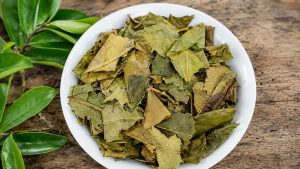
Soursop Leaves Appearance
Soursop leaves come from the tropical fruit tree Annona muricata. They grow alternately along the branches rather than directly opposite one another. Mature leaves are generally elongated and oval to oblong, with a pointed tip and a smooth margin.
A healthy mature leaf commonly has a dark green upper surface with a slightly lighter green underside. The surface can have a naturally glossy appearance, particularly when the leaf is fresh. A prominent central vein runs from the base toward the tip, with smaller veins extending outward.
The exact size varies according to the tree’s age and growing conditions, but mature leaves are commonly several inches long. Young leaves are usually softer and lighter green before gradually becoming thicker and darker as they mature.
Healthy soursop leaves should look firm and intact. Some natural variation is normal, but leaves with extensive yellowing, large brown patches, holes, heavy insect damage, or unusual distortion may indicate environmental stress or pest problems.
When examining foliage, look at both sides of the leaf. Some insects and other problems are easier to notice underneath the leaves than on the upper surface.
When to Harvest Soursop Leaves
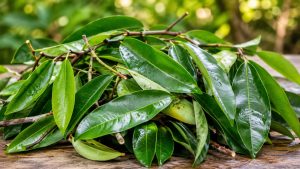
The best time to harvest soursop leaves depends on what you plan to do with them afterward. For drying and storage, choose mature leaves that are fully developed and naturally green.
Avoid collecting very young leaves because they are softer and contain more moisture. Extremely old, damaged, yellowing, or diseased-looking leaves should also be left on the tree or removed separately rather than mixed with healthy foliage.
A dry morning can be a convenient time for harvesting. If the leaves are wet from rain or heavy dew, allow surface moisture to evaporate before collecting them when possible. Starting with relatively dry leaves makes the preparation and drying process easier.
It is also important to consider the condition of the tree. Do not harvest heavily from a young, recently transplanted, drought-stressed, or otherwise unhealthy plant. The leaves are essential for photosynthesis, so the tree needs enough healthy foliage to continue producing energy.
How to Harvest Soursop Leaves
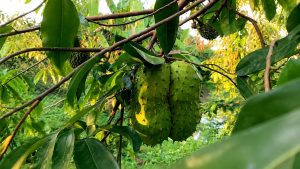
Harvesting soursop leaves does not need to be complicated. The main goal is to remove selected mature leaves without unnecessarily damaging the branches or stripping the tree.
Use clean, sharp garden scissors or pruning shears. Select healthy leaves that are free from obvious insect damage, disease symptoms, or chemical residue.
Cut or remove individual leaves carefully near their stems. Avoid pulling forcefully, as rough handling can damage the surrounding tissue or young shoots.
For a larger harvest, work gradually around the tree rather than taking most of the leaves from a single branch. Maintaining an even canopy helps the tree continue normal growth.
A useful rule is to harvest moderately. A healthy mature tree can tolerate selective leaf removal better than a young or stressed tree, but excessive harvesting can reduce the amount of foliage available for photosynthesis.
After harvesting, place the leaves in a clean basket, tray, or breathable container. Avoid compressing them into a sealed plastic bag while they are still wet because trapped moisture can encourage deterioration.
If you are learning more about the characteristics and care of Soursop leaves, understanding how the leaves look when healthy is particularly useful before harvesting.
How to Prepare Soursop Leaves for Storage
Proper preparation begins immediately after harvesting. Sort through the leaves and remove those that are badly damaged, discolored, or contaminated.
If the leaves are visibly dirty, gently rinse them with clean water. Do not soak them for longer than necessary. After washing, allow excess water to drain away and gently pat the leaves dry with a clean towel.
The leaves should be completely dry on the surface before long-term storage. Extra moisture can increase the chance of mold and spoilage.
For short-term storage, fresh leaves can be placed in a clean container lined with a dry paper towel. Keep the container in a cool refrigerator and check the leaves regularly for moisture or deterioration.
For longer storage, drying is generally more practical.
How to Dry Soursop Leaves
There are two simple approaches: air-drying and using a food dehydrator.
For air-drying, spread the cleaned leaves in a single layer on a clean tray, rack, or drying surface. Choose a dry, well-ventilated location away from direct harsh sunlight and excessive humidity.
Turn the leaves occasionally so that air can reach both sides. Drying time depends on temperature, humidity, leaf thickness, and ventilation.
A food dehydrator provides more controlled conditions. Arrange the leaves in a single layer without overlapping them. Use the manufacturer’s recommended setting for leafy plant material and allow the leaves to dry until they are crisp and contain very little remaining moisture.
Avoid storing leaves while they are still flexible and noticeably damp. They need to be thoroughly dry before being placed in an airtight container.
How to Store Soursop Leaves
Once completely dry, soursop leaves should be stored in a clean, dry, airtight container. Glass jars, food-safe containers, or sealed storage bags can work well.
Keep the container in a cool, dark, dry place away from direct sunlight and sources of heat. Light, humidity, and heat can gradually reduce the quality of dried plant material.
Label the container with the harvest or drying date. This simple habit makes it easier to track how long the leaves have been stored.
For fresh leaves, refrigeration is more appropriate for short-term storage. Place them in a clean container or breathable bag with a dry paper towel to absorb excess moisture. Avoid sealing wet leaves in a completely airtight container because condensation can accelerate spoilage.
Check stored leaves periodically. If moisture accumulates inside the container, remove the leaves and allow them to dry properly before storing them again.
How Long Do Soursop Leaves Last?
The storage life of soursop leaves depends heavily on how well they were dried and stored.
Fresh leaves are best used relatively soon after harvesting. Refrigeration can slow deterioration, but fresh foliage will eventually lose moisture, firmness, and color.
Properly dried leaves can last much longer when kept in an airtight container in a cool, dry, dark location. The most important factor is keeping moisture away from the stored leaves.
Discard leaves if you notice visible mold, an unusual musty smell, excessive moisture, or significant deterioration. Do not mix newly dried leaves with older material that already shows signs of spoilage.
Final Thoughts
Soursop leaves are simple to identify and relatively easy to harvest and store when handled carefully. Choose mature, healthy green leaves, harvest selectively with clean tools, and avoid removing excessive foliage from the tree.
For storage, proper drying is the most important step. Leaves should be thoroughly dry before being placed in an airtight container, while fresh leaves should be kept refrigerated and used within a shorter period.
With careful harvesting and good storage conditions, you can preserve the leaves while maintaining a healthy soursop tree and its productive foliage.