Durian is one of the most distinctive tropical fruits in the world, known for its spiky shell, creamy flesh, and strong aroma. Despite its unusual smell, many people enjoy durian for its rich, custard-like texture and naturally sweet flavor.
This guide explains what durian is, its nutritional value, potential benefits, how to eat and choose ripe fruit, how durian trees are grown, when they produce fruit, and the best ways to harvest and store durian. You’ll also find several simple ideas for enjoying durian at home.
What Is Durian?
Durian is a tropical fruit that grows on large evergreen trees in the genus Durio. It is native to Southeast Asia and is especially popular in Thailand, Malaysia, Indonesia, Vietnam, and the Philippines.
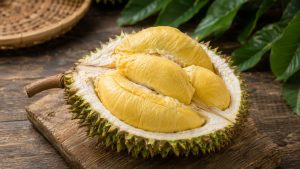
The fruit is easy to recognize because of its large size and hard shell covered with sharp spikes. Inside, several sections contain soft, creamy edible flesh surrounding large seeds.
Durian has a distinctive aroma that can be quite strong. Some people describe it as sweet and fruity, while others find the smell overpowering. Its flavor is equally distinctive, combining sweetness with a rich, creamy texture.
What Does Durian Look Like?
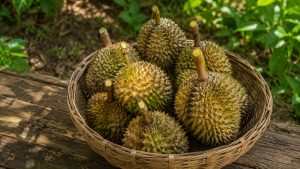
A mature durian generally has:
- A large, oval or round shape
- A thick green, brownish-green, or yellow-green shell
- Sharp pyramidal spikes
- Several internal sections of edible flesh
- Large, smooth seeds
- Creamy yellow, pale yellow, or orange flesh, depending on variety
The exact appearance varies considerably between cultivars.
Where Does Durian Grow?
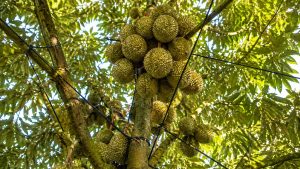
Durian trees prefer warm, humid tropical climates. Commercial production is concentrated in Southeast Asia, where temperatures and rainfall are generally suitable for healthy tree growth and fruit development.
Durian Nutrition
Durian provides carbohydrates, dietary fiber, vitamin C, potassium, and several other nutrients. It is also more calorie-dense than many common fresh fruits.
A 100-gram serving of raw durian provides approximately:
- 147 calories
- 27 grams of carbohydrates
- 3.8 grams of dietary fiber
- 1.5 grams of protein
- About 5 grams of fat
- Vitamin C
- Potassium
- Small amounts of several B vitamins and minerals
Nutritional values can vary depending on the variety, ripeness, and serving size.
Because durian is relatively high in calories and carbohydrates, portion size is worth considering when adding it to your diet.
Source: USDA FoodData Central
Durian Benefits and How to Eat It
Durian can be part of a balanced diet and provides several nutrients that support normal body functions. Its fiber content can contribute to overall digestive health, while vitamin C supports normal immune function.
Potassium is another important nutrient found in durian and plays a role in normal muscle and nerve function.
Potential Benefits of Durian
Including moderate amounts of durian in a varied diet may provide:
- Dietary fiber for digestive health
- Vitamin C for normal immune function
- Potassium for normal muscle and nerve function
- Carbohydrates that provide energy
- Plant compounds with antioxidant activity
Durian should not be viewed as a treatment for a specific health condition. Its main value is as a nutrient-containing tropical fruit.
How to Eat Durian
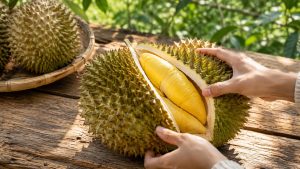
Fresh durian is usually eaten by opening the shell, removing the creamy flesh, and separating it from the seeds.
You can enjoy the flesh:
- Fresh from the fruit
- Chilled in the refrigerator
- Blended into smoothies
- Mixed into desserts
- Used in ice cream
- Added to cakes and pastries
- Combined with coconut milk in desserts
The large seeds should not be eaten raw. Remove them before serving the edible flesh.
How to Choose a Good Durian
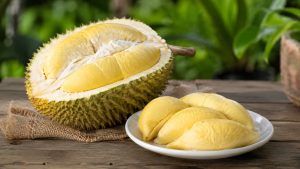
Choosing a ripe, high-quality durian can take some practice because the thick shell hides most of the edible flesh.
When shopping for durian, look for:
- A naturally strong but fresh aroma
- A firm, intact shell
- Healthy-looking spikes
- A fresh-looking stem
- No large cracks or damaged areas
- No visible mold
- A fruit that feels appropriately heavy for its size
Some varieties develop natural cracks as they mature, while others may remain closed. Therefore, appearance alone is not always enough to determine ripeness.
How to Tell If Durian Is Ripe
A ripe durian usually develops a stronger aroma and may show other signs of maturity depending on the variety.
If buying whole durian, ask the seller about the variety and harvest stage. Experienced vendors can often identify ripeness more accurately than appearance alone.
If buying packaged flesh, choose pieces that look creamy and fresh without excessive liquid, discoloration, or signs of spoilage.
Growing Durian and Time to Fruit
Durian trees need a warm tropical environment to grow successfully. They perform best in areas with high humidity, regular rainfall, and protection from prolonged cold.
For home or commercial growing, choose a location with:
- Full sun
- Deep, fertile soil
- Good drainage
- Consistent moisture
- Protection from strong winds
- Plenty of space for the mature tree
Durian roots do not perform well in constantly waterlogged soil, so drainage is especially important.
How Long Does a Durian Tree Take to Fruit?
The time to fruit depends on whether the tree was grown from seed or propagated from a grafted plant.
Grafted durian trees generally produce fruit sooner than seedlings. Under suitable growing conditions, grafted trees may begin producing after several years, while seed-grown trees can take significantly longer.
Fruit production also depends on:
- Cultivar
- Climate
- Soil conditions
- Water availability
- Fertilization
- Pollination
- Tree age
- Overall plant health
Patience is important because durian is a long-lived tree that requires several years of proper care before reaching reliable production.
Durian Tree Care
Young trees need consistent watering, weed control, suitable fertilization, and protection from extreme weather.
A layer of organic mulch around the root zone can help conserve soil moisture and reduce weed competition. Keep mulch away from direct contact with the trunk to reduce moisture-related problems.
Harvesting and Storing Durian
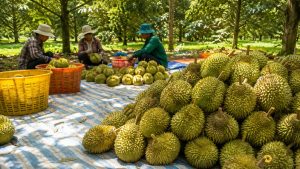
Harvest timing depends on the variety and intended market. Some durians are allowed to mature further on the tree, while others are harvested at a mature stage and continue ripening afterward.
Common maturity indicators can include:
- Stronger natural aroma
- Changes in shell color
- Slight changes around the fruit seams
- A mature stem
- Natural opening or separation of the shell in some varieties
- Changes in the sound when gently tapped
Because different cultivars behave differently, growers should use variety-specific maturity indicators rather than relying on one sign.
How to Store Fresh Durian
Once opened, durian flesh should be stored in an airtight container in the refrigerator.
For longer storage, remove the flesh from the shell, place it in a freezer-safe container or bag, and freeze it.

Good storage practices include:
- Refrigerating fresh flesh promptly
- Using airtight containers
- Keeping durian separate from foods that easily absorb odors
- Freezing extra flesh for longer storage
- Labeling frozen portions with the storage date
Frozen durian works particularly well in smoothies, desserts, and blended recipes.
Durian Recipes
Durian’s creamy consistency makes it useful in many sweet recipes. Its strong flavor pairs particularly well with coconut milk, avocado, banana, chocolate, and mild dairy ingredients.
Durian Avocado Ice Cream
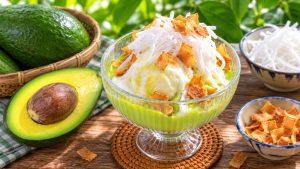
Durian avocado ice cream combines two naturally creamy fruits into a rich frozen dessert.
Blend ripe durian flesh with avocado and your preferred milk or dairy-free alternative. Add a small amount of sweetener if needed, then chill or freeze until firm.
For a smoother texture, blend the mixture again before serving.
Durian Cheese Pizza

Durian cheese pizza offers a sweet and savory combination that may appeal to adventurous eaters.
To make it:
- Prepare your favorite pizza dough.
- Add a thin layer of sauce if desired.
- Sprinkle with mozzarella or another mild cheese.
- Add small pieces of ripe durian.
- Bake until the crust is golden and the cheese is melted.
- Allow it to cool slightly before serving.
Use a moderate amount of durian because its flavor can easily dominate the other ingredients.
Durian Smoothie
A durian smoothie is one of the easiest ways to use ripe frozen durian.
Blend durian flesh with milk, yogurt, or a dairy-free alternative and ice until smooth. Banana can be added for extra creaminess and sweetness.
For a lighter flavor, use less durian and add another fruit such as banana or mango.
Durian Dessert Soup
Durian can also be used in sweet dessert soups, especially those made with coconut milk.
A simple version can combine durian flesh with coconut milk and other ingredients such as sticky rice or tropical fruits. Serve warm or chilled depending on the recipe.
Tips for Enjoying Durian
Durian has an intense flavor and aroma, so a few simple habits can make eating and storing it easier.
Start With a Small Portion
If you are trying durian for the first time, start with a small amount. The flavor and aroma can be surprisingly strong.
Keep It Chilled
Chilling durian can make the texture firmer and the aroma somewhat less noticeable. It also makes the fruit refreshing on warm days.
Pair It With Mild Ingredients
Durian works well with ingredients that complement rather than overpower its flavor, including:
- Coconut milk
- Banana
- Avocado
- Sticky rice
- Mild cheese
- Yogurt
- Chocolate
Store It Properly
Because durian has a powerful aroma, airtight storage is especially useful. It helps reduce odor transfer to other foods in the refrigerator.
Conclusion
Durian is a unique tropical fruit with a creamy texture, strong aroma, and naturally rich flavor. It provides fiber, vitamin C, potassium, carbohydrates, and other nutrients while being relatively high in calories.
Whether you enjoy it fresh, blended into a smoothie, frozen into ice cream, or incorporated into desserts, durian offers many ways to explore tropical flavors.
For gardeners in suitable climates, growing durian can also be a rewarding long-term project. With warm temperatures, fertile, well-drained soil, consistent moisture, and proper care, a healthy tree can eventually produce its distinctive fruit.
Thank you for reading this guide to the end. I hope you find some delicious, high-quality durians to enjoy. If you found this article helpful, please consider sharing it with others. Thanks so much for reading!
Frequently Asked Questions (FAQ)
How many calories are in durian?
Durian contains approximately 147 calories per 100 grams, although the exact amount varies depending on variety and serving size.
Does eating durian cause weight gain?
Eating large amounts may increase calorie intake because durian is relatively calorie-dense. Moderate portions can fit into a balanced diet.
Who should avoid eating too much durian?
Anyone limiting calories or carbohydrates should watch portions. People with specific dietary concerns should follow guidance from a qualified healthcare professional.
How much durian should you eat per day?
There is no universal amount for everyone. A moderate serving is generally a sensible choice because durian is relatively high in calories.
Is durian good for your health?
Durian provides fiber, vitamin C, potassium, and other nutrients, making it a nutritious fruit when enjoyed as part of a balanced diet.
How long does durian last?
Whole durian can last several days depending on maturity and storage. Once opened, refrigerate the flesh and use it promptly.
When is durian season?
Durian seasons vary by country, region, and cultivar. Major harvest periods commonly occur during warm and rainy parts of the year.
Garden Guide Hub