A coneflower close-up in garden reveals many of the features that make this popular perennial easy to recognize. With its colorful petals, raised cone-shaped center, and upright stems, coneflowers bring texture and pollinator-friendly beauty to gardens. The most familiar type is purple coneflower, also known as Echinacea purpurea, but coneflowers are available in several colors and forms.
Learning how to identify coneflowers can help gardeners choose the right varieties, understand their growth habits, and create a garden that attracts bees and butterflies.
1. What Does a Coneflower Look Like?
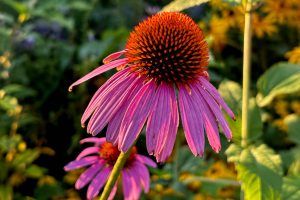
Coneflowers are herbaceous perennial plants recognized by their distinctive flower heads. The petals usually extend outward or slightly downward from a raised central cone.
A mature coneflower commonly has:
- Upright green stems
- Long, oval or lance-shaped leaves
- A prominent central cone
- Drooping or horizontal petals
- Rough-textured foliage
- Large, daisy-like flowers
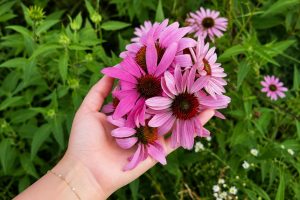
Purple coneflower is one of the easiest varieties to identify. Its petals are commonly pinkish-purple to lavender, while the center develops a dark orange-brown appearance as the flower matures.
The combination of colorful petals and a raised center gives the plant its characteristic appearance.
2. Coneflower Close-Up: The Flower Center
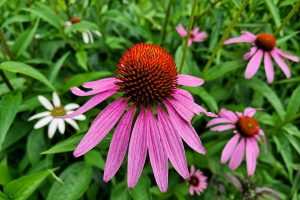
One of the most useful features to examine in a coneflower close-up in garden is the center of the flower.
The central cone is made up of many tiny individual flowers packed closely together. As the flower develops, this center becomes more prominent and can appear somewhat spiky or prickly.
This raised structure is especially noticeable in mature flowers. It also gives coneflowers their distinctive three-dimensional appearance compared with many flat-centered daisy-like flowers.
In purple coneflowers, the central cone often changes from greenish to orange-brown as it matures.
3. Identifying Coneflower Petals
The petals are another important identification feature.
Purple coneflower typically produces long, narrow petals that extend outward from the central cone. They may naturally curve downward, giving the flower a slightly relaxed appearance.
Depending on the variety, coneflower petals can be:
- Purple
- Pink
- White
- Yellow
- Orange
- Red or reddish shades
Petal color alone should not be used to identify a coneflower because modern garden varieties come in many colors.
Instead, look at the entire flower structure, especially the raised center and arrangement of the petals.
4. What Do Coneflower Leaves Look Like?
A close view of the foliage can also help identify a coneflower plant.
Coneflower leaves are generally green and may have an oval, lance-shaped, or broadly pointed appearance. They often have a slightly rough or hairy texture.
The leaves near the lower portion of the plant are usually larger than those higher on the stems. Their edges may appear slightly toothed.
When identifying a plant in the garden, examine both the flower and foliage rather than relying on the flower color alone.
5. Coneflower Stems and Growth Habit
Coneflowers generally grow upright, forming clumps of flowering stems. Depending on the variety and growing conditions, plants can reach several feet in height.
The stems are usually green and relatively sturdy. Mature plants can support multiple flowers, creating a noticeable display above the surrounding foliage.
This upright growth habit makes coneflowers useful in:
- Cottage gardens
- Pollinator gardens
- Perennial borders
- Native plant gardens
- Wildflower gardens
- Sunny landscape beds
A close-up of the plant can reveal the relationship between the stem, leaves, and flower head, making identification easier.
6. Purple Coneflower in the Garden
Purple coneflower is one of the most recognizable members of the coneflower group.
Its botanical name is Echinacea purpurea. It is widely grown as an ornamental perennial and is valued for its long-lasting flowers and attractive form.
Typical features include:
- Pink-purple petals
- A raised orange-brown central cone
- Rough green foliage
- Upright stems
- Large daisy-like flower heads
When viewed in a garden, purple coneflowers often stand above other plants and create a strong visual focal point.
7. Coneflower Close-Up and Pollinators
A coneflower close-up in garden can also reveal why these flowers are popular in pollinator-friendly landscapes.
The central cone provides a large landing and feeding area for insects. Bees and butterflies may visit flowering coneflowers during the growing season.
The flower’s open structure makes the central area relatively accessible compared with flowers with tightly enclosed centers.
For gardeners interested in supporting pollinators, planting coneflowers alongside other flowering plants can provide additional floral resources throughout the season.
8. How to Tell Coneflower Apart From Similar Flowers
Coneflowers can resemble other daisy-like garden plants, so looking closely at the flower center is useful.
A raised, cone-shaped center is one of the strongest visual clues.
When comparing coneflower with other flowers, check:
- Shape of the central disk
- Position and shape of petals
- Leaf texture
- Stem structure
- Overall plant height
- Flower color
The combination of these characteristics is more reliable than using a single feature.
9. Best Features to Photograph in a Coneflower Close-Up
If you are photographing coneflowers for a gardening guide, focus on details that help readers identify the plant.
Useful close-up subjects include:
- The central cone
- Individual petals
- Flower head from the side
- Leaf texture
- Leaf edges
- Flower and stem connection
- Mature and newly opened flowers
A side-angle photograph can be especially helpful because it shows how the petals extend from the raised center.
A front-facing image, meanwhile, clearly displays the overall flower shape and color.
10. When Do Coneflowers Bloom?
Coneflowers generally bloom during the warmer months, with flowering periods depending on the species, variety, climate, and growing conditions.
Once established, many coneflower varieties can provide flowers for an extended period. Removing spent flowers may encourage additional blooming in some garden varieties, although leaving some mature flower heads can provide winter interest and food for birds.
Blooming coneflowers are also an excellent subject for garden photography because their distinctive centers remain visually interesting even after the petals begin to fade.
11. Growing Coneflowers in the Garden
Coneflowers are generally considered relatively low-maintenance perennials when grown in suitable conditions.
They typically perform best with:
- Plenty of sunlight
- Well-drained soil
- Regular watering while establishing
- Adequate space for mature growth
- Good air circulation
Once established, many varieties tolerate periods of dry conditions better than plants that require consistently moist soil.
Avoid keeping the soil excessively wet, particularly in poorly drained areas.
12. Final Thoughts
A coneflower close-up in garden makes it easier to appreciate the features that distinguish this beautiful perennial. The raised central cone, colorful petals, textured leaves, and upright growth habit all provide useful clues for identification.
Purple coneflower is especially recognizable because of its purple-pink petals and prominent orange-brown center, but gardeners can find many other coneflower colors and cultivated varieties.
Whether you are growing coneflowers for their flowers, photographing them for a gardening project, or creating a pollinator-friendly landscape, looking closely at the flower structure is one of the best ways to understand and identify this popular garden plant.