
Learning how to harvest basil correctly can help you enjoy fresh, flavorful leaves while encouraging your plant to produce more growth. Basil is one of the easiest herbs to harvest, but the way you pick the leaves and stems can make a big difference in how productive the plant becomes.
Many gardeners make the mistake of picking individual leaves whenever they need them. While this is not necessarily harmful, harvesting the entire growing tip correctly can encourage basil to branch out and become fuller.
Basil is a fast-growing herb that can produce a large amount of fresh foliage during the growing season. With regular harvesting and pruning, one healthy plant can provide plenty of basil for pesto, pasta, pizza, salads, sauces, sandwiches, and other recipes.
The key is to harvest basil at the right time and in the right way.
In this complete guide, you will learn how to harvest basil without damaging the plant, when to start harvesting, where to cut basil stems, how often to harvest, how to harvest basil without killing the plant, what to do when basil starts flowering, and the best ways to store and preserve your harvest.
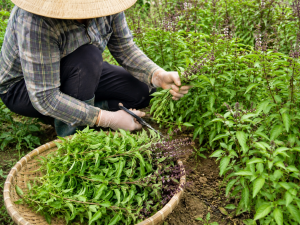
When Should You Start Harvesting Basil?
You can usually start harvesting basil once the plant has developed several sets of healthy leaves and has become well established.
A young basil plant should have enough foliage to continue growing after harvesting.
Avoid taking large amounts from very small seedlings.
Once the plant has multiple healthy branches, you can begin harvesting regularly.
For the best results, harvest basil before the plant produces many flowers.
Young leaves and tender stems generally have a fresh, mild flavor and are ideal for cooking.
If you see flower buds forming, this is a good time to harvest and prune the plant.
Regular harvesting can help encourage new leafy growth and delay the plant’s transition into full flowering.
How to Harvest Basil Correctly
The best way to harvest basil is to cut the stem just above a pair of healthy leaves.
Look for a stem with two sets of leaves.
Using clean scissors or garden shears, make your cut approximately ¼ inch above the leaf pair.
This encourages the plant to produce new branches from the nodes where the leaves are attached.
Instead of removing only one leaf at a time, harvest the growing tips of the stems.
This method gives you more basil while also helping the plant become bushier.
For example, if you have a tall stem with several sets of leaves, cut the top few inches just above a pair of leaves.
The remaining plant can then produce new side shoots.
Repeat this process on different branches as the plant grows.
Where to Cut Basil
Knowing where to cut is one of the most important parts of learning how to harvest basil.
Always look for a pair of leaves growing opposite each other on the stem.
Make your cut just above this pair of leaves.
New branches will often develop from these points.
Avoid cutting too close to the leaves.
Leaving a small amount of stem above the leaf pair can help protect the growing point.
Do not cut the entire plant down to the soil.
Leave plenty of healthy foliage behind so the plant can continue producing energy through photosynthesis.
A good rule is to harvest no more than about one-third of the plant at a time.
If the plant is very large and healthy, you may be able to harvest more, but avoid removing most of the foliage in one session.
Should You Pick Basil Leaves or Cut the Stems?
For regular harvesting, cutting stems is generally better than picking individual leaves.
When you cut a stem above a pair of leaves, the plant can produce new branches.
This encourages a fuller and bushier shape.
Picking individual leaves is perfectly fine when you only need a small amount of basil for a meal.
However, if your goal is to keep the plant productive and encourage more growth, harvest the growing tips instead.
You can then remove the leaves from the harvested stems for cooking.
This method combines harvesting and pruning into one simple task.
How to Harvest Basil Without Killing the Plant
You can harvest basil repeatedly without killing the plant as long as you avoid removing too much foliage at once.
Follow these simple steps:
- Choose a healthy stem.
- Find a pair of leaves lower down the stem.
- Cut just above the leaf pair.
- Repeat on several branches.
- Leave at least two-thirds of the plant intact.
- Water the plant if the soil is dry.
- Allow the plant to recover and produce new growth.
Healthy basil plants can tolerate regular harvesting.
In fact, frequent harvesting can encourage branching and help prevent the plant from becoming tall and leggy.
The key is to harvest gradually rather than removing most of the plant at once.
How Often Should You Harvest Basil?
You can harvest basil whenever you need it.
During periods of rapid growth, you may be able to harvest once or twice a week.
The more favorable the growing conditions, the faster the plant can replace harvested growth.
Regular harvesting is often better than waiting until the plant becomes very large.
If you allow basil to grow unchecked, it may become tall and develop flower buds.
Once flowering begins, the plant may put more energy into reproduction.
Harvesting the growing tips regularly helps maintain a compact plant and provides a continuous supply of fresh leaves.
The Best Time of Day to Harvest Basil
The best time to harvest basil is generally in the morning after the dew has dried but before the heat of the day becomes intense.
At this time, the plant is usually well hydrated and the leaves are fresh.
Avoid harvesting immediately after heavy rain or when the foliage is wet.
Wet leaves can be more susceptible to damage during handling.
If you need basil for immediate cooking, you can harvest it whenever necessary.
However, for larger harvests that you plan to store, morning is often a good time.
How to Harvest Basil Flowers
Basil flowers are edible, but allowing the plant to flower can change its growth pattern.
If you want to maximize leaf production, remove flower buds as soon as you notice them.
Use clean scissors to cut the flower stalk just above a pair of healthy leaves.
This encourages the plant to produce more leafy growth.
If the flowers are already open, you can still cut the flowering stems and use the leaves.
Basil flowers can also be used as an edible garnish or added to salads.
Some gardeners choose to leave a few plants in flower because basil flowers can attract bees and other pollinators.
If you want to collect seeds, allow the flowers to remain on the plant until they mature.
Can You Harvest Basil After It Flowers?
Yes, you can still harvest basil after the plant begins flowering.
However, the leaves may have a stronger flavor and may become slightly tougher or more bitter.
If the plant has just started flowering, cut back the flowering stems to encourage new leafy growth.
If the plant is heavily covered with flowers, you may want to harvest a large amount of the remaining foliage and use it immediately or preserve it.
You can also allow the plant to complete its life cycle and collect seeds.
Flowering does not make the basil plant useless.
It simply means the plant is entering a different stage of growth.
How Much Basil Can You Harvest at Once?
The amount you can harvest depends on the size and health of your plant.
For a young plant, take only a few leaves or small stems.
For a mature, healthy plant, you can harvest several stems at once.
As a general guideline, avoid removing more than one-third of the plant’s total foliage in a single harvest.
If you need a large amount of basil, consider harvesting from several plants instead of taking too much from one plant.
After harvesting, allow the plant to recover and produce new growth before taking another large harvest.
How to Harvest Basil for Pesto
Basil is one of the most popular herbs for making pesto.
If you are harvesting basil specifically for pesto, you may need a larger quantity of leaves.
Choose healthy, young leaves and tender stems.
Harvest the growing tips of multiple branches.
Remove damaged or yellowing leaves.
For the best flavor, use freshly harvested basil as soon as possible.
If you cannot make pesto immediately, store the basil properly for short-term use.
You can also make pesto and freeze it in small portions.
Frozen pesto is an excellent way to preserve a large basil harvest for later use.
How to Harvest Basil for Cooking
Fresh basil can be harvested whenever you need it for cooking.
For small amounts, simply pick a few healthy leaves.
For larger amounts, cut several stems from the plant.
Fresh basil can be used in:
- Pasta
- Pizza
- Pesto
- Salads
- Sandwiches
- Soups
- Sauces
- Tomato dishes
- Homemade dressings
When using basil in cooked recipes, add the leaves toward the end of cooking when possible.
This helps preserve the herb’s fresh aroma and flavor.
How to Store Freshly Harvested Basil
Fresh basil is best used soon after harvesting.
If you plan to use it within a few days, avoid storing it in the refrigerator if possible.
Cold temperatures can cause basil leaves to darken and lose quality.
Instead, place the stems in a glass of water at room temperature.
Keep the leaves above the water.
You can loosely cover the basil with a plastic bag to help maintain humidity.
Change the water regularly.
Store the basil away from direct sunlight and extreme heat.
This method can help keep freshly harvested basil usable for several days.
How to Preserve a Large Basil Harvest
If your basil plants are producing more leaves than you can use, preserving the harvest is a great option.
Freeze Basil
Freezing is one of the easiest ways to preserve fresh basil.
Wash the leaves gently and dry them thoroughly.
Place the leaves in a freezer-safe bag or container.
You can freeze them whole or chop them first.
Another option is to freeze chopped basil in ice cube trays with water or oil.
Frozen basil works well in soups, sauces, pasta, and other cooked dishes.
Make Pesto
If you have a large harvest, making pesto is another excellent option.
Prepare your favorite pesto recipe and divide it into small portions.
Freeze the portions for convenient use throughout the year.
Dry Basil
Basil can also be dried.
Use a food dehydrator or another suitable drying method.
Once completely dry, store the leaves in an airtight container.
Keep dried basil in a cool, dark location.
Dried basil has a different flavor from fresh basil but can be useful in sauces, soups, and seasoning blends.
How to Harvest Basil Seeds
If you want to grow basil again next season, you can collect seeds from mature plants.
Allow some flower stalks to remain on the plant.
After flowering, seed pods will develop.
Let the seed heads dry naturally on the plant.
Once the seed heads are completely dry, remove them carefully.
Separate the small seeds from the dried plant material.
Store the seeds in a labeled airtight container.
Keep them in a cool, dry location until you are ready to plant them.
Saving seeds allows you to continue growing your favorite basil varieties year after year.
Common Basil Harvesting Mistakes
Avoid these common mistakes when harvesting basil.
Cutting Too Low
Do not cut stems all the way down to the base.
Always leave healthy foliage and cut above a pair of leaves.
Removing Too Much
Harvesting too much at once can weaken the plant.
Try to remove no more than one-third of the plant during a single harvest.
Waiting Too Long
If you wait until the plant becomes tall and heavily flowered, the leaves may not be as tender.
Harvest regularly throughout the growing season.
Using Dirty Tools
Dirty scissors can spread plant diseases.
Clean your harvesting tools before use, especially if you have been working with other plants.
Harvesting Wet Leaves
Wet foliage can be more difficult to handle and may spoil more quickly during storage.
Whenever possible, harvest after the leaves have dried.
How to Keep Basil Producing After Harvesting
Regular harvesting is one of the best ways to keep basil productive.
After cutting the growing tips, watch for new branches to develop.
Provide the plant with enough sunlight and water.
Keep the soil consistently moist but not waterlogged.
If flower buds appear, remove them if your goal is continued leaf production.
You can also plant new basil seeds every few weeks.
This succession planting method ensures that you have younger plants ready to replace older plants as they become mature.
With good care, basil can remain productive for much of the warm growing season.
How to Harvest Basil From Container Plants
Container-grown basil can be harvested in exactly the same way as garden-grown basil.
Choose healthy stems and cut just above a pair of leaves.
Because container plants may have limited root space, avoid taking too much foliage at once.
Make sure the plant receives enough sunlight and water.
Containers can dry out faster than garden beds, especially during hot weather.
Check the soil regularly and water when necessary.
If the plant becomes root-bound or overcrowded, consider moving it to a larger container.
Healthy roots support strong new growth after harvesting.
Frequently Asked Questions About Harvesting Basil
When should I start harvesting basil?
Start harvesting once the plant has developed several sets of healthy leaves and is well established.
How do you harvest basil without killing the plant?
Cut the stems just above a pair of leaves and avoid removing more than about one-third of the plant at a time.
Is it better to pick basil leaves or cut the stems?
For regular harvesting, cutting the growing tips is generally better because it encourages new branches and creates a bushier plant.
Where should I cut basil?
Cut the stem just above a pair of healthy leaves. New growth can develop from the nodes below the cut.
How often can I harvest basil?
You can harvest basil whenever you need it. During active growth, healthy plants may be harvested once or twice a week.
Should I remove basil flowers?
If you want to maximize leaf production, remove flower buds as they appear. If you want seeds or want to attract pollinators, you can allow some plants to flower.
Can I harvest basil after it flowers?
Yes. You can still harvest the leaves, but they may have a stronger flavor. You can also harvest flowers or allow the plant to produce seeds.
How much basil can I harvest at once?
For most healthy plants, avoid removing more than about one-third of the foliage at one time.
What is the best time of day to harvest basil?
Morning, after the dew has dried and before the heat of the day, is generally a good time to harvest basil.
How do I keep fresh basil from wilting?
Place freshly cut basil stems in a glass of water at room temperature and keep the leaves above the water.
Can I freeze fresh basil?
Yes. Basil can be frozen whole, chopped, or prepared as pesto.
How do I harvest basil seeds?
Allow the plant to flower and let the seed heads dry. Collect the dried seed heads and separate the small seeds for storage.
Final Thoughts on How to Harvest Basil
Learning how to harvest basil correctly is an important part of growing a productive herb garden.
The best approach is to harvest the growing tips regularly rather than simply picking individual leaves whenever possible. Cut each stem just above a pair of healthy leaves to encourage new branches and create a fuller, bushier plant.
Avoid removing too much foliage at once, and always leave enough healthy leaves for the plant to continue growing.
Regular harvesting can also help delay flowering, although basil will eventually flower as it reaches maturity.
If your plant begins producing flower buds, you can remove them to encourage continued leaf production. Alternatively, allow some plants to flower and collect seeds for next year’s garden.
Freshly harvested basil can be used immediately in pesto, pasta, pizza, salads, sauces, and many other dishes. If you have more basil than you can use, consider freezing it, making pesto, or drying the leaves for later.
With the right harvesting technique and regular care, a single healthy basil plant can provide fresh leaves for much of the growing season.
Once you learn where and when to cut, harvesting basil becomes simple—and the more you harvest correctly, the more productive your plant can become.